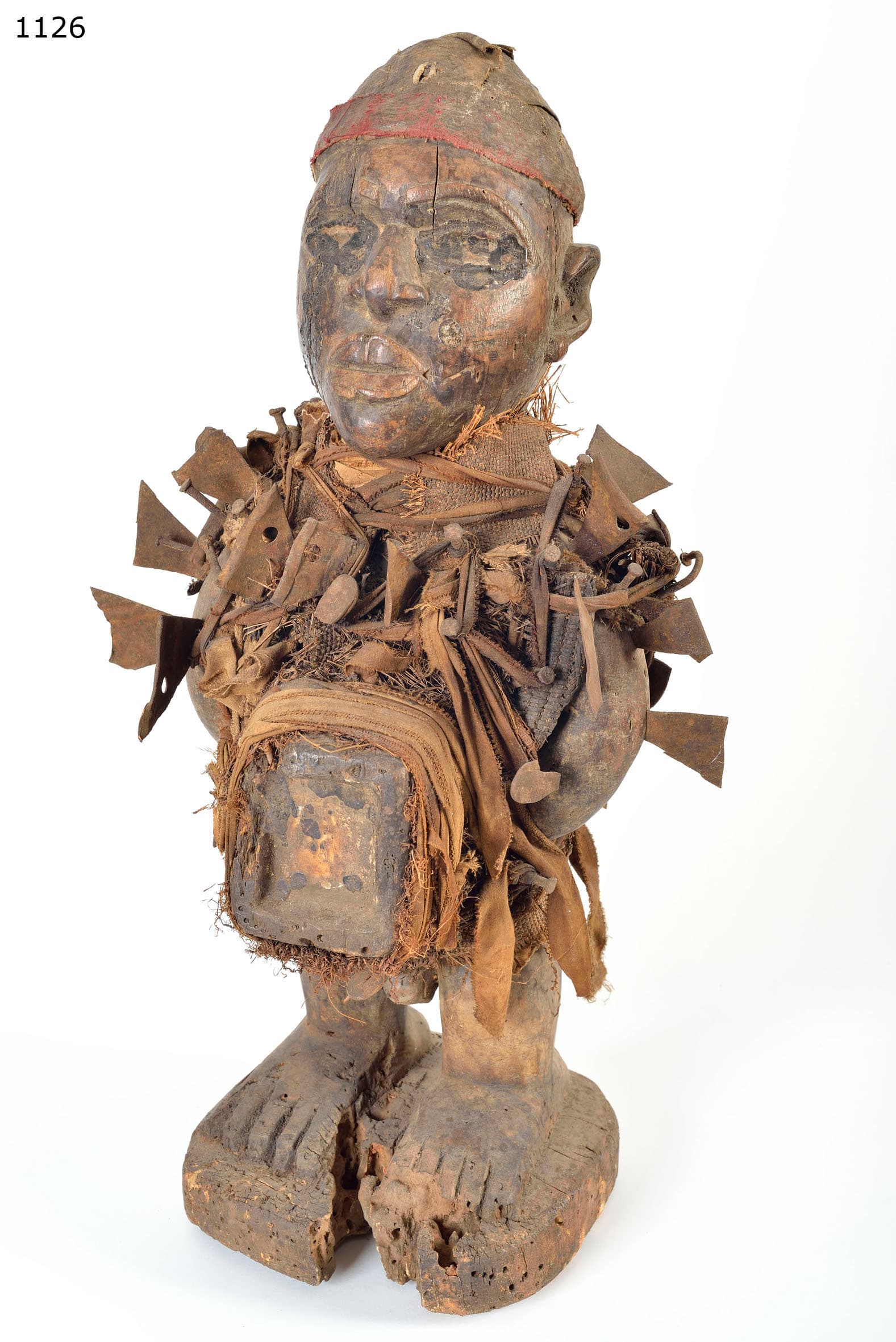
A wooden nail figure of the BaKongo, about 150 cm tall, from Liba village in the Republic of the Congo. The figure stands upright with its right arm raised, a mirrored box on its belly and a gourd hanging at its side.
1. Form and Assemblage
The figure is carved as a full-length standing man, with strong, rounded limbs and visible adze marks on the thighs. The right arm is raised and bent, the hand closed around a small pointed object. The left arm hangs along the body. The head wears a small cap with a red band and tufts of fibre, and the face is marked with fine incised lines. The eyes are inset and pale, in the manner the catalogue calls mirrored or partly clouded.
Much of the chest and shoulders is covered with an assemblage of cords, fibre bundles, pieces of cloth and iron nails, some driven in and some standing out. On the belly sits a rectangular box with a mirror-like panel at its front. A gourd hangs at the left side of the body, a black fibre loincloth is tied at the hips, and a small bundle is fixed at the right.
2. Use and Context
According to the collection catalogue, such nail figures, called nkondi, served a variety of purposes in the life of the BaKongo. Their power was given to them by the ndanga, the fetishist or medicine man, in special rituals. The catalogue names as outward signs of this power the many amulets, the tray on the belly with its mysterious contents and the numerous sharp metal objects driven into the surface. Mirrored eyes let the figure follow everyday events while also looking into the world of spirits and ancestors. One area of activity was upholding law and order in the community, another the protection against evil influences, with the figure ready to hurl the spear raised in its right hand.
3. Surface
The wood is dark brown to nearly black with a smooth, slightly worn sheen on the limbs. The upper body is much darker and rougher where cords, fibre and nails are layered.
Summary
A tall BaKongo nkondi from Liba with raised arm, belly box and gourd, fitted with nails, cords and fibre bundles.
Written with AI assistance from the collection appraisal, object photography and our own research; editorially reviewed. Mistakes are possible — corrections are welcome. How we work →
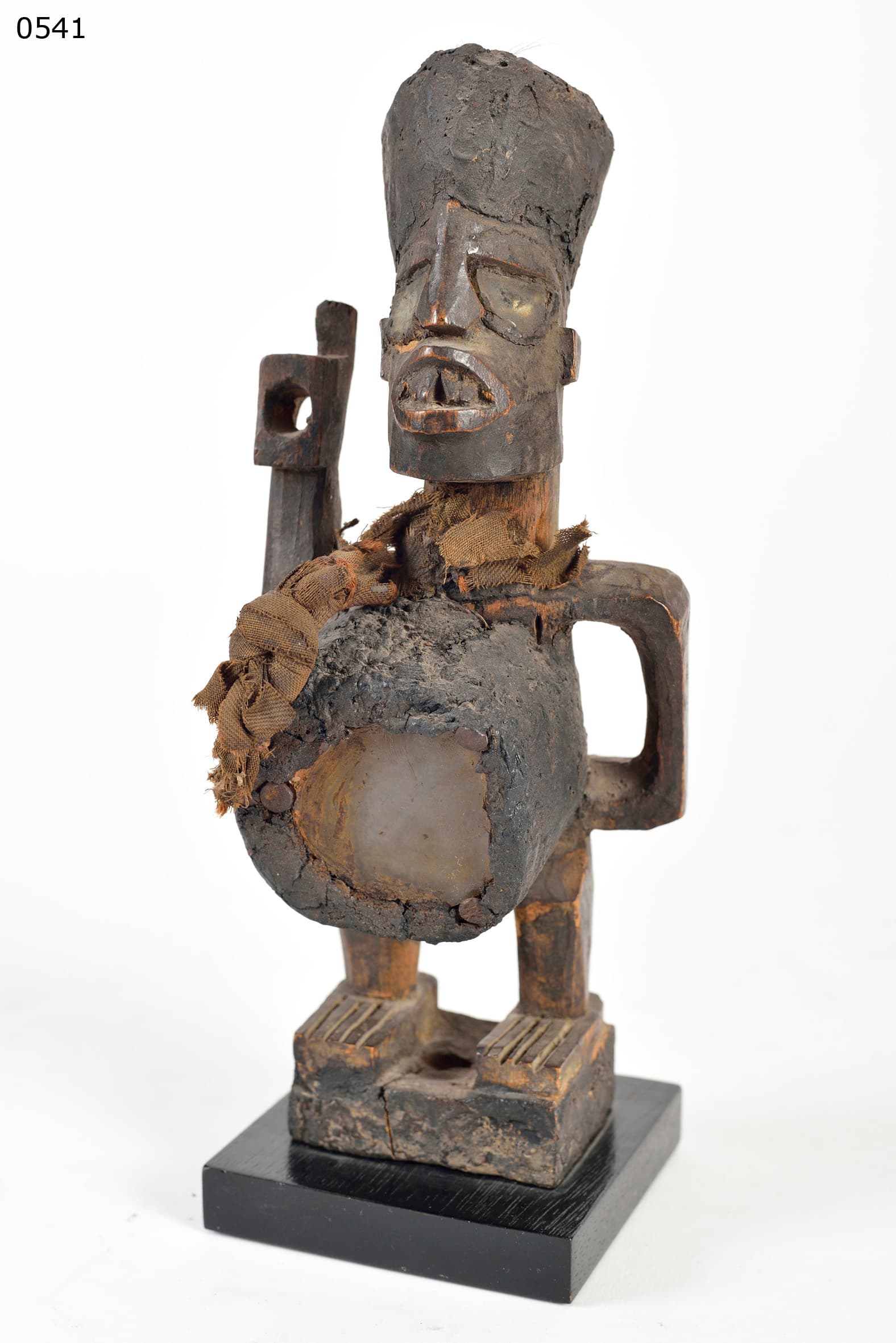
power figure
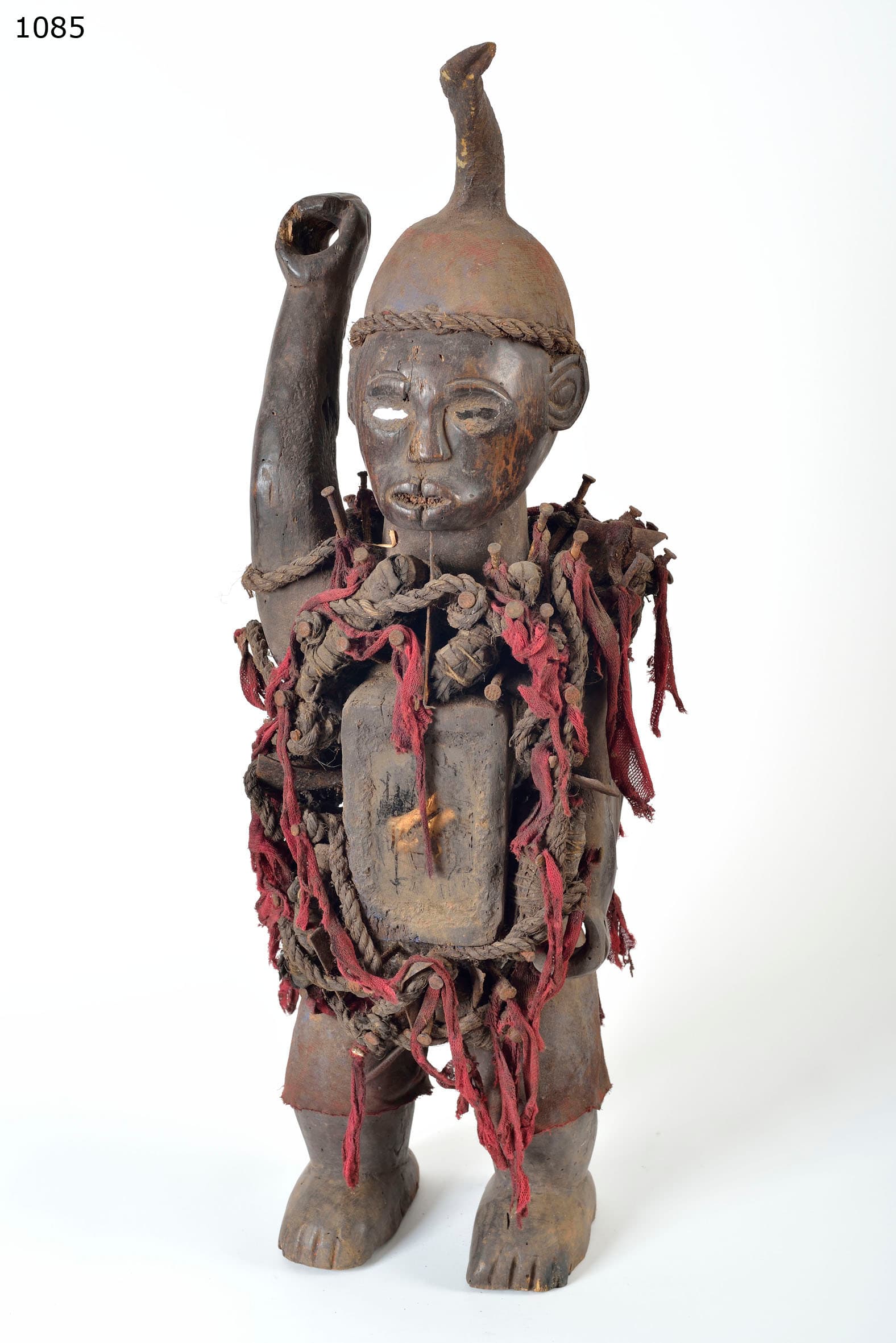
community power figure
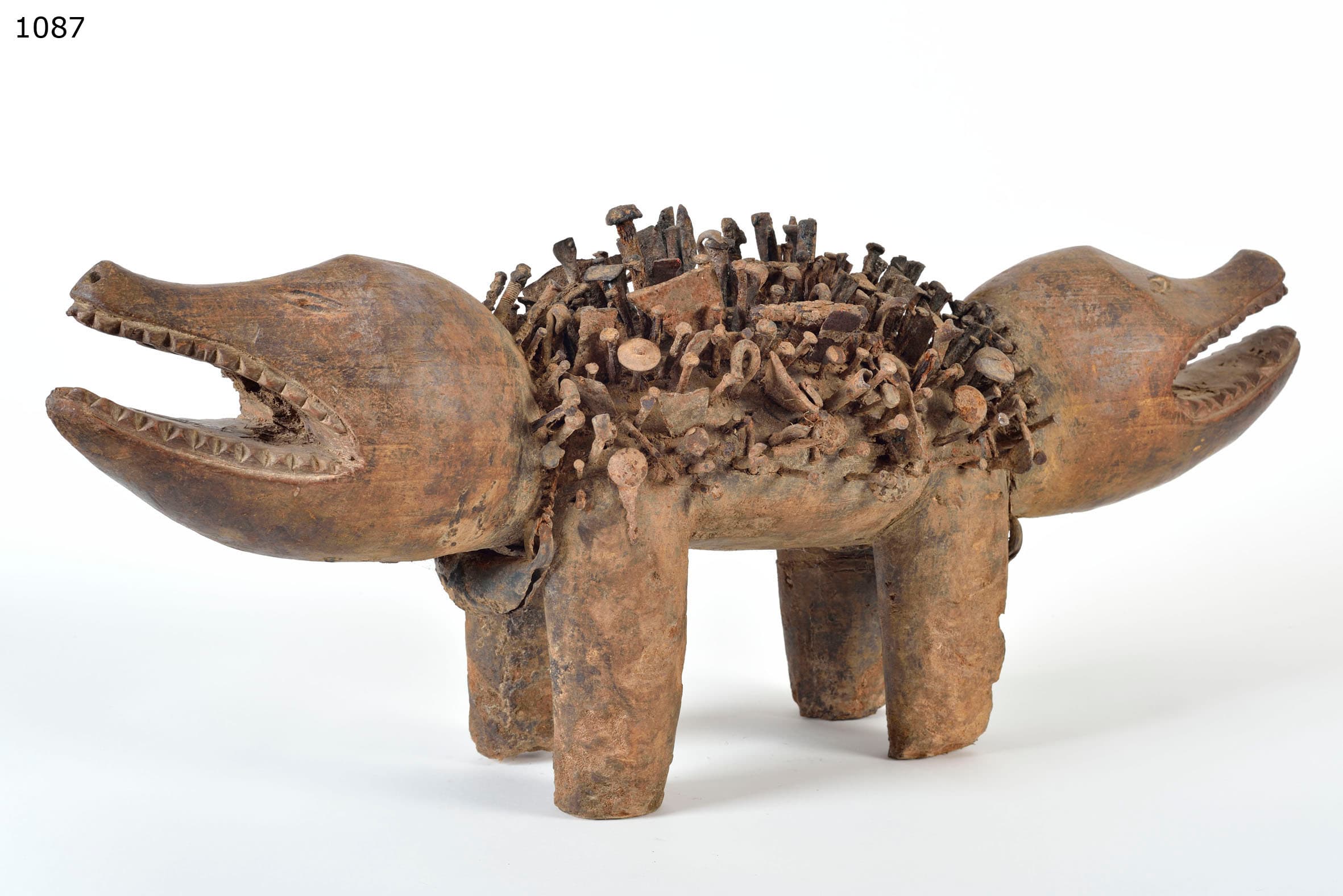
animal altar power figure