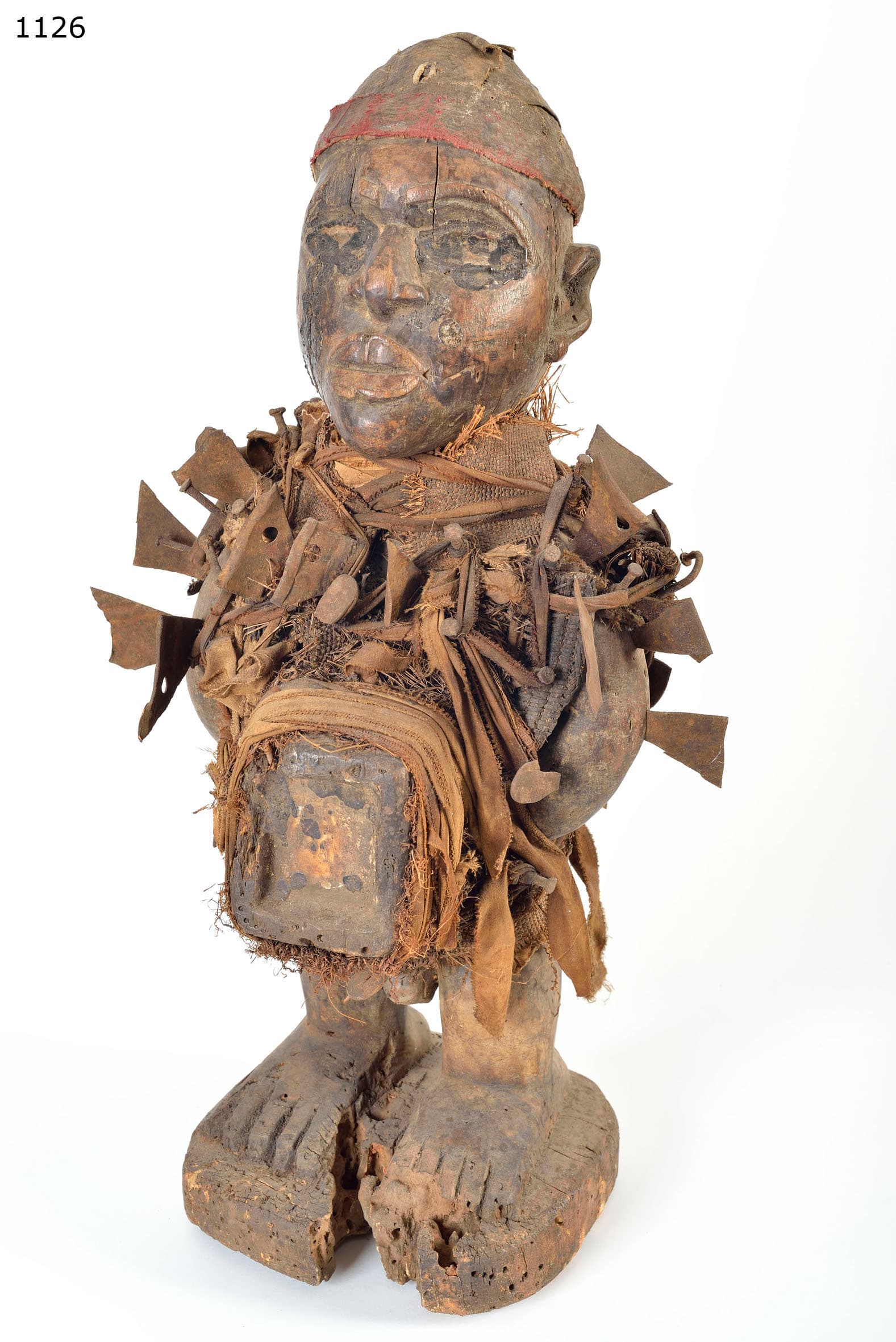
A standing male figure about 130 cm high, from Liba Village in the Kongo area near the mouth of the Congo River. Cords, bundles and a coiled collar cover the chest, and a round container sits at the belly.
1. Form and Carving
The figure stands upright on two rectangular plinths, one under each foot, with arms drawn back along the body. The face is dark and glossy, with a heavy brow, pale inlaid eyes, bared teeth and a short beard. A red cap with a green band and a small knob at the crown covers the head. Fine incised patterns mark the thighs, and the toes are carved on the plinths.
Around the neck lies a broad collar of tightly coiled fibre. Braided cords and small bundles are wrapped across the chest and shoulders, with a few nails and pins driven in among them. At the belly, a round container capped with clay, with a small pin at its centre, is held in place by the cords.
2. Use and Context
According to the collection catalogue, nail figures of this type are called nkonde in the area around the Congo mouth, among the BaKongo, Vili and Yombe. The ritual specialist, the ndanga, drives in the nails to activate the figure's power, and the catalogue also links the nailing to the confirmation of oaths and agreements. Red and white clay, kola nuts and blood are rubbed on the figure in the process.
3. Surface
The wood is dark and polished on the face and limbs. The attached materials are dry and matte, and the clay on the container is cracked, with white and reddish patches.
Summary
A standing nkonde with a bearded face, bundled chest and sealed belly container, charged through ritual use.
Written with AI assistance from the collection appraisal, object photography and our own research; editorially reviewed. Mistakes are possible — corrections are welcome. How we work →
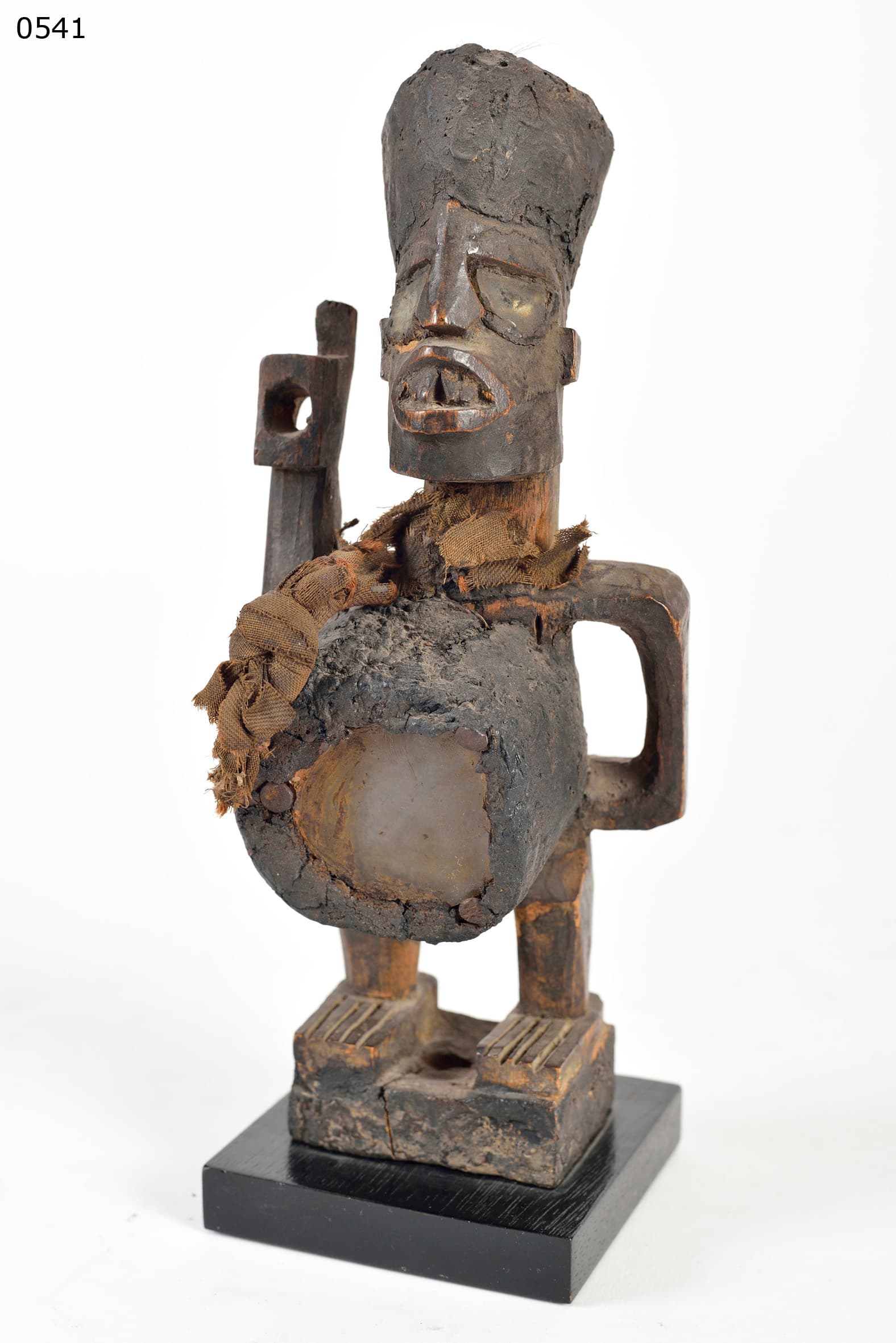
power figure
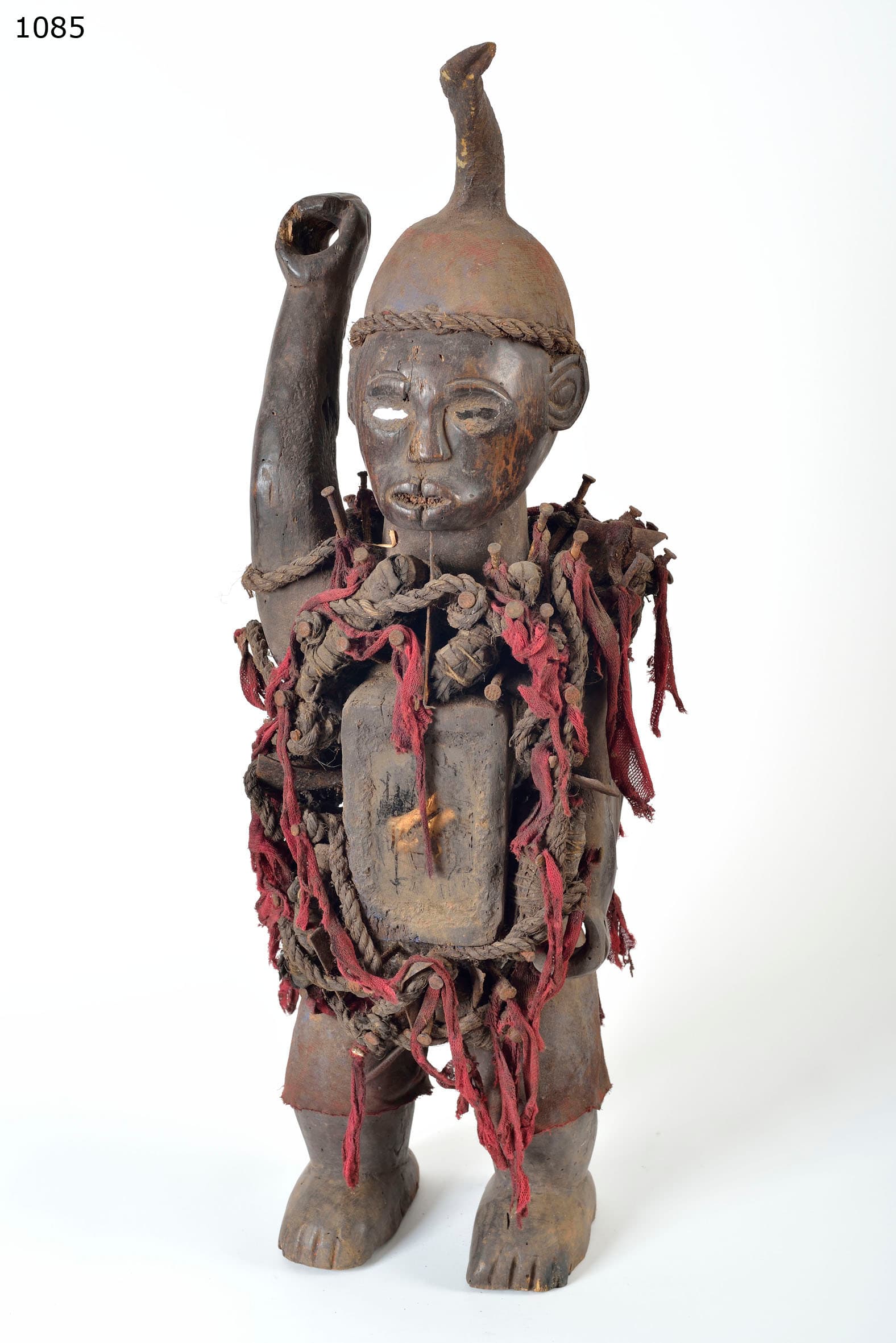
community power figure
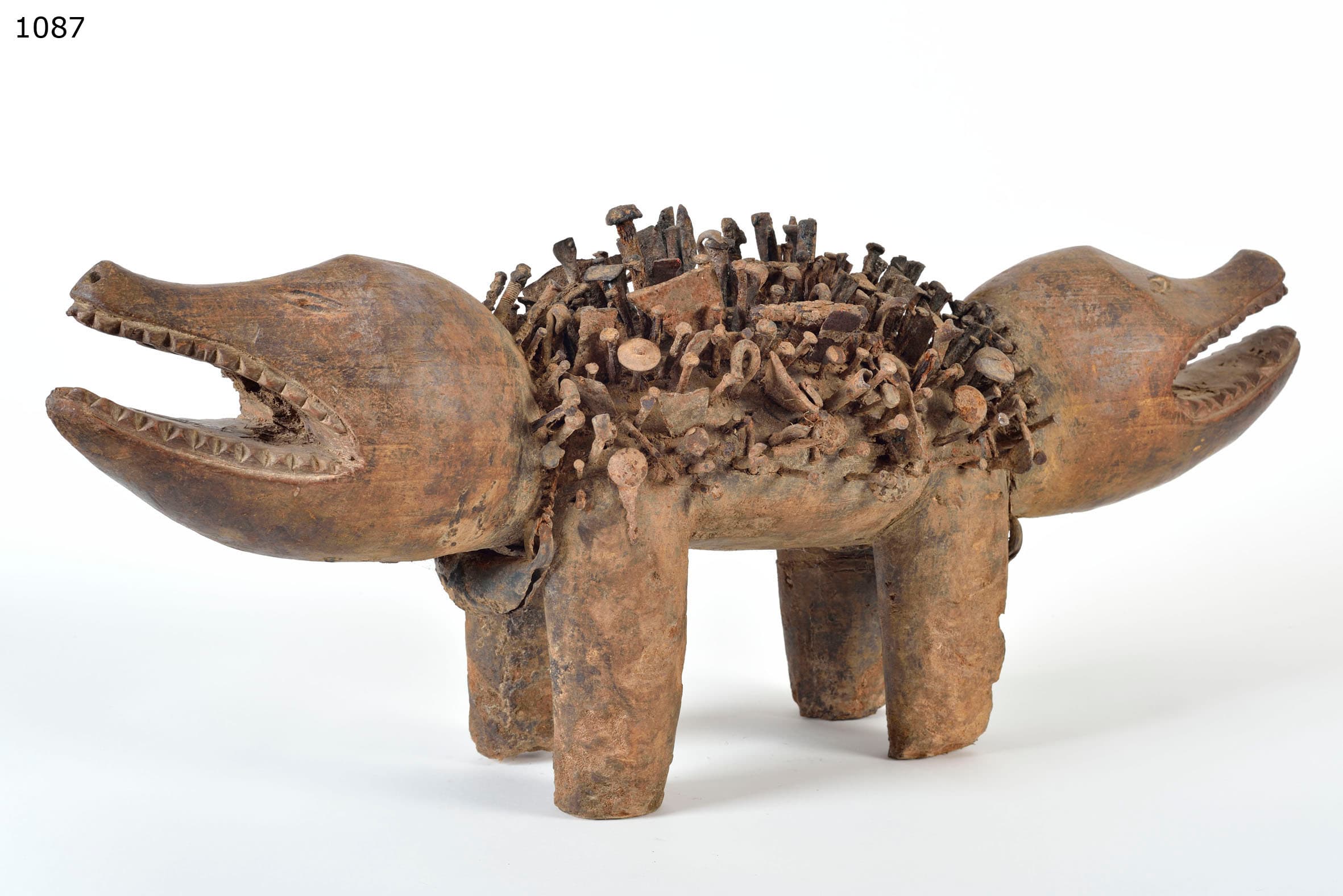
animal altar power figure