A highly sculptural dance hat densely embroidered with vibrant glass beads over a structural fabric base. The piece features a prominent, stylized human face with protruding features and an extended red cloth tongue, crowned by a beaded animal figure. Bordered with cowrie shells along the lower rim, it exemplifies the dynamic festive regalia of the Cameroon Grasslands.
1. Aesthetic Style and Cross-Border Mobility
While stylistically rooted in Bamileke traditions, this hat originates from a chiefdom within the tribal area of the neighboring Bamum. In the Cameroon Grasslands, which are home to various ethnic groups, it frequently occurs that cult objects of one tribe are found within the territory of another. This mobility is primarily due to chiefs exchanging traditional objects as diplomatic gifts during visits. Furthermore, artisans and sculptors historically moved between chiefdoms, retaining their tribal peculiarities while absorbing new influences. This blending of stylistic features across ethnic groups and subtribes makes it common and academically appropriate to classify such pieces under the broader regional designation of "Cameroon Grassland."
2. Ritual Function and the Festival of Joy
In stark contrast to ritual objects designed to instill fear or terror among tribesmen, this dance hat serves as an instrument of pure celebration. Hats of this type—featuring artfully contoured human faces and animal figures, or animal heads such as the elephant dancing hat (see Object No. 293 A/B)—are highly popular in many Bamileke areas. They are actively danced at festivals where the joy of life is paramount. These communal celebrations are accompanied by music and the consumption of palm wine, schnapps, or the local beer variety "33," which holds the status of a national drink. Consequently, the hat's exaggerated, vibrant features are intended to convey a profoundly joyful expression.
3. Materiality, Beadwork, and Surface Condition
The object is constructed using a dense application of cylindrical and seed beads in contrasting shades of white, black, and red, meticulously stitched to form geometric patterns and contoured facial features. The face is characterized by protruding, cylindrical eyes, a pronounced nose, and flat, lateral ears. Red textile accents, notably the extended tongue and the crest of the surmounting animal figure, provide textural contrast to the glass beads. A row of cowrie shells lines the base, adding structural weight and acoustic elements for dancing. The surface exhibits authentic wear consistent with festive use; the beads show subtle, uneven patination and embedded dust in the crevices, while the exposed textile elements display slight fraying and softening, suggesting repeated handling and exposure to the elements during outdoor celebrations.
Summary
This vibrant Bamileke dance hat is a spectacular, beaded testament to Grassfields festive traditions. Exchanged across tribal borders, its intricate beadwork, cowrie shell accents, and signs of authentic wear document the peaceful, celebratory diplomacy shared between neighboring chiefdoms.
Written with AI assistance from the collection appraisal, object photography and our own research; editorially reviewed. Mistakes are possible — corrections are welcome. How we work →
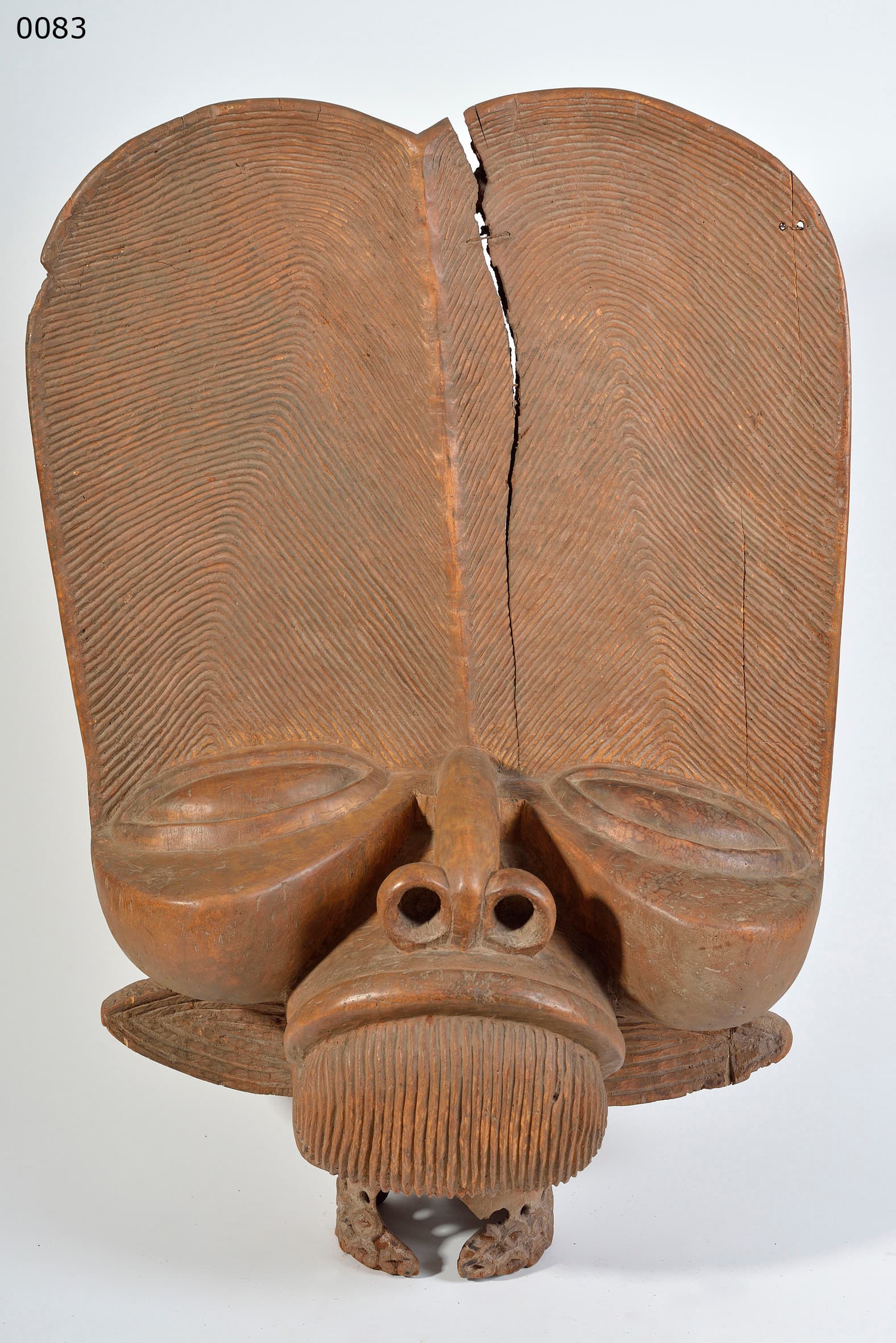
headcrest or shoulder mask (called BATCHAM or TSEMABU)
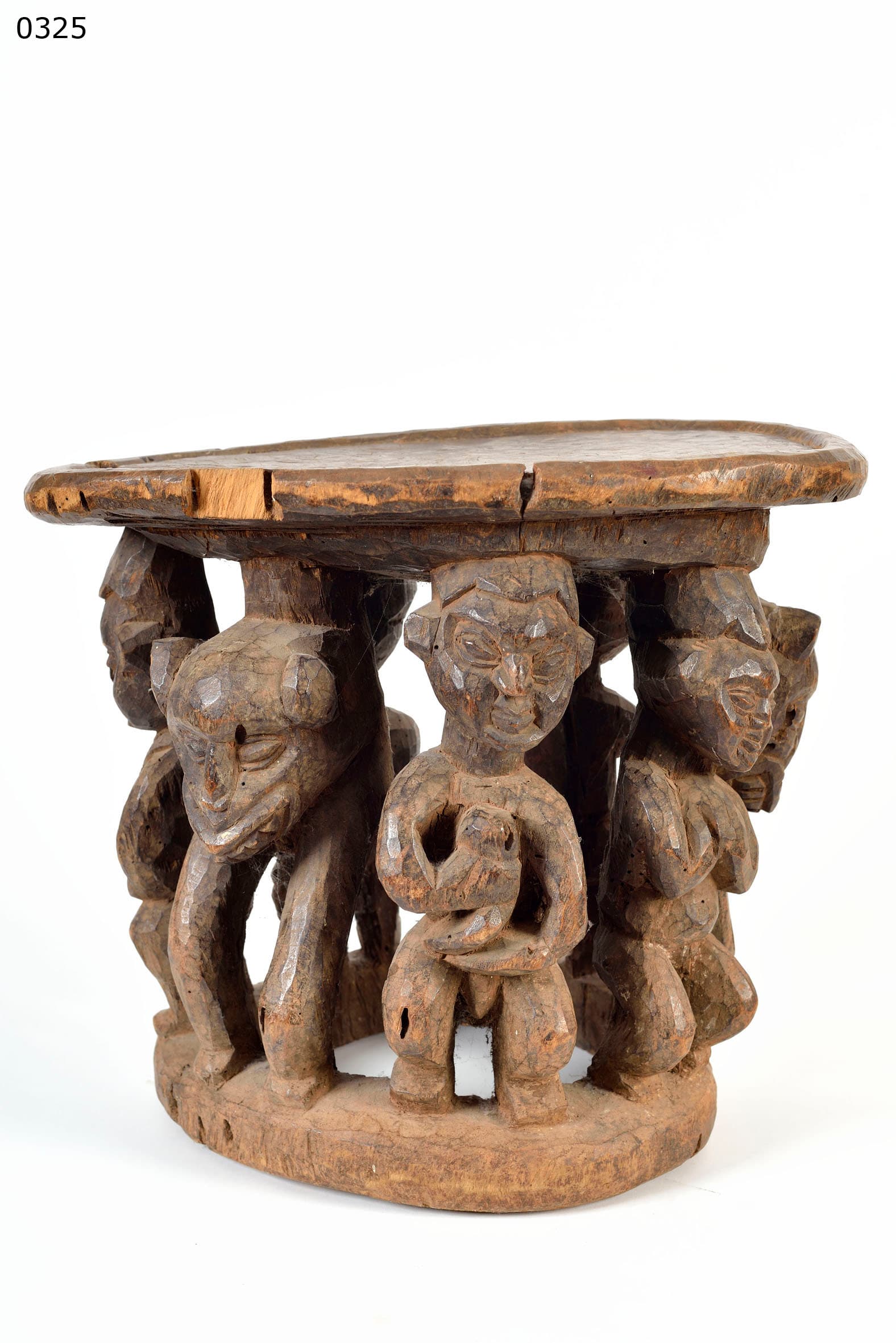
ritual stool
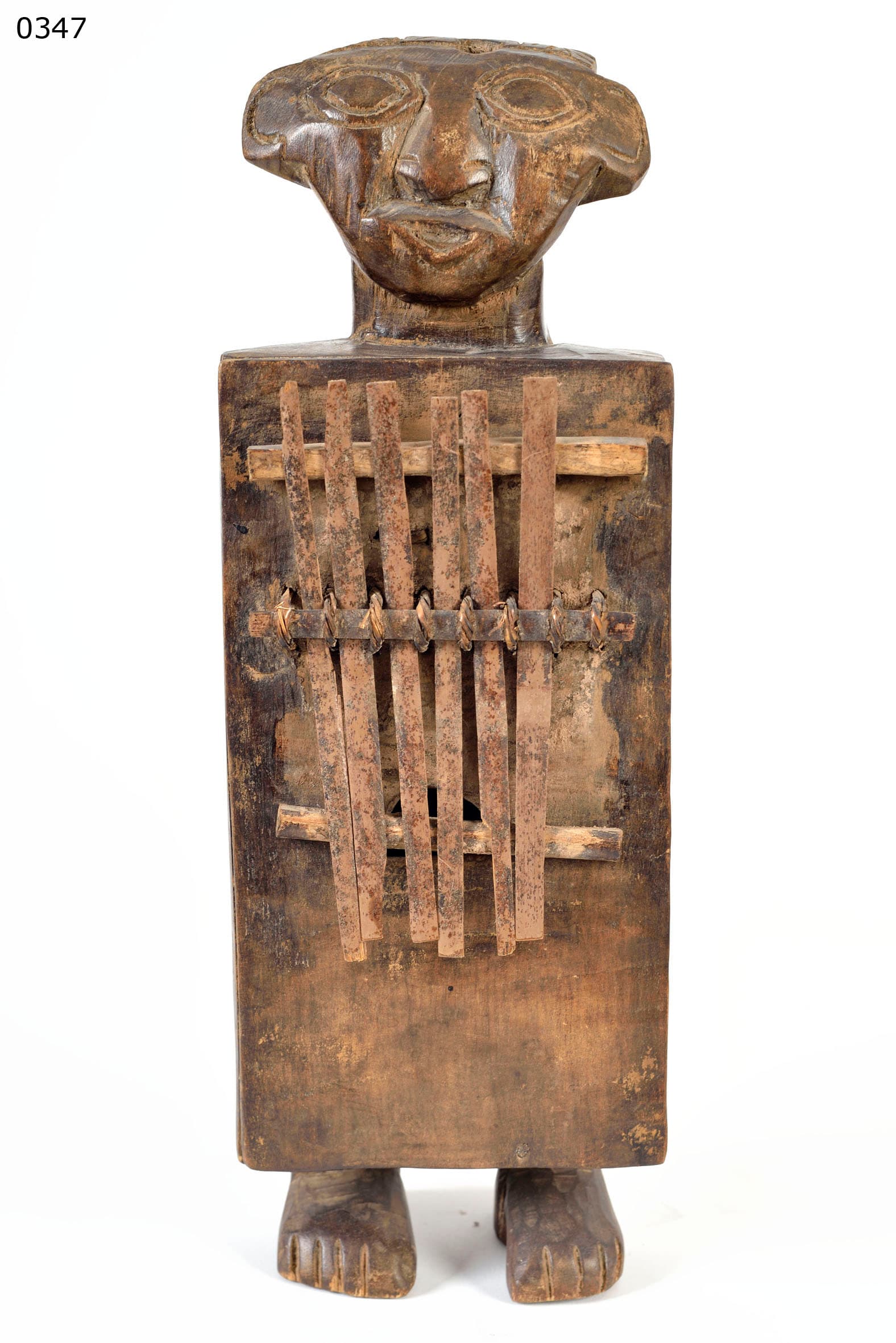
lamellophone