A group of sculptural dance hats from the Cameroon Grasslands, covered in glass beadwork. They have contoured faces or animal heads with large ears and are trimmed with cowrie shells.
1. Form and Beadwork
The hats are built up as a cap-like body covered in a dense mosaic of small glass beads. Diamond and chevron fields in orange, green, grey-black and cream are outlined with lines of pale blue tube beads. Faces and animal heads stand out in relief: some show an elephant head with a long beaded trunk, small rounded eyes and large, flat ears worked in zigzag patterns. Others carry human faces with protruding features, sometimes surmounted by a small animal figure. Rows of cowrie shells edge the base, the ears and the openings, and red cloth shows at the rim and behind the ears.
2. Use and Context
Hats of this kind belong to festive and ceremonial dress in the Grasslands. Their expressions are lively and not meant to frighten, and the large, brightly beaded surfaces are made to be seen from a distance.
3. Materials and Surface
The beads are sewn onto a flexible foundation covered with red cloth. The beads are mostly intact, with a slightly uneven dullness in places. The cowries are cream with a warm, handled tone, and the cloth is somewhat flattened and faded at the edges.
Summary
Beaded dance hats from the Cameroon Grasslands, with elephant and human faces in glass beads, trimmed with cowrie shells.
Written with AI assistance from the collection appraisal, object photography and our own research; editorially reviewed. Mistakes are possible — corrections are welcome. How we work →
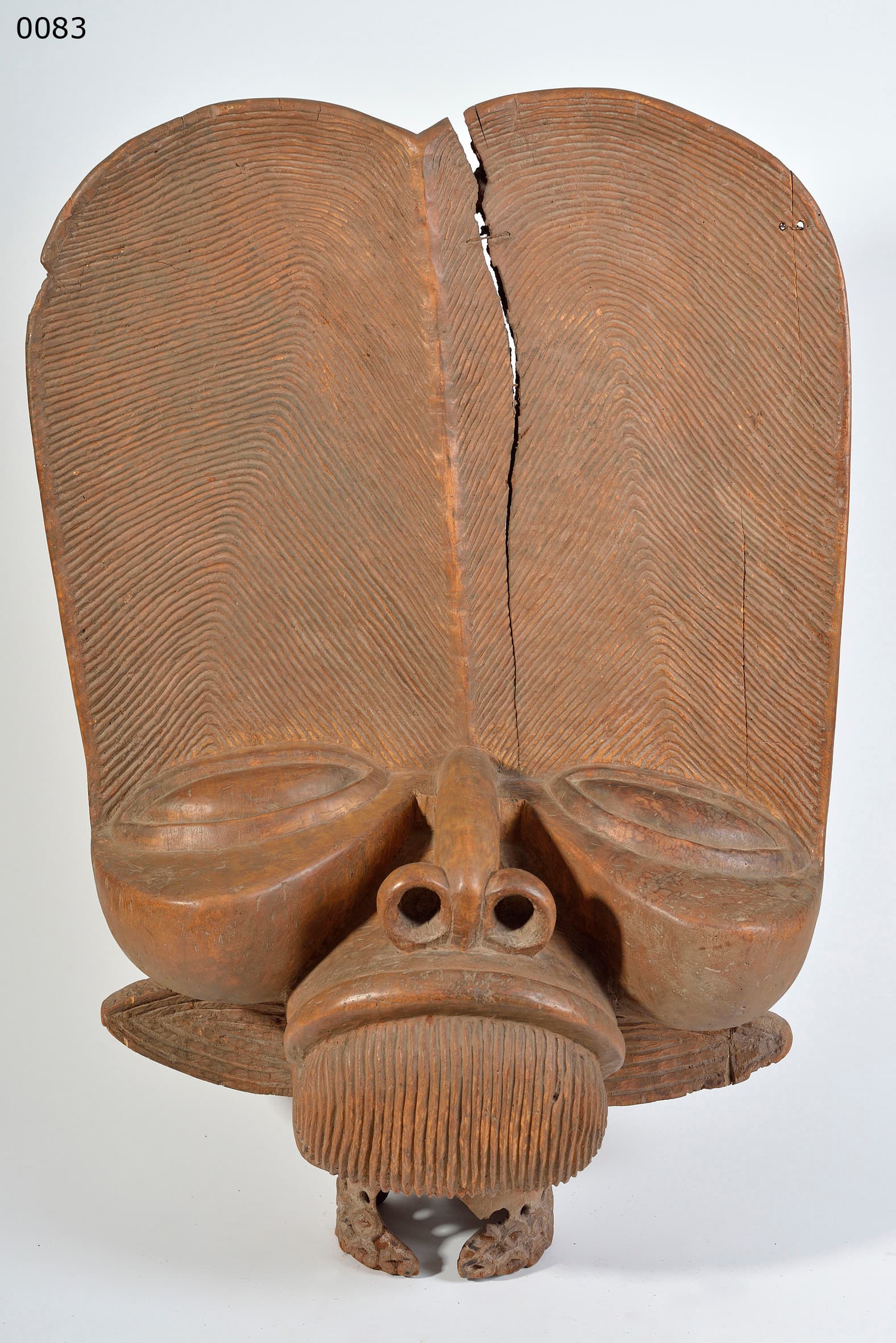
headcrest or shoulder mask (called BATCHAM or TSEMABU)
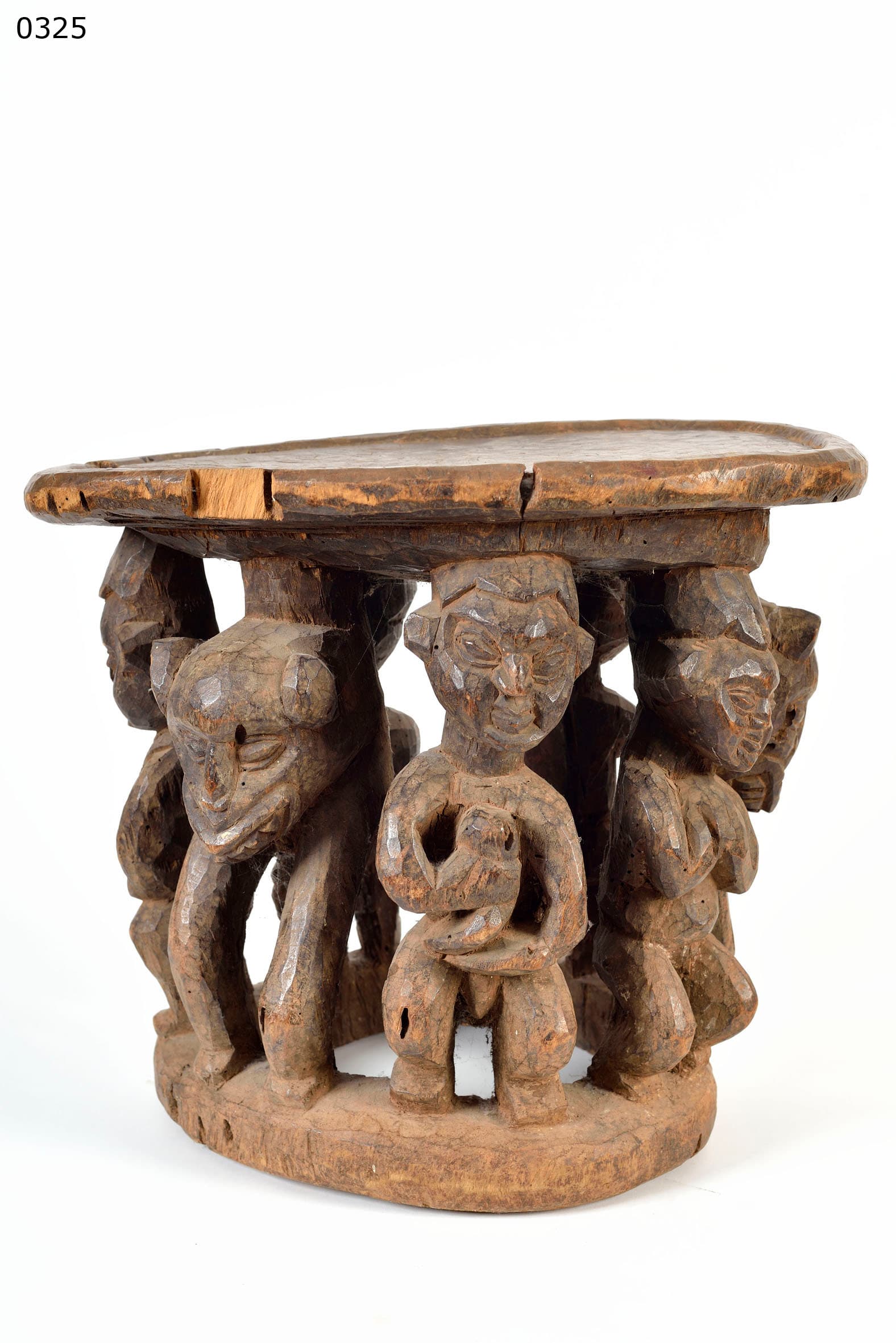
ritual stool
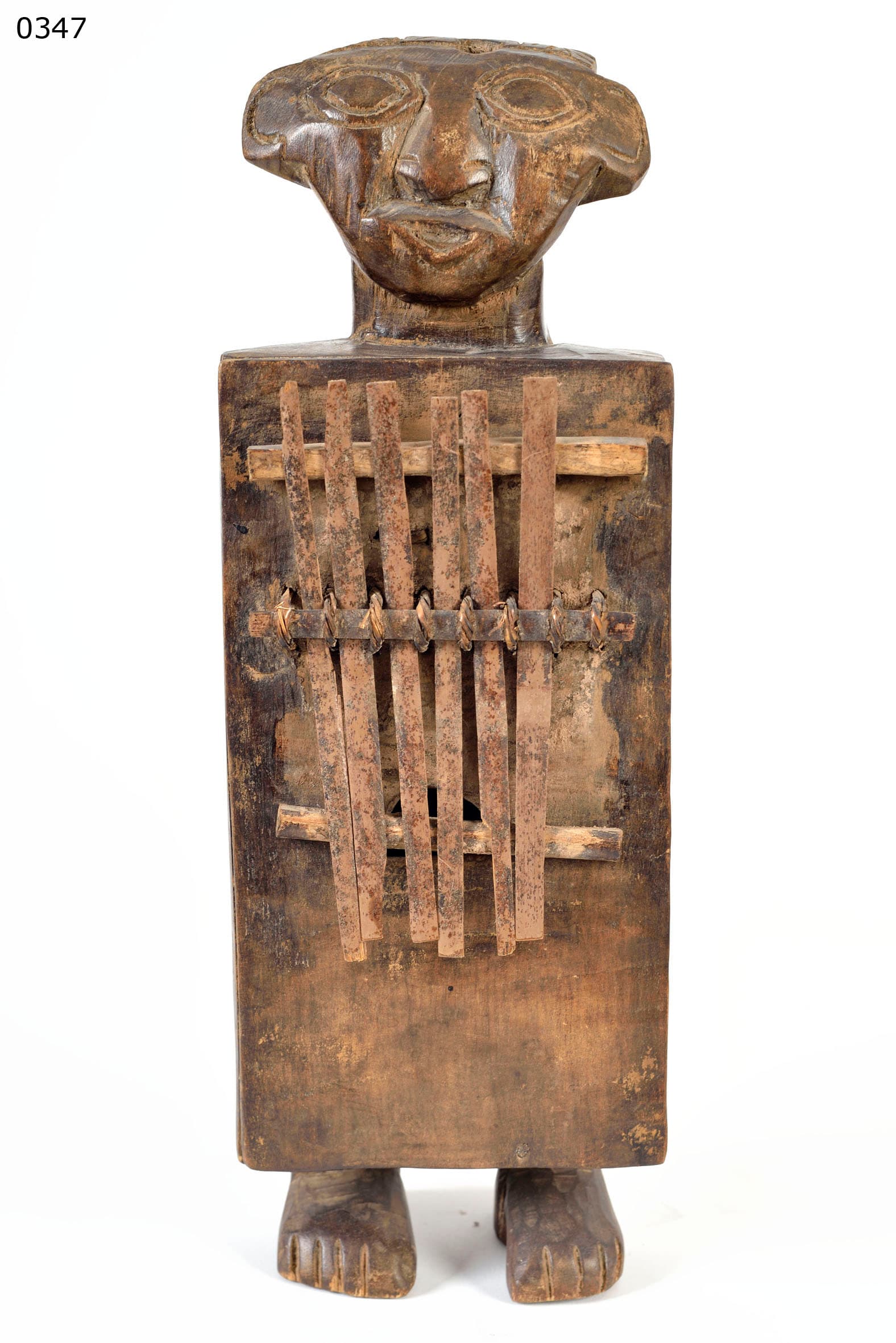
lamellophone