This 40 cm wooden sculpture depicts a robust male figure in a deep squatting posture, featuring oversized arms, hands, and feet, and a wide, flat face. The weathered, eroded wood retains faint traces of powdery blue pigment in its deepest crevices.
1. Aesthetic style — grassfields expressionism and hyper-musculature
The Bamileke people of the Cameroon Grassfields are traditionally associated with the expression of dynamic energy over anatomical realism. This figure displays a pronounced volumetric distortion. The head, hands, and feet are carved to oversized proportions, while the torso is compressed into a tight, athletic squat. This muscular geometry creates a sensation of compressed power — like a coiled spring — visually translating the authority of the ancestors and the ruling elite into a heavy, wooden monument.
2. Ritual function — the kwifoyn and ancestral vigilance
In the highly stratified kingdoms of the Grassfields, heavy statuary like this was traditionally owned by the Fon (king) or controlled by the Kwifoyn (the secret regulatory society). The deep squatting posture is not one of rest, but of vigilance and readiness. Placed in a royal shrine or a society meeting house, the figure is understood to have served as a sentry, embodying the strength of the lineage and warning citizens of the justice that awaited those who broke social taboos.
3. Physical patina — reckitt's blue and profound wood erosion
The patination on this figure shows deep-grain erosion, consistent with exposure to atmospheric humidity, heat, and insect activity. The deepest crevices of the carving retain traces of a powdery blue pigment. This is likely "Reckitt's Blue," an imported European laundry bluing agent that was utilized in early 20th-century African ritual contexts for its striking color and association with foreign wealth and power.
Summary
Projecting an aura of dynamic, muscular energy, this Bamileke figure is consistent with monuments of Grassfields royal authority. Its deeply eroded wood grain and the presence of historical blue pigment support its attribution as a 20th-century shrine guardian.
Written with AI assistance from the collection appraisal, object photography and our own research; editorially reviewed. Mistakes are possible — corrections are welcome. How we work →

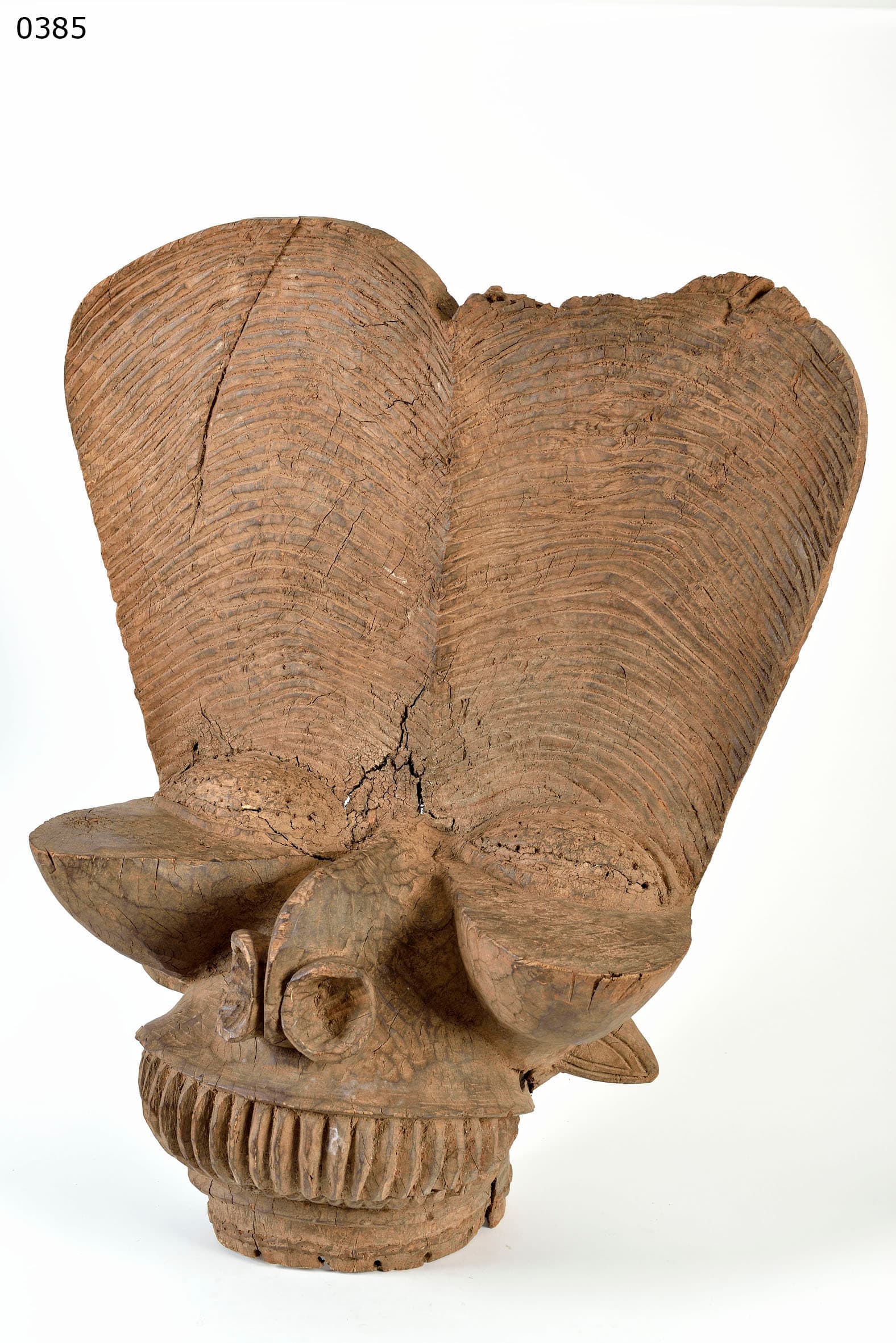
headcrest or shoulder mask (called BATCHAM or TSEMABU)

ritual stool
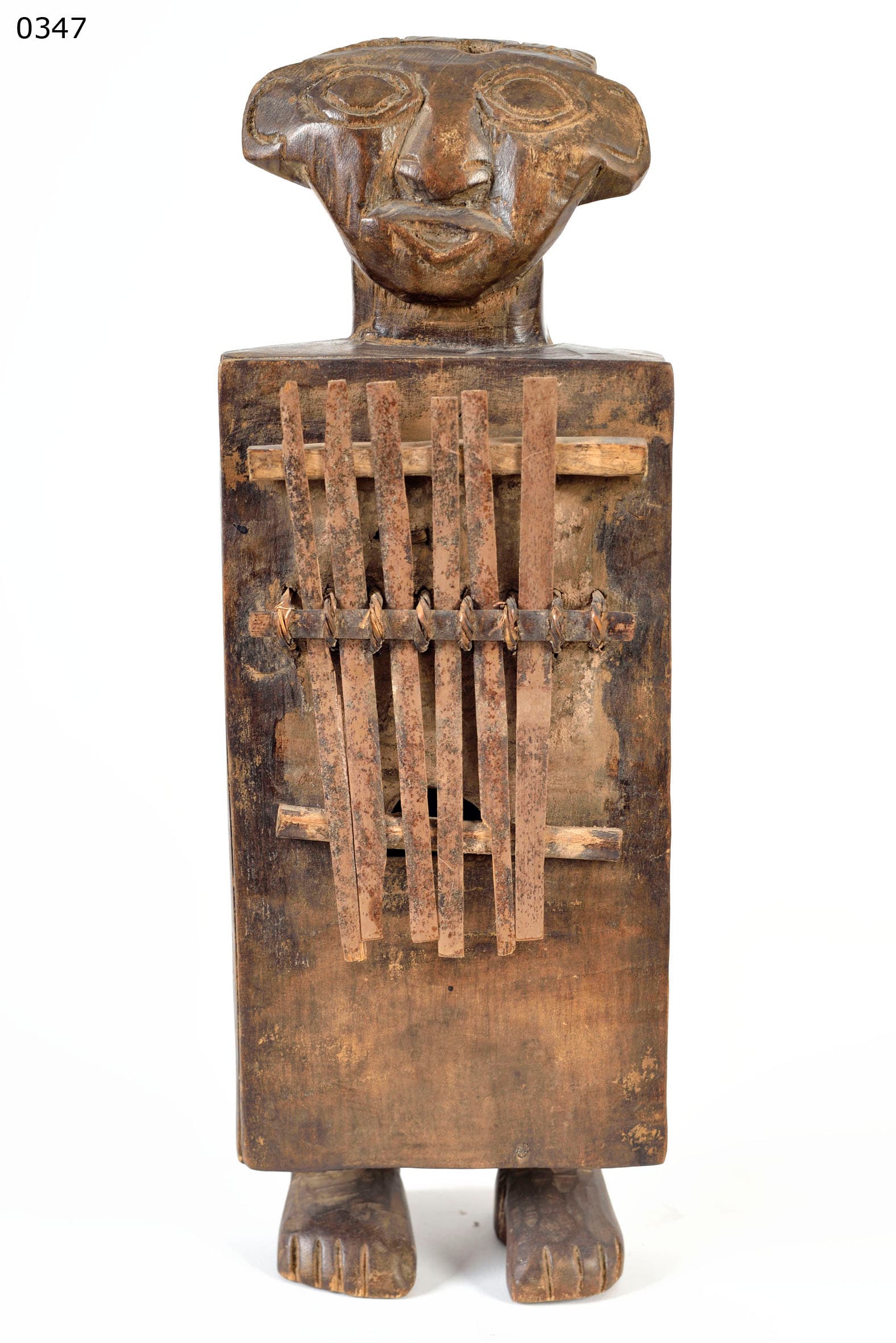
lamellophone