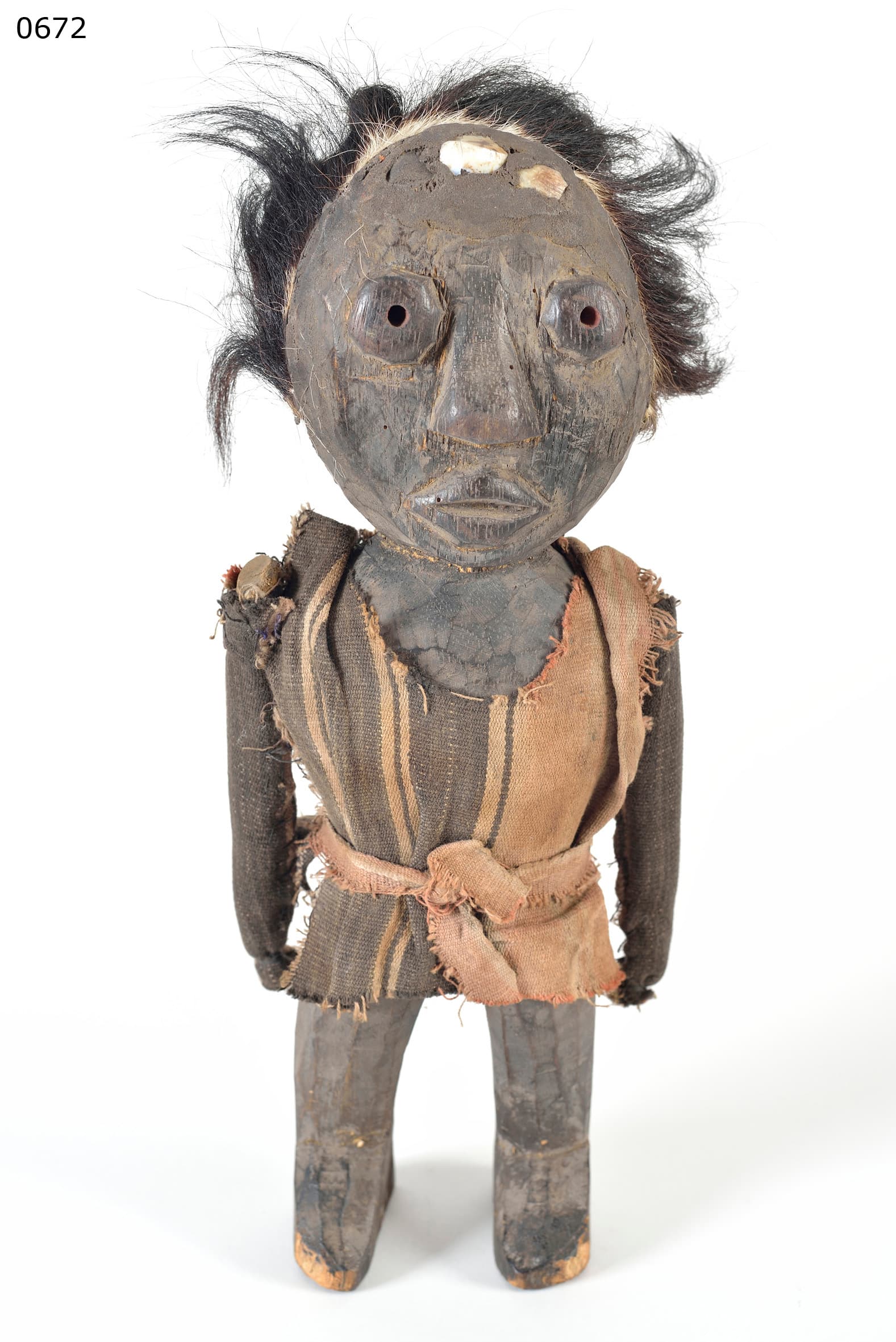
This unusual, squat wooden figure possesses a massive, spherical torso, short, thick legs, and an oversized, flat-topped head with deeply carved, bulging eyes. The surface is heavily blackened and encrusted with a thick, textured layer of hardened ritual matter.
1. Aesthetic style — volumetric deviation from canonical Sande aesthetics
The Mende people are universally renowned for the refined, delicate features of their Sande society masks (bundu), which idealize female beauty. This altar figure, however, represents a deliberate and radical departure from that aesthetic canon. It embraces a grotesque, heavy, and bulbous morphology. The massive, swollen abdomen and the wide, staring, geometric face are designed to project intimidating, raw power rather than elegance. This volumetric approach suggests the figure belongs to a different, highly secretive branch of Mende spiritual practice, utilizing deliberate disproportion to inspire awe.
2. Ritual function — healing cults and the containment of hale
While Sande and Poro govern general societal initiation, specialized Mende societies such as the Njayei or Yassi deal directly with madness, severe illness, and powerful magic. This robust figure likely served as a central altar object for such a healing or divinatory cult. Its massive torso acts as a conceptual container for hale — the potent, dangerous spiritual medicine or energy that healers must harness to cure afflictions. The figure was a focal point in the shrine room, acting as a physical anchor for the unpredictable spirits summoned during trance rituals.
3. Physical patina — sacrificial encrustation and shrine patination
The defining feature of this piece is its deeply encrusted, blackened patina. Unlike figures carved for public display, which are polished, this altar figure is coated in a thick, friable crust of dried blood, palm oil, chewed kola nuts, and earthen matter. This accumulation is the direct result of repeated sacrificial offerings necessary to "feed" and activate the spirit residing within the wood. The crust obscures the original tool marks, creating an organic, visually heavy skin that is consistent with intensive use in a closed shrine environment.
Summary
A rare and formidable departure from standard Mende artistry, this altar figure embodies the heavy, secretive power of Sierra Leonean healing cults. Its raw, bulbous form and profound sacrificial encrustation make it a significant example of esoteric spiritual practice.
Written with AI assistance from the collection appraisal, object photography and our own research; editorially reviewed. Mistakes are possible — corrections are welcome. How we work →