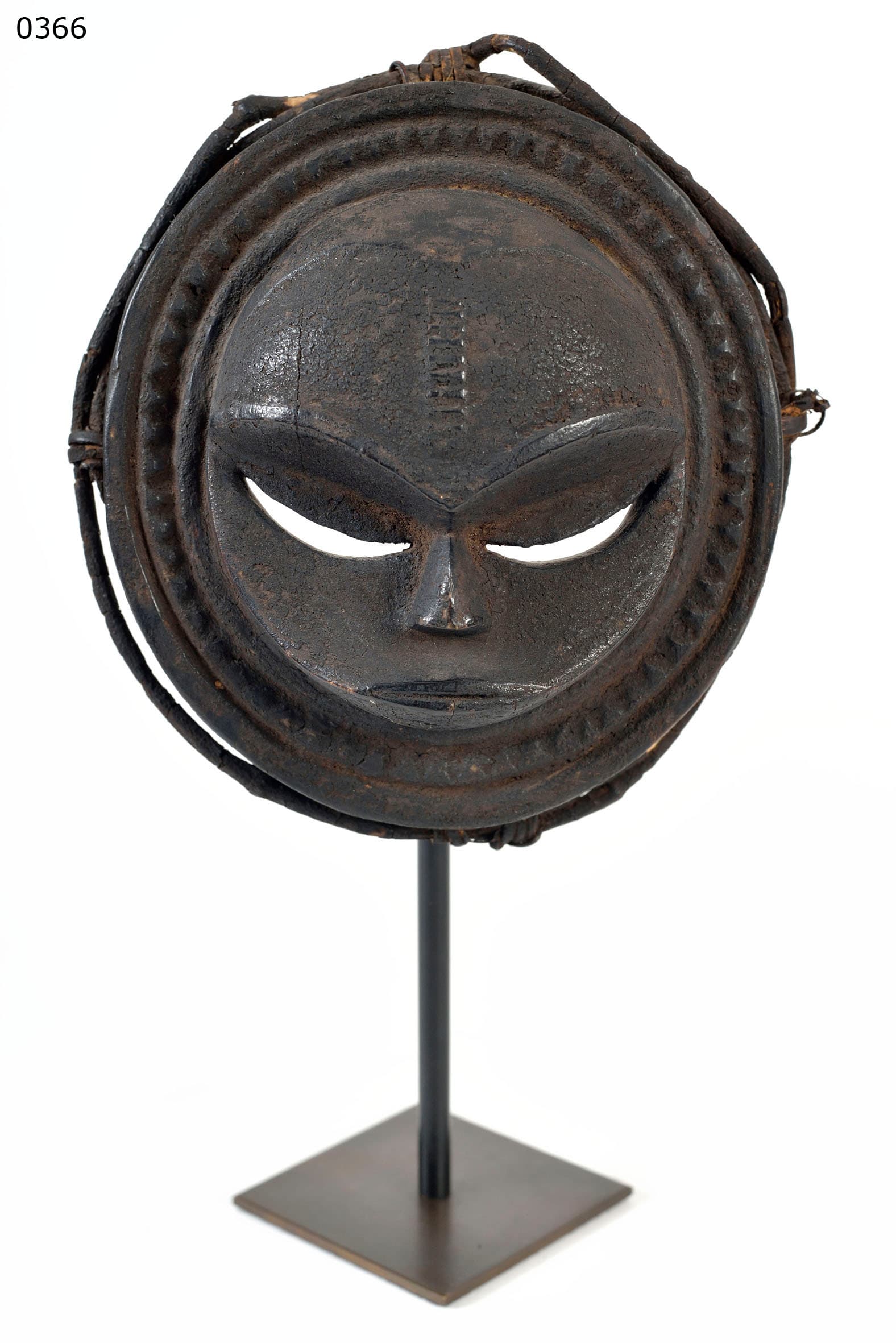
A serene 19th-century Dan Deangle mask (23 cm) from the Ivory Coast — narrow horizontal slit eyes intersected by a distinct band of white kaolin pigment, a refined nose, and full protruding lips, the wood displaying a dark, rich sweat-polished patina with numerous peripheral attachment holes for a lost fiber beard.
1. The deangle and idealized clairvoyance
Reflecting the classic traditions of idealized West African beauty, this 19th-century mask belongs to the Deangle (or Gle mu, "peaceful spirit") typology.
- Fluid Symmetry: The mask exhibits a refined fluid symmetry — prioritizing smooth sweeping volumetric curves.
- Kaolin Clairvoyance Band: The horizontal band of white kaolin clay painted across the eyes is a highly specific iconographic marker — symbolizing spiritual clairvoyance, purity, and the mask's ability to see beyond the physical world into the realm of the ancestors.
2. The jokor camp and the peacemaker
The Deangle is a benevolent joyful spirit.
- Forest-Village Intermediary: During the isolation of boys' initiation camps (Jokor) in the deep forest, this mask functioned as the vital peaceful intermediary between terrifying bush spirits and the human village.
- Maternal Reassurance: The dancer moved with graceful flowing steps to enter the village, collect food for the initiates, and entertain the women — the serene expression projects maternal warmth and reassurance to the mothers whose sons had been taken away into the dangerous initiation forest.
3. 19th-century antiquity and the "glass" polish
An attribution to the 19th century is supported by the mask's surface condition.
- Mirror-Like Jet-Black Polish: The front exhibits a deep glass-like patina — a mirror-like jet-black polish consistent with decades of being rubbed with palm oil and leaves to keep the spirit beautiful.
- Pre-Colonial Wear: The interior rim is deeply oxidized and stained by the sweat of generations of dancers — heavy wear around the peripheral holes (where a woven fiber or monkey-hair beard was repeatedly attached and detached) suggests genuine pre-colonial ceremonial use.
Summary
This 19th-century Dan Deangle mask is an exceptional example of West African idealized portraiture — radiating grace and spiritual clairvoyance. Its mirror-like handling polish and deep interior sweat oxidation support its significance as a highly accomplished work of classical African art.
Written with AI assistance from the collection appraisal, object photography and our own research; editorially reviewed. Mistakes are possible — corrections are welcome. How we work →