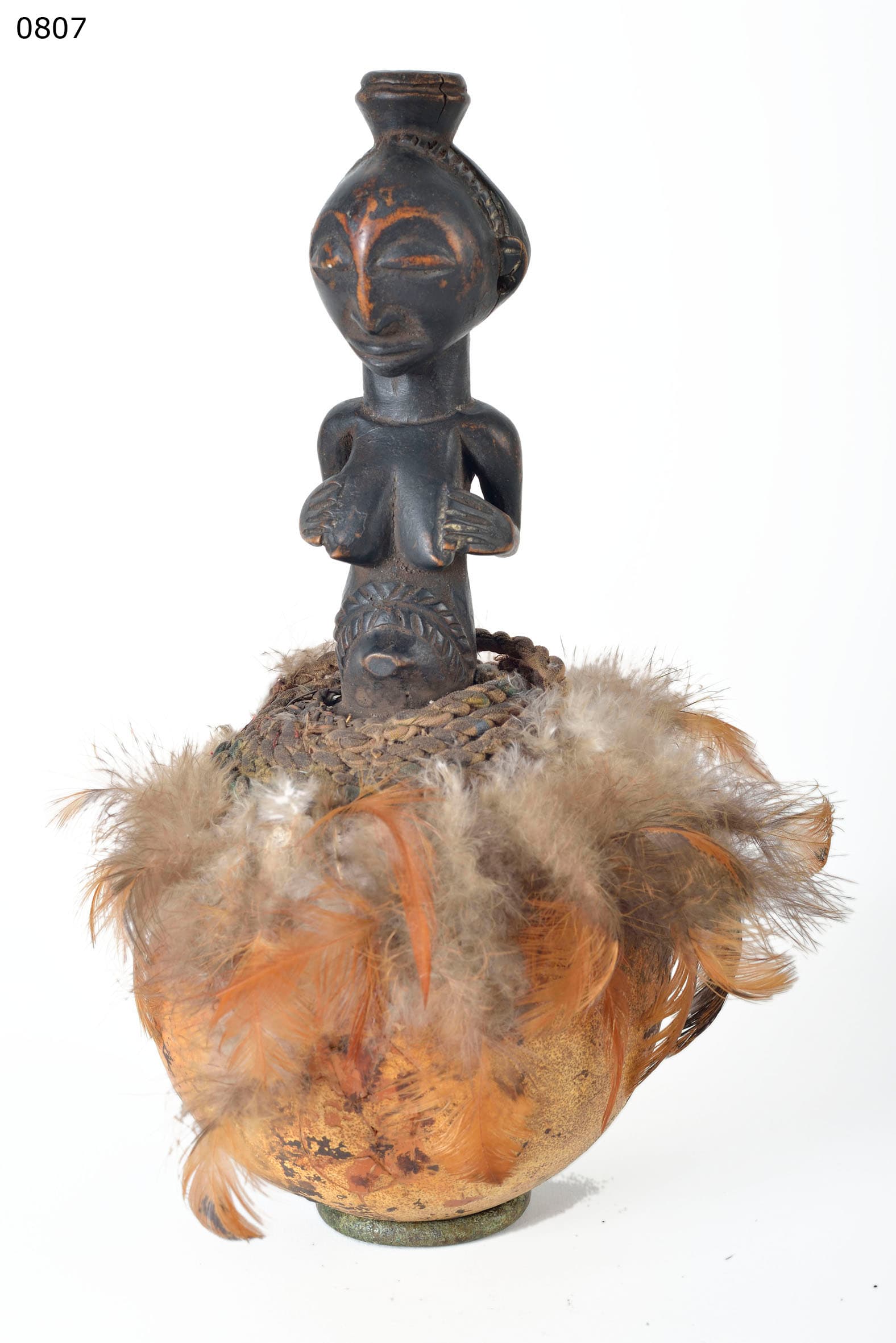
An elegantly proportioned Hemba Singiti (1st half 20th C., 56 cm) from DR Congo — a male figure standing with hands resting prominently on a rounded distended abdomen, the face a picture of absolute serenity with closed downcast eyes, topped by an intricate swept-back cruciform coiffure, the dark wood highly polished, the figure wearing an organic (cloth / leather) wrapping around its waist.
1. The singiti ideal and classical Hemba volumes
The Hemba (historically categorized with the Luba) are widely celebrated for producing the Singiti — a highly regarded form of classical idealized African portraiture.
- Harmonious Volumetric Balance: A balanced composition of rounded swelling volumes — from the domed forehead and serene heavy-lidded eyes to the distended belly and muscular thighs.
- Aristocratic Cruciform Coiffure: The highly complex swept-back cross-shaped coiffure is a hallmark of high-ranking Hemba aristocracy — meticulously carved to signal the elegance and cultured grace of the lineage founder.
2. Bvidye and the mausoleum of kings
This sculpture represents a Singiti — traditionally understood as the physical vessel for the spirit of an ancestral chief (fumu).
- Funerary Mausoleum: Not kept in a common house but housed in a special funerary mausoleum or shrine alongside the statues of his predecessors.
- Umbilical Continuity: The posture — hands framing the navel — is deeply symbolic in Luba / Hemba cosmology, representing the lineage's continuity linking past, present, and future generations through the umbilical center of the ancestor. The chief's spirit (bvidye) was believed to reside within the wood, guiding the current ruler in matters of war and justice.
3. Mirror polish and intimate curation
The surface shows wear consistent with age and traditional use.
- Deep Polish: A deep, dark, highly reflective polish — a patina consistent with long-term handling.
- Decades of Care: Suggestive of decades of care during the first half of the 20th century, where shrine keepers traditionally washed such statues, rubbed them with palm oil, and polished them to honor the ancestor. The survival of the organic waist wrapping is compatible with curated use in a Congolese sanctuary.
Summary
The Hemba Singiti is highly regarded within classical African portraiture, and this figure is a serene and finely carved example of that tradition. Its balanced volumes and lustrous handling polish make it a distinguished representative of this carving style.
Written with AI assistance from the collection appraisal, object photography and our own research; editorially reviewed. Mistakes are possible — corrections are welcome. How we work →