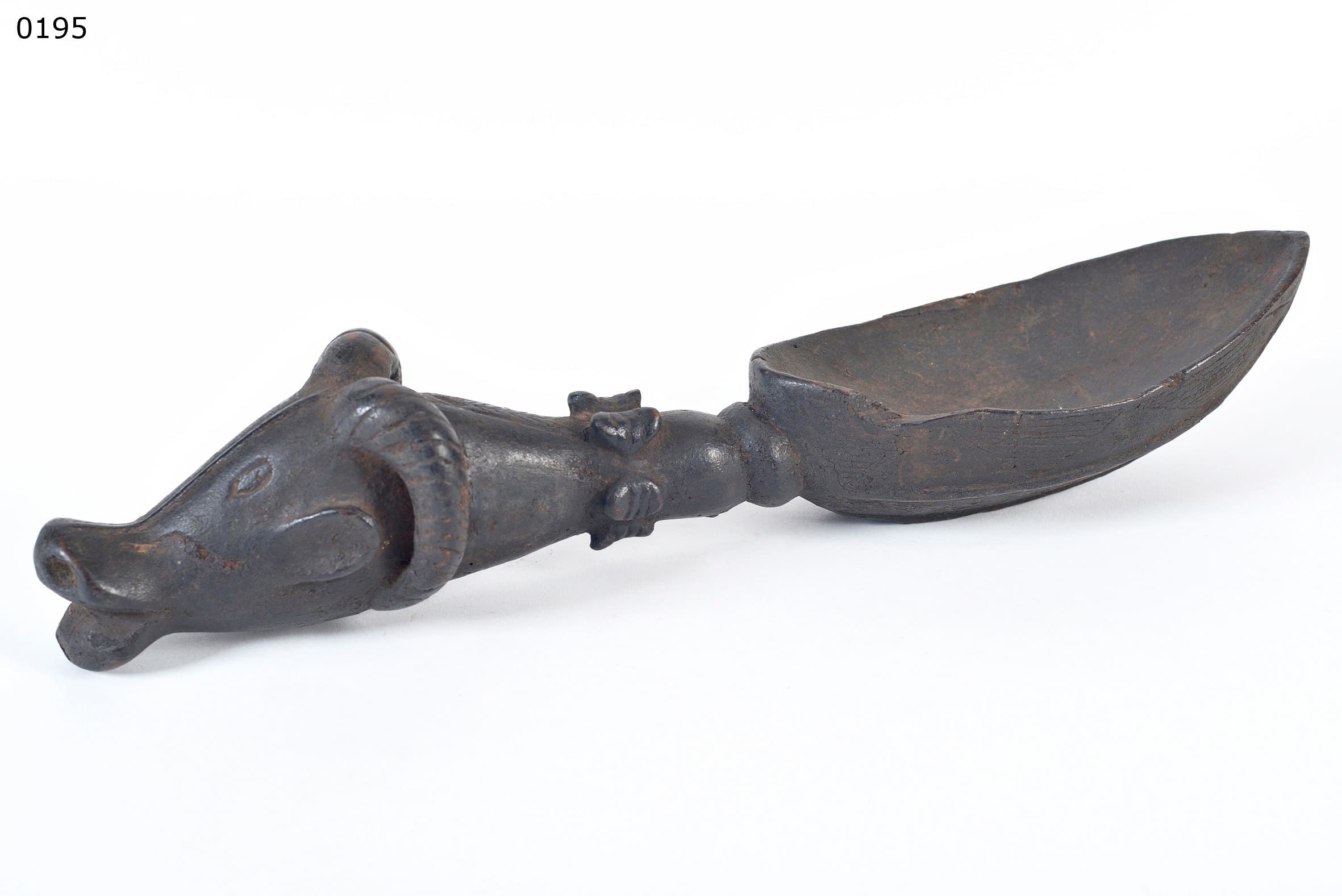
This large, elegantly carved wooden spoon features a deep, elongated, leaf-shaped scoop at one end, transitioning into a handle sculpted as a stylized, horned animal head (likely a cow or ram) with an open, toothed jaw. The dark, dense wood is polished to a high gloss from extensive handling.
1. Aesthetic style and regional traits
This object is a Wunkirmian or Wakalua (feast spoon), a classic example of Dan functional sculpture from the Ivory Coast. Dan carvers are celebrated for their ability to infuse utilitarian objects with distinctive anthropomorphic or zoomorphic grace. The transition from the massive, functional scoop into the neck and head of the horned animal is seamless and highly aerodynamic. The abstraction of the animal — focusing on the imposing horns and aggressive jaw — projects an aura of strength, vitality, and untamed bush energy.
2. Ritual function and secret society context
This is not a culinary tool, but a prestigious badge of honor. It is traditionally the property of the wunkirle, the most hospitable, generous, and successful farming woman in a Dan village. During major festivals, masquerades, or communal planting events, the wunkirle dances with this massive spoon, filling it with rice or coins and throwing them to the crowd. The spoon is believed to hold its own spiritual power (dü), aiding the woman in her agricultural endeavors and solidifying her respected matriarchal status within the community.
3. Physical patina and age
The suggested 19th-to-early-20th-century age of this spoon is supported by its deep friction patina. The entire object has been handled so frequently that the dense tropical wood has achieved a glassy, buttery sheen characteristic of long-term handling. The interior of the bowl shows distinct, smooth wear consistent with decades of scooping and distributing grain. Furthermore, the edges of the animal's ears and horns appear softly blunted, consistent with years of ceremonial use and storage.
Summary
An elegant convergence of utility, zoomorphic sculpture, and female prestige, this Dan Wunkirmian is a highly accomplished work. Its elegant lines and profound, handling-worn friction patina align with its role as a significant symbol of matriarchal generosity in West Africa.
Written with AI assistance from the collection appraisal, object photography and our own research; editorially reviewed. Mistakes are possible — corrections are welcome. How we work →