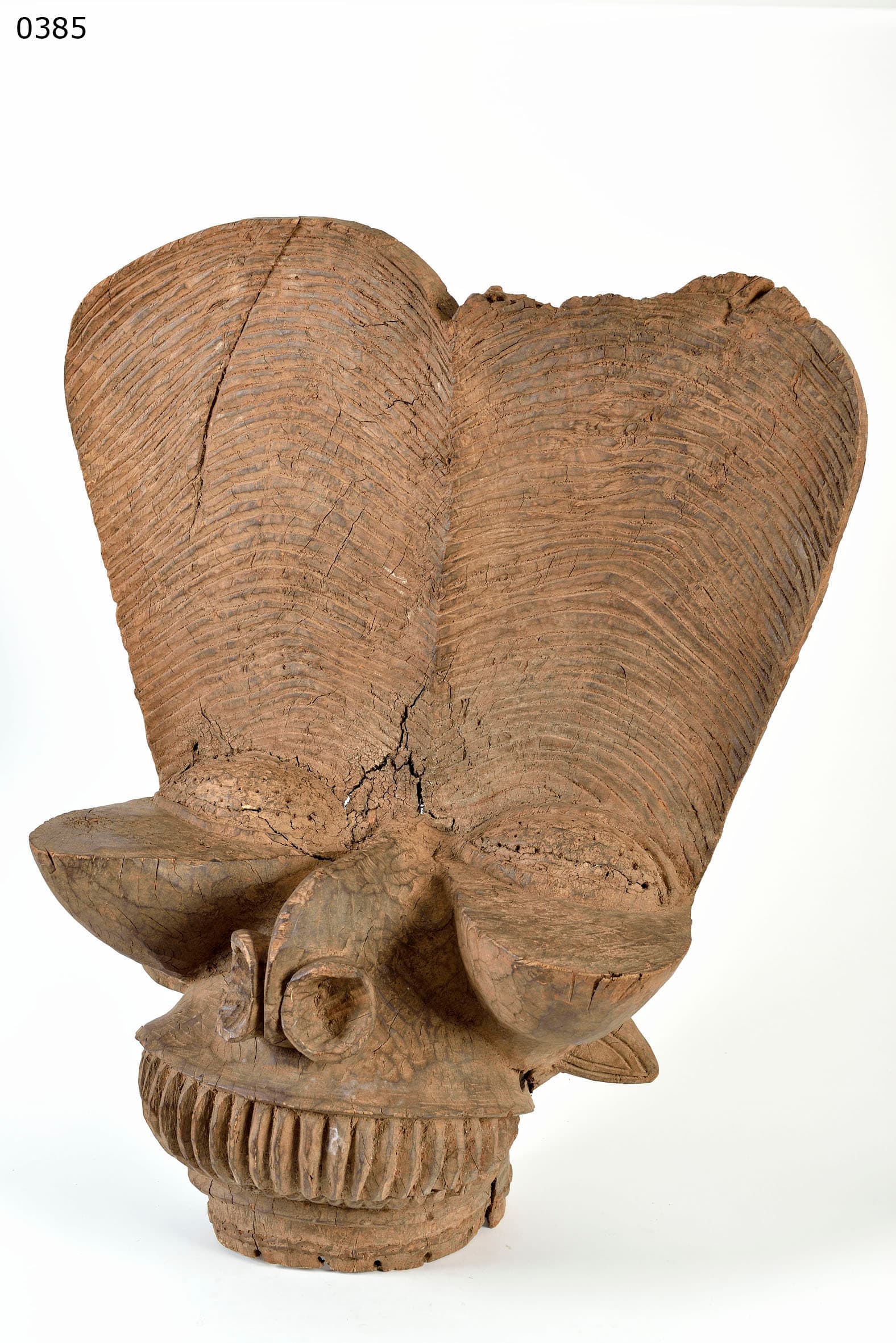
This fierce, stylized wooden feline head exhibits a gaping jaw exposing large, carved teeth, alert upright ears, and meticulously carved linear striations representing the mane. The dark, aged wood is heavily encrusted with soot, with the high points of the snout rubbed to a smooth, oily finish.
1. Aesthetic style and regional traits
This is a notable example of Grassfields zoomorphic carving, capturing the powerful essence of the royal feline. While leopards are the most common royal animals in the region, lion masks (nku) are rare and represent a high position in the Bamileke animal hierarchy. The carver has balanced the gaping jaws with the tight, rhythmic, linear patterning of the mane, creating a mask that conveys kinetic, aggressive energy while maintaining the strict, formal stylization associated with royal court art.
2. Ritual function and secret society context
This mask is traditionally associated with the Kuosi (or Kwifoyn), the elite, closed regulatory society of the Bamileke kingdom, composed of royals, wealthy warriors, and powerful retainers. The lion is considered an alter-ego of the Fon (King). When danced during the funeral of a king or during high-stakes judicial proceedings, the wearer is said to have channeled the power of the lion to enforce the law, execute criminals, and remind the populace of the authority of the royal court.
3. Physical patina and age indicators
Having been published in art literature, its documented history supports its attribution. The physical patina is consistent with active ritual use. The deep recesses of the mouth and mane are packed with a thick, friable crust of shrine soot and sacrificial matter. Conversely, the tip of the nose and the prominent teeth exhibit a glassy friction polish, suggesting extensive handling by Kuosi society dancers as they performed the movements of the lion.
Summary
This Bamileke lion headcrest is a rare manifestation of Cameroonian royal authority. Its dynamic, aggressive carving, combined with a published provenance and a handled sacrificial patina, support its attribution as a significant artifact of Grassfields justice.
Written with AI assistance from the collection appraisal, object photography and our own research; editorially reviewed. Mistakes are possible — corrections are welcome. How we work →

headcrest or shoulder mask (called BATCHAM or TSEMABU)

ritual stool
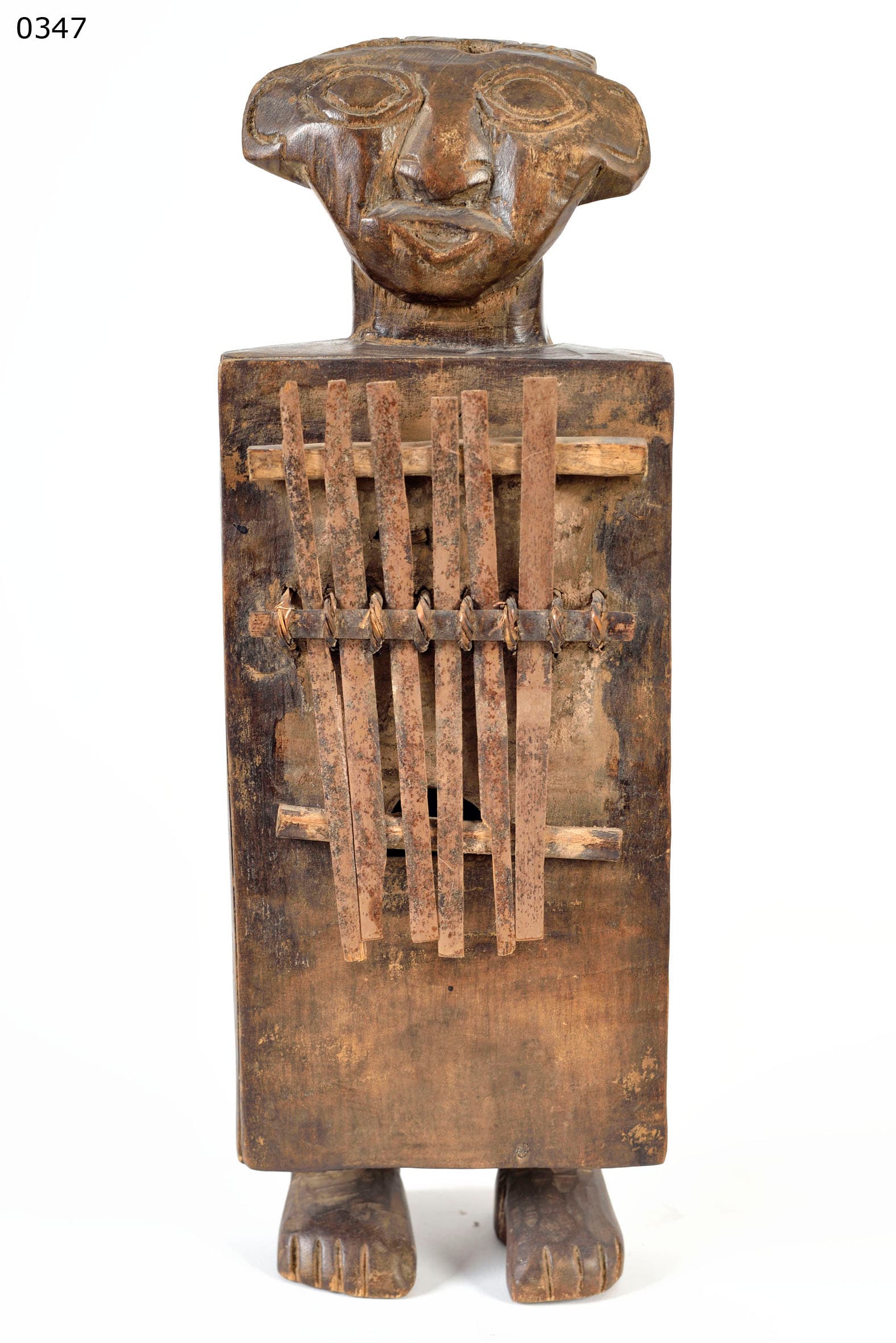
lamellophone