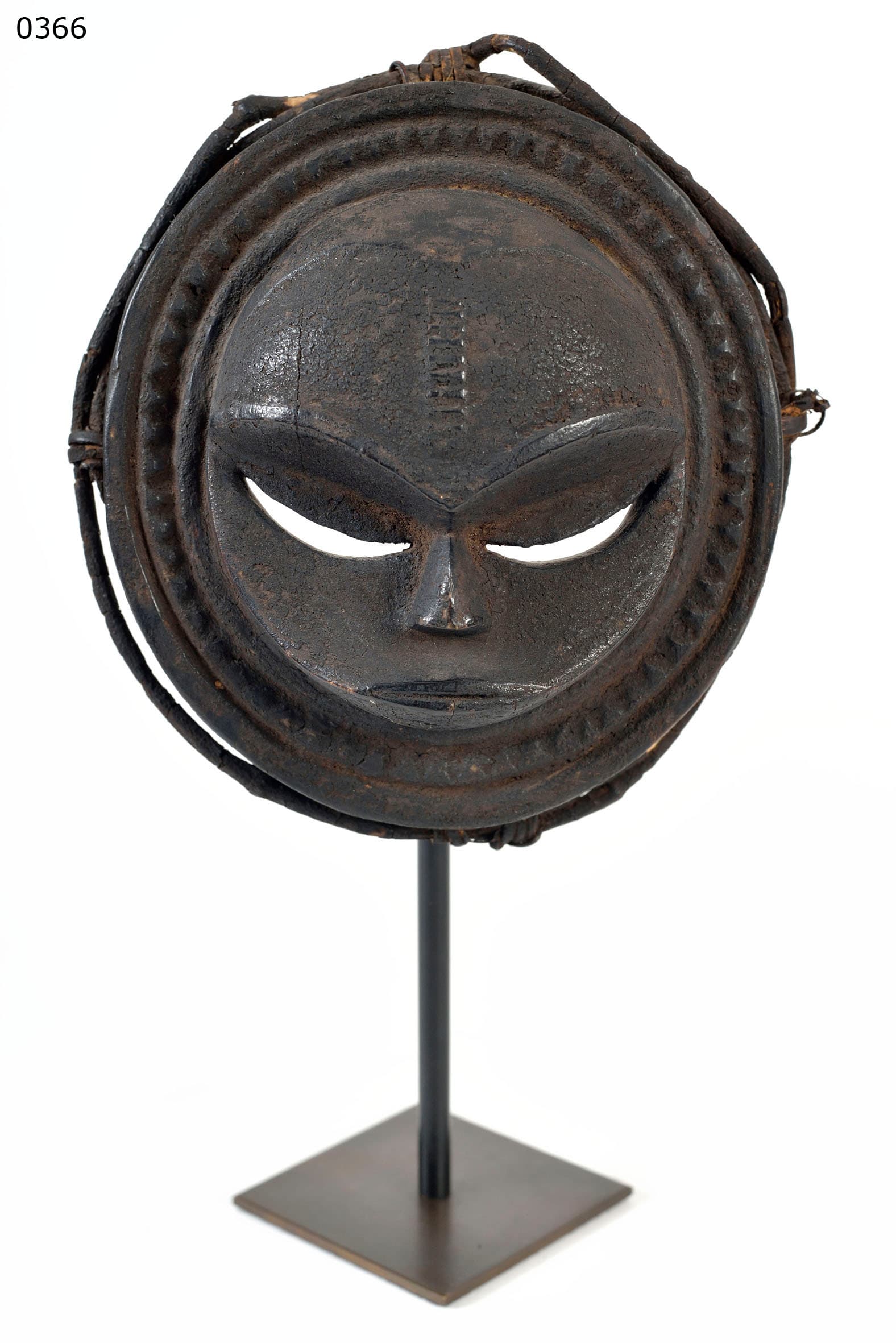
A powerful dark wooden face mask adorned with a dense halo of white cowrie shells across the forehead, a heavy beard composed of large, cast brass bells and colorful trade beads, framed by dry, natural raffia fibers.
1. Aesthetic style and regional traits
This is a notable example of a Dan Gunye Ge (racing mask) or a high-status entertainment mask, distinguished from the standard wooden face through extensive material accumulation. The idealized facial carving — with its wide, alert circular eyes and open mouth — is framed by elements representing the wealth of the community. The application of cowries (traditional currency) and imported brass bells transforms the mask into a display of economic and spiritual power. Material accumulation in Dan masking signals institutional rather than household scale of devotion.
2. Ritual function and acoustic authority
The heavy bronze bells serve a vital dual purpose. Visually, they display the prestige of the mask's owner or society. Acoustically, they provide a rhythmic accompaniment during the mask's dynamic, athletic performance. The clashing of the bells announces the spirit's arrival from a distance, demanding immediate respect, clearing the path, and adding an auditory dimension to the masquerade. The acoustic signature is part of the spirit's identity — traditionally, viewers recognize the mask by sound before sight.
3. Physical patina and signs of age
The mask displays a rich, multi-media patina. The dark, polished surface of the wooden face contrasts with the aged, brittle raffia, the tarnished bronze bells, and the dirt-ingrained stringing of the cowrie shells. The preservation of this complete, complex assemblage suggests it was actively danced and valued as a significant ceremonial ensemble.
Summary
A dynamic Dan mask that utilizes material accumulation — cowries, bells, and beads — to project economic and spiritual authority. Its complete assemblage and rich patina suggest a danced history, making it a notable ethnographic work.
Written with AI assistance from the collection appraisal, object photography and our own research; editorially reviewed. Mistakes are possible — corrections are welcome. How we work →