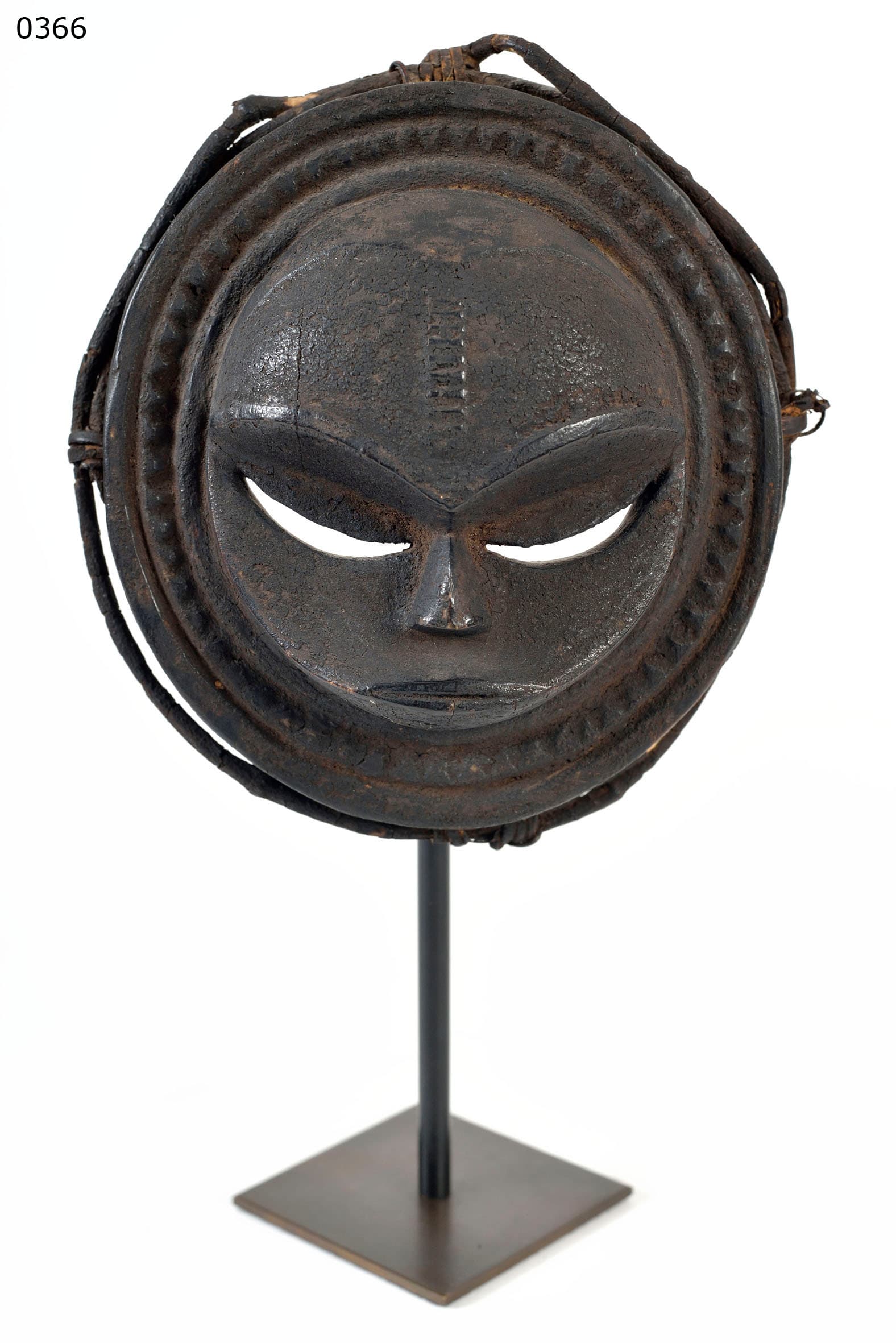
A monumental, dark wooden face mask framed by a heavy collar of large, cast bronze bells and a crown of embedded cowrie shells. The face features large, pierced eyes and a prominent, open, smiling mouth displaying carved teeth.
1. Aesthetic style and regional traits
This mask departs from standard Dan portraiture through its massive accumulation of prestige materials. The addition of a dense, heavy collar of cast bronze bells and a crown of white cowrie shells (historical traditional currency) transforms the mask into a significant display of economic wealth and societal importance. The wide, alert eyes and open mouth are associated with a highly active, dynamic spirit, traditionally linked to elite entertainment or racing (Gunye Ge). Material accumulation in Dan masking signals institutional rather than household scale of devotion.
2. Ritual function and acoustic authority
In West African masking, the auditory impact is often as important as the visual. The massive array of heavy bronze bells serves a vital, functional purpose during the masquerade. As the dancer moves, the rhythmic clashing of the bells announces the spirit's arrival from a distance, demanding that the path be cleared and immersing the entire village in a sensory experience that commands respect. The acoustic identity of the mask is part of its institutional identity — viewers recognize the spirit by sound before sight.
3. Physical patina and indications of age
The artifact exhibits a rich, complex, and seemingly un-restored patina. The wooden face exhibits a deep luster consistent with ceremonial wear. The heavy bronze bells are deeply oxidized with natural tarnishing and verdigris, while the thick fiber cords binding the bells and cowries are brittle and stained with accumulated dust and ceremonial oils.
Summary
A striking and highly sensory Dan mask that utilizes heavy bronze bells and cowrie shells to project wealth and spiritual authority. Its complete assemblage and rich patina make it a notable ethnographic example from the Ivory Coast.
Written with AI assistance from the collection appraisal, object photography and our own research; editorially reviewed. Mistakes are possible — corrections are welcome. How we work →