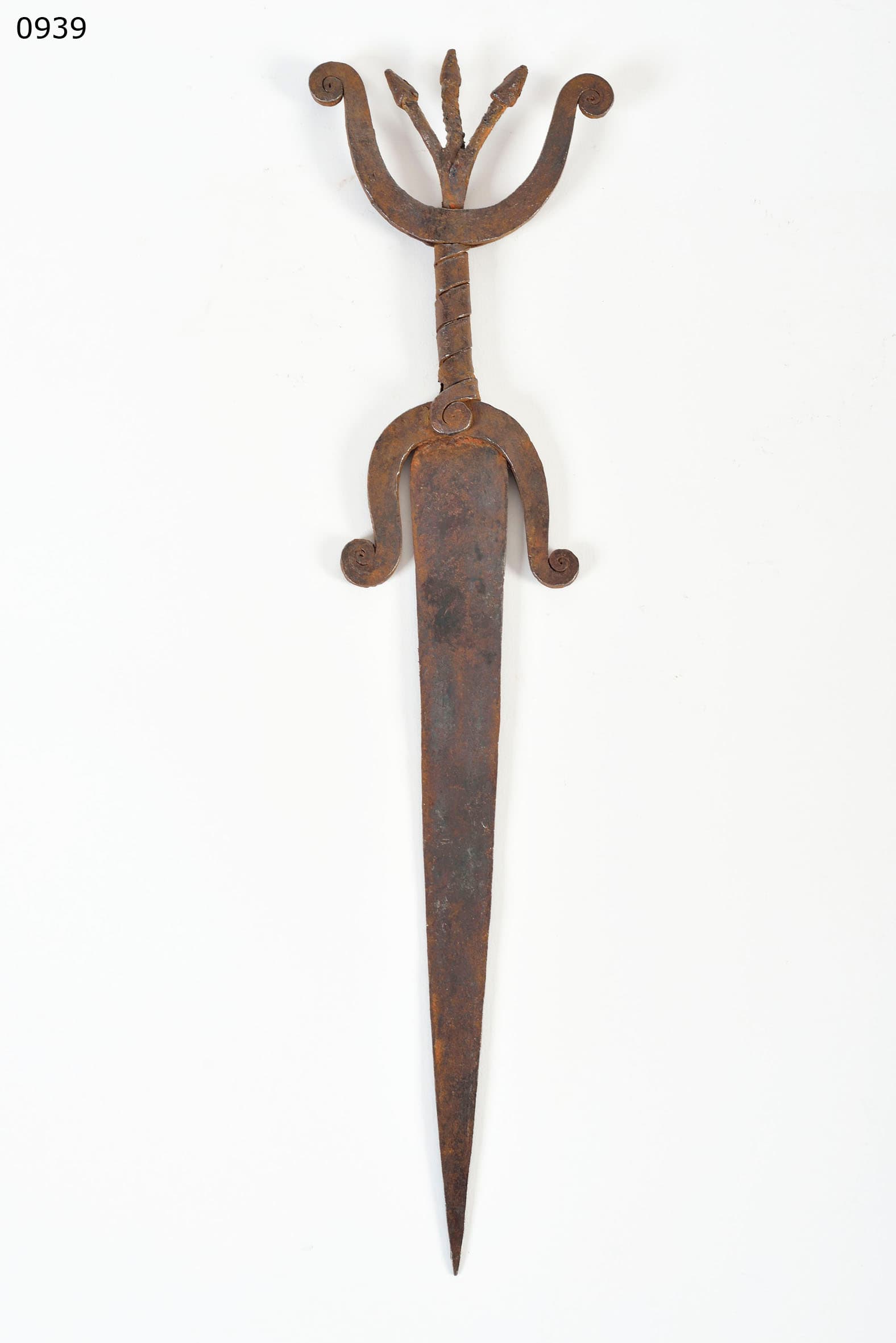
One of two flat, leaf-shaped iron knives. This piece features a highly ornate, non-functional hilt with a tightly spiraled grip, sweeping scroll-like crossguard, and a trident-like pommel. It displays a dark, matte oxidized finish indicative of historic, non-combat use.
1. Aesthetic style and regional traits
The Goemai people, situated in the culturally rich Benue River valley of Nigeria, excel at subverting the utility of iron weaponry into pure abstract art. This knife showcases exceptional forging techniques, particularly the ability to draw out the iron into thin, graceful coils and elaborate, symmetrical scrolls at the crossguard, terminating in a striking trident-form pommel. By rendering the handle effectively unusable for combat, the blacksmith transforms a weapon of death into a canvas of life, demonstrating supreme control over the ferrous medium.
2. Ritual function and insignia of rank
These elaborate knives were never intended to cut flesh; they are pure insignia of rank. They were held aloft by chiefs, elite warriors, or senior members of the Komtin or Kwompten healing and divination societies during public ceremonies and ritual dances. The flashing of the iron in the sun, coupled with the complex, regal design of the hilts, visually separated the leaders from the common populace, acting as a metallic scepter associated with leadership and social authority.
3. Physical patina and age indicators
The traditional use of this prestige item is suggested by its patination and edge condition. Unlike functional daggers, the blade lacks the striations, chips, and asymmetrical wear of active sharpening. Instead, the iron is covered in a uniform, dark brown, and highly stable oxidized patina. This smooth, matte finish is consistent with being stored indoors, occasionally oiled, and handled during major festivals over the course of the early 20th century.
Summary
Subverting martial utility for delicate, spiraling ornamentation, this Goemai prestige knife is a notable example of Nigerian iron forging. Its dark, stable patina and unsharpened blade support its attribution as a treasured emblem of Benue Valley leadership.
Written with AI assistance from the collection appraisal, object photography and our own research; editorially reviewed. Mistakes are possible — corrections are welcome. How we work →