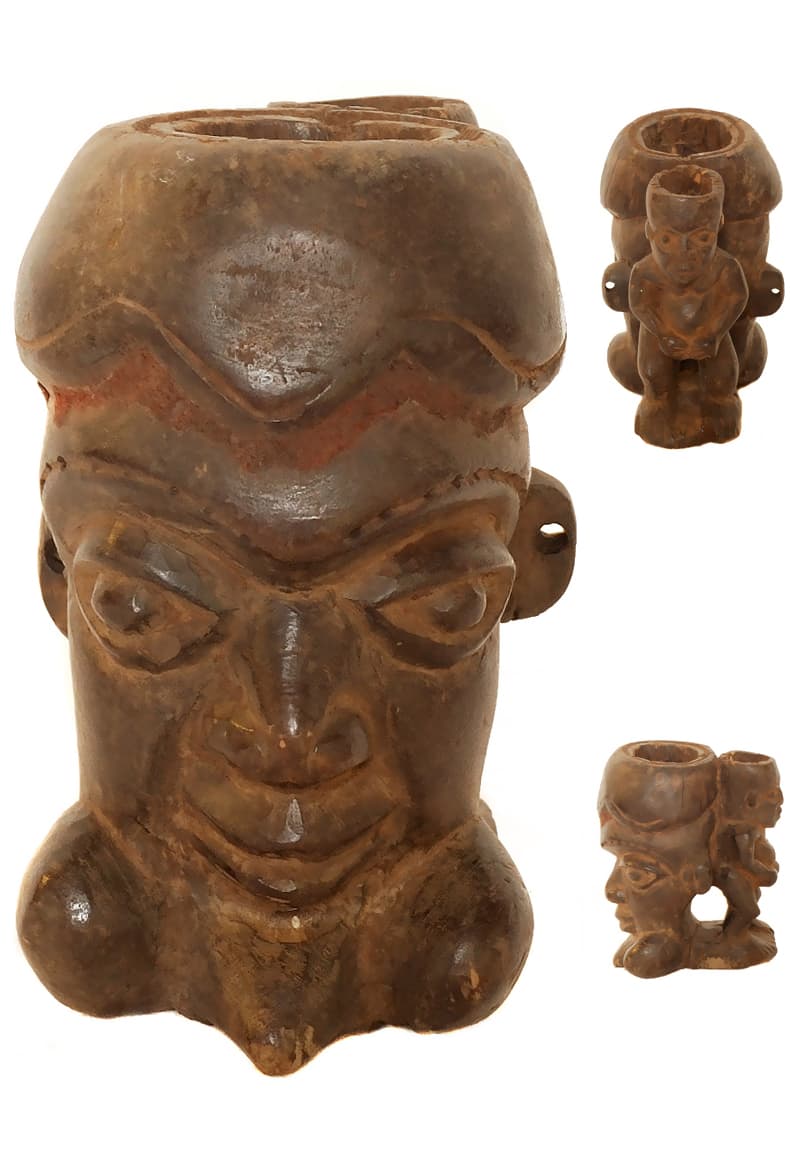
A monumental wooden pull-on helmet mask characterized by an enormous, ballooning lower face, a wide grin showing teeth, and a massive, towering coiffure comprised of dozens of intricately carved, interlocking stylized human heads.
1. Aesthetic Style and the Master Carver
This mask is a distinctive anomaly in Grassfields art, attributed to the historically documented carver Fai Mankoh Njong (or his immediate workshop) of the Oku region. The aesthetic is incredibly bold and highly expressionistic. The deeply carved, inflated cheeks and wide eyes project an intense, almost overwhelming psychological presence. The defining feature — the towering, hive-like headdress composed of miniature, interconnected heads — is a brilliant abstraction of a high-ranking chieftain's prestige cap, executed with a level of spatial complexity and technical skill associated with the carver's reputation.
2. Ritual Function and the Privilege of Rank
Unlike standard face masks, this massive wooden sculpture is designed to be pulled entirely over the wearer's head. The sheer weight and elaborate iconography of the mask indicate that it was reserved for individuals of the highest social strata. In the fiercely hierarchical Oku and Bamileke societies, the right to wear a mask topped with such a complex, status-defining "hood" was a strictly guarded privilege. It was danced during elite ceremonies, royal funerals, or secret society gatherings to physically and spiritually elevate the wearer above the common populace.
3. Patina, Material Weathering, and Indications of Age
The dark, uniform patina covering the wood may reflect careful preservation and ritual oiling. The interior of the helmet section shows smoothed wear and localized staining where it rested heavily against the shoulders and head of the dancer. The minor edge abrasions along the intricate outer heads of the coiffure are consistent with active use in dynamic, physically demanding Grassfields performances prior to its acquisition.
Summary
A striking example of volumetric distortion and structural complexity, this mask represents a highly developed form of individual artistic expression in traditional African carving. Attributed to a documented carver, it is a significant artifact of Oku royal performance.
Written with AI assistance from the collection appraisal, object photography and our own research; editorially reviewed. Mistakes are possible — corrections are welcome. How we work →