Overview
The Oku people represent one of the most culturally complex and artistically prolific centralized polities within the North West Region of the Republic of Cameroon. Speaking a language categorized within the Central Ring Grassfields subgroup of the Southern Bantoid language family, the group's autonym is transcribed variably in the linguistic and ethnographic record as Ebkuo, Ekpwo, Ukfwo, Bvukoo, or Kuɔ. Within their native linguistic framework, the language itself is referred to as əblam əbkwo ("language of the Oku"). However, "Oku" remains the standard exonym universally utilized in historical literature, museum database taxonomies, and international art historical discourse to identify both the people and their material culture.
Geographically, the Kingdom of Oku—traditionally organized as a fondom—is situated in a highly elevated, rugged Afromontane environment within the Bui Division. The territorial heart of the kingdom is anchored by Mount Oku, the second-highest peak in West Africa reaching an elevation of 3,011 meters, and the sacred crater lake, Lake Oku, which features prominently in the group's cosmological and creation narratives. This specific topography encompasses the Kilum-Ijim forest, a critical ecological zone that has historically shielded the kingdom from extensive external military incursions while simultaneously providing a rich repository of natural resources integral to their material culture. The forest supplies the dense, slow-growing hardwoods required for classical monumental carving and sustains populations of the critically endangered Bannerman’s turaco, whose crimson feathers (Fen) serve as paramount markers of royal prestige and elite masquerade regalia across the region. Oku is bordered by several other prominent Grassfields chiefdoms with whom they share deep historical, artistic, and trade relationships: the Kom to the northwest, the Nso to the east, the Babungo to the south, and the Babanki (Kedjom) to the southwest. Contemporary population estimates place the Oku between 87,000 and 145,000 individuals, primarily engaged in subsistence agriculture on the steep mountain slopes, commercial coffee cultivation, and highly specialized traditional crafts, notably woodcarving and blacksmithing.
The socio-political organization of Oku is characterized by a deeply stratified, patrilineal hierarchy organized around a dualism of authority. At the visible apex is the King, known as the Ebfon or Fon, who serves as the paramount religious, economic, and political leader of the kingdom. However, the Fon does not wield absolute, autocratic power. His authority is fundamentally inextricably linked to, and rigorously regulated by, the Kwifon (or kwifoyn), the supreme, male-only regulatory and secret society. The political architecture of Oku functions as a delicate equilibrium: the Fon embodies the benevolent, fertile, and hyper-cultural aspects of the state, while the Kwifon executes the harsh judicial, disciplinary, and martial functions necessary for state survival and social order.
Within the broader canon of African art, the Oku hold a position of paramount importance specifically for their monumental, intensely expressive wooden masquerades and their complex corpus of regulatory arts. They are globally recognized for their heavy, horizontally worn helmet masks representing powerful fauna—most notably the buffalo, elephant, and ram—as well as their severe anthropomorphic leader masks. Unlike the highly decorative, delicate openwork styles of their Babanki neighbors, or the heavily brass-ornamented royal arts of the Bamum kingdom, classical Oku sculpture is defined by its rugged monumentality, deep sacrificial patinas, and an uncompromising adherence to esoteric ritual function over purely aesthetic display. In Oku, art is never produced within an "art for art's sake" paradigm; every carved mask, beaded prestige object, and ceramic ritual vessel operates as an active agent of social control, justice, and existential stability, mediating between the visible world of the living and the invisible realm of ancestors and supernatural forces.
Cultural Context
The cultural universe of Oku is anchored by a complex social structure historically divided into strict echelons of royals, retainers, and commoners, organized around patrilineal descent and clan affiliations. At the absolute center of this social order is the institution of divine kingship. The Fon is viewed as a sacred, transcendental entity, explicitly described in ethnographic and sociological literature as "hyper-social and hyper-cultural". He represents the zenith of human socialization: to consolidate the state, the Fon marries extensively, forging diplomatic and familial alliances across all major lineages and quarters within the fondom. He controls major trade networks and serves as the exclusive chief priest, acting as the sole individual authorized to offer the highest sacrifices to the royal ancestors and the patron gods of Oku to guarantee the prosperity, fertility, and health of the land. Because the Fon embodies the cultural purity and life-giving forces of the kingdom, he is traditionally shielded from anything deemed polluting. Specifically, the Fon is kept entirely segregated from acts of violence, warfare, and direct judicial execution; the encroachment of such primal forces upon his person is believed to threaten the cosmic balance of the entire kingdom.
This absolute requirement for royal purity necessitates the existence of the Kwifon (the regulatory society), which functions as the dark, punitive, and administrative counterpart to the Fon. The relationship between the two is highly symbiotic; in the neighboring and culturally analogous kingdom of Kom, the king is even formally referred to as wain kwifoyn ("the child of kwifoyn"), indicating that while the king reigns, the society rules—a dynamic that operates with similar intensity in Oku. The Kwifon is housed within a restricted, highly fortified precinct inside the royal palace complex, an area strictly forbidden to women, children, and uninitiated men. The society acts as the undisputed executive body of the kingdom, responsible for enacting legislation, enforcing sumptuary laws, settling severe disputes, and historically executing capital sentences. The Kwifon communicates its presence and its unyielding edicts through specialized sonic and visual markers. Retainers (nchinsetock) announce the society's arrival in the marketplace by blowing the kembab, a sacred trumpet fashioned from an elephant tusk, or by striking the double iron gong, which stands as the paramount, universally recognized symbol of regulatory authority across the entire Grassfields region.
Visual art in Oku functions within this rigid socio-political framework as a highly codified visual language, completely divorced from Western concepts of aesthetic autonomy. Objects are categorized, utilized, and physically restricted based on their spiritual potency and the social rank of the owner. Ownership of specific iconography and materials is strictly regulated by customary sumptuary laws. The Fon exercises an absolute monopoly over high-prestige materials: leopard pelts (representing the ultimate royal alter-ego), ivory tusks, imported European glass beads, and specific brass castings. Consequently, visual art in this context fulfills three interconnected primary functions: prestige, regulation, and ancestor mediation.
Prestige objects, such as elaborately beaded thrones, state umbrellas, sculpted architectural pillars, and ceremonial palm-wine drinking horns (ndu), visibly reinforce the dominant hierarchy. These items signal the Fon's ability to command immense human and material resources, projecting an aura of invincibility and divine right. Regulatory art, predominantly comprising the fearsome, blackened wooden masks of the Kwifon, functions as the primary mechanism of social control. These masks are not viewed merely as theatrical representations of authority; they are understood to be physical manifestations of the society's supernatural power, designed to intimidate dissenters, correct improper behavior, and ruthlessly maintain civic order.
Finally, art functions as an essential intercessory medium. Commemorative statues and specific lineage masks act as direct conduits to the "living dead" (the ancestors). The visual display of these objects during commemorative death celebrations publicly proclaims the continuity of the lineage and broadcasts the ownership of privileged, secret knowledge, thereby acting as a source of immense political and spiritual power for the lineage head. Furthermore, visual art is deeply intertwined with the practice of therapeutic medicine (fofang or kefuh myin). In Oku cosmology, illness and profound misfortune are frequently attributed to the actions of malevolent witches, ancestral displeasure, or ritual pollution. Medicine societies utilize highly specific visual assemblages—such as the eking myin (wine pots of the gods) decorated with stark white kaolin circles representing the "eyes of God"—to contain, manipulate, and administer supernatural protection. Masks, too, are frequently imbued with these protective medicines, sporting thick encrustations of sacrificial matter that physically accumulate supernatural efficacy over decades of ritual deployment.
Aesthetic Markers
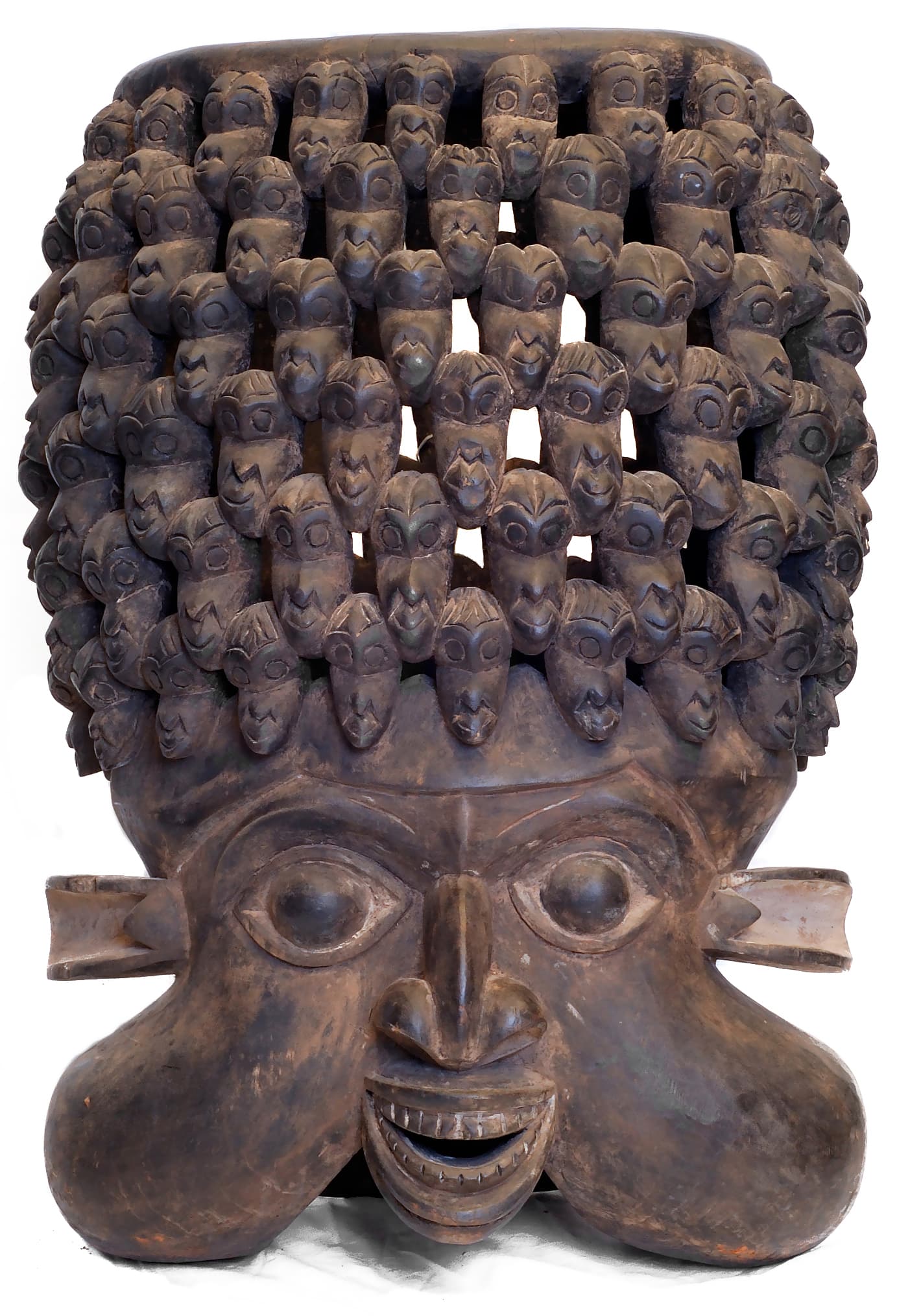
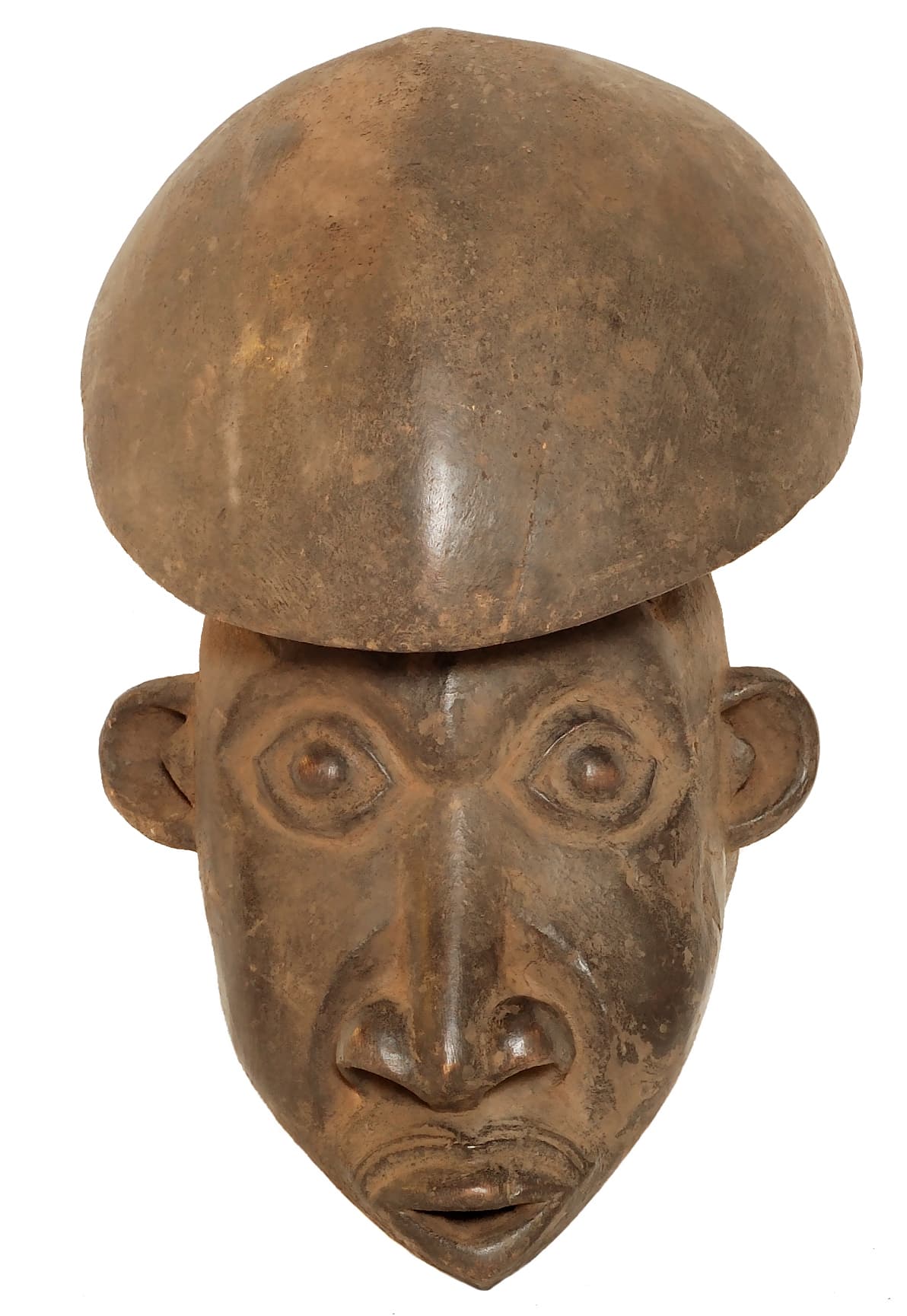
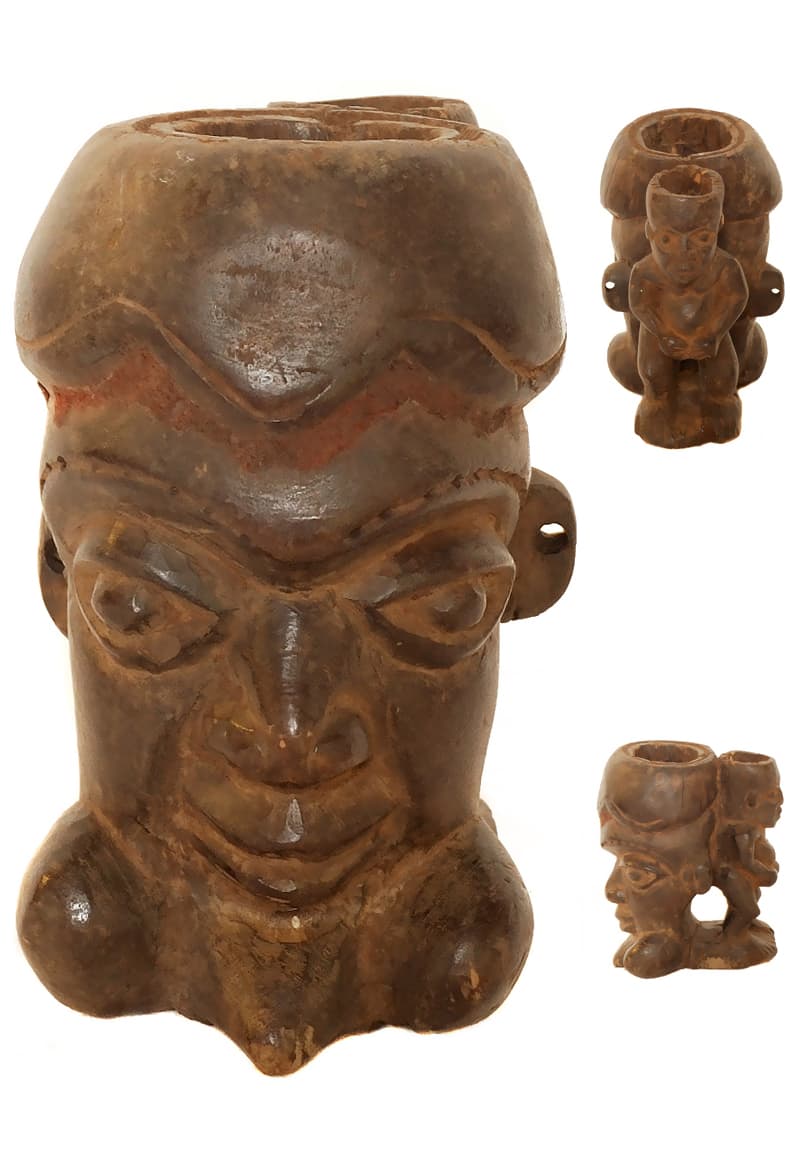
The formal vocabulary of Oku sculpture is robust, monumental, and aggressively expressive, a visual language perfectly suited to its primary function as an instrument of regulation, intimidation, and raw ancestral power. The classic Oku facial canon, particularly evident in its anthropomorphic masks, features broad, sweeping volumetric planes dominated by a highly pronounced, protruding forehead. In Grassfields symbolism, this expansive forehead is not merely a stylistic convention but a direct morphological signifier of deep wisdom, esoteric knowledge, and age. This is counterbalanced by a forceful, heavy jawline that projects an uncompromising authority. The eyes of Oku masks are typically large, almond-shaped, and deeply set beneath heavy, overhanging brows. They are almost universally outlined with a thick, stark border of white kaolin clay, creating a piercing, hypnotic contrast against the dark, encrusted wood of the face. Noses are rendered with broad, muscular sweeping ridges terminating in flaring, triangular nostrils that frequently meet sharply at the tip. Mouths are frequently carved wide open, exposing rows of prominently filed teeth—a marker of both human aristocratic status and animalistic ferocity.
The surface treatment of Oku sculpture is perhaps its most defining and archaeologically identifiable characteristic. Unlike the smooth, finely sanded and polished aesthetics favored in some neighboring forest groups, authentic, field-used Oku regulatory masks exhibit a thick, dark, aggressively encrusted patina. This deep black finish is not achieved through the application of paint; rather, it is the result of a specific indigenous pyrogravure technique. The carved wood is heavily scorched using red-hot iron rods, creating a permanent layer of iron oxide that turns the wood a deep, matte black. Over decades of ritual deployment, this oxidized surface is repeatedly anointed and "fed" with palm oil, camwood (Baphia nitida—a vibrant red vegetable dye associated with transition and power), and various sacrificial libations, including animal blood and palm wine. This creates a crusty, layered topography on the mask that is literal evidence of its spiritual activation. Furthermore, the complex coiffures of specific leader masks are frequently built up using real human hair bound together with leh, a highly adhesive sap harvested from local Grassfields trees. This sap is not merely structural; it is believed to possess potent apotropaic properties, sealing the mask against the infiltration of malevolent spirits.
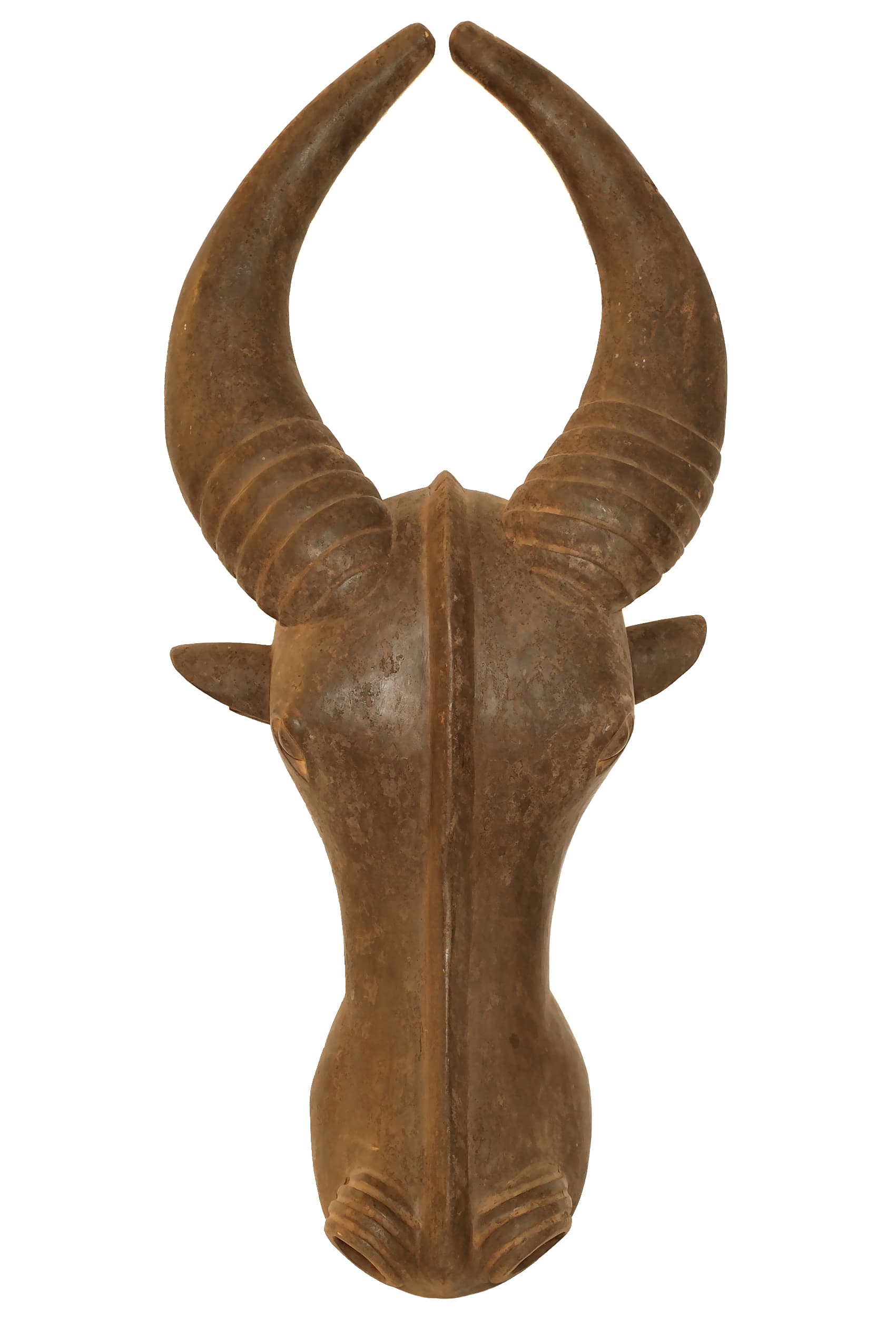
The scale and proportions of Oku masks are directly dictated by their specific performative choreography. Buffalo and ram masks, representing the ultimate, unbridled symbols of royal physical power, are carved as massive, heavy helmet crests designed to be worn horizontally on the top of the head. These zoomorphic masks are characterized by a striking fusion of intense naturalism and exaggerated signifiers of strength: massive, backward-sweeping or deeply ribbed stubby horns, elongated heavy muzzles, and aggressive, bared dentition. Conversely, anthropomorphic masks, such as the male leader mask (Kam or Akam), often feature complex, multi-lobed coiffures or prominent, extended beards, and are worn flat atop the head or pulled slightly forward over the face, extending the dancer's silhouette vertically into an imposing, towering presence.
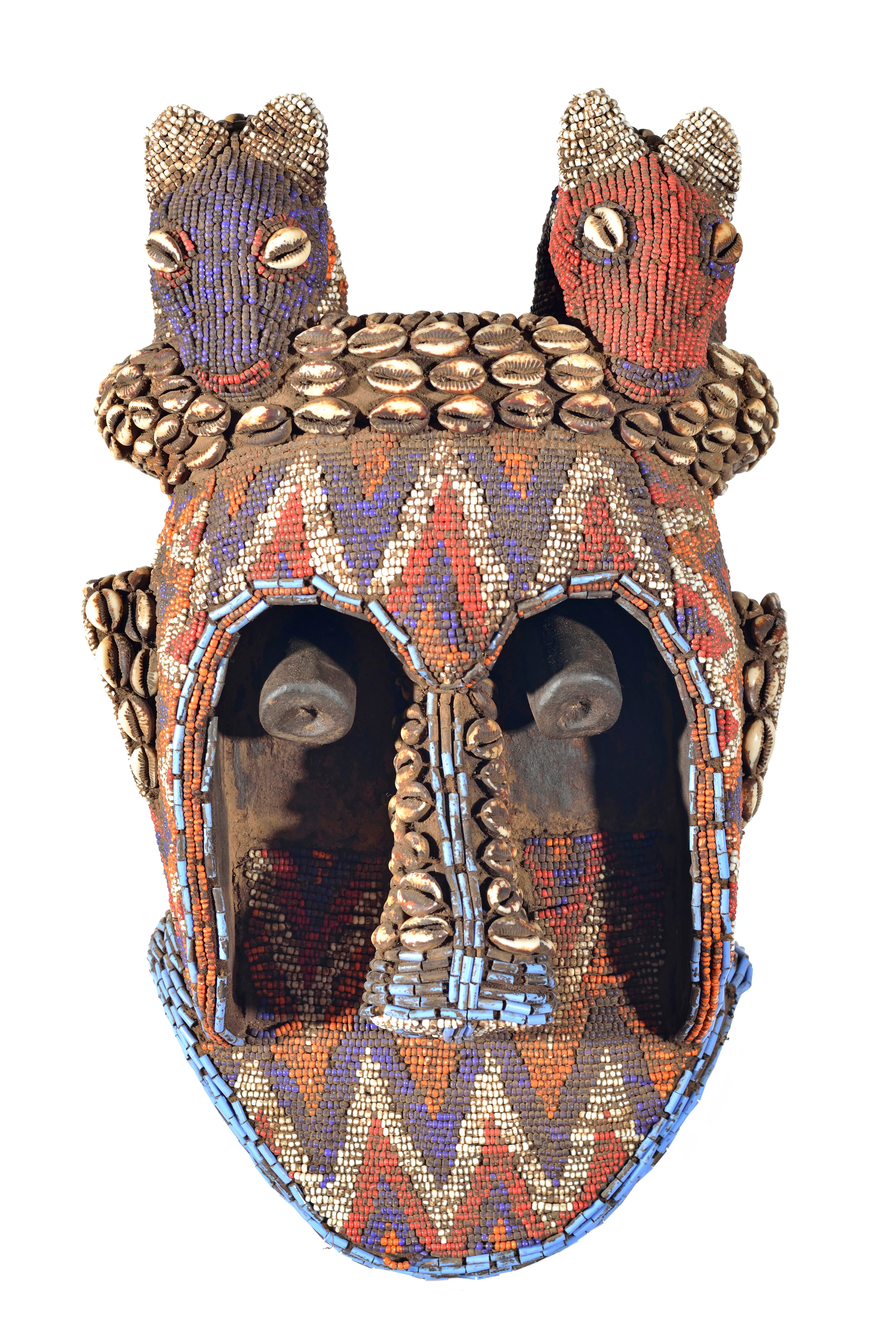
Materials in Oku art are strictly hierarchical and sumptuary. While wood forms the structural core of almost all sculpture, prestige is explicitly denoted through the application of secondary, exotic materials. High-status objects—such as the Fon's thrones, specific architectural elements, prestige calabashes, and elite elephant masks used by the highest echelon of regulatory societies—are covered in tightly stitched, multicolored imported glass beads. These Venetian or Bohemian trade beads are meticulously applied over a foundation of locally woven cotton or raffia cloth that has been glued or tacked to the wooden armature. The most prestigious and visually dominant color within this beaded aesthetic is red, symbolizing royalty, blood, and danger, heavily utilizing the natural red feathers of the endemic Bannerman’s turaco bird, reserved exclusively for the absolute highest elite and the Fon himself.
To accurately catalogue the art of the Grassfields, the Oku sculptural idiom must be distinctly identified and isolated when compared to the highly developed traditions of its immediate neighbors. The following table provides a structural comparison of the dominant aesthetic markers across the four primary interconnected chiefdoms of the region.
| Visual Feature | Oku Style | Babanki (Kedjom) Style | Kom Style | Bamum Style |
|---|
| Facial Proportions | Heavy, aggressive planes; large, deeply set eyes; prominent, projecting forehead. | Elegant, refined, serene; softer contours; highly naturalistic features. | Broad, somewhat flattened facial planes; strong emphasis on verticality. | Highly inflated, bulging, rounded cheeks; prominent, protruding "frog-like" eyes. |
| Surface Treatment | Scorched iron-oxide black; heavy, crusty sacrificial patination (oil, camwood, blood). | Smoother, polished wood finishes; less emphasis on thick sacrificial encrustation. | Variable; extensive use of colorful beadwork directly overlaying the carved wood. | Extensive incorporation of lost-wax bronze/brass casting and copper sheet overlay. |
| Coiffure / Headpiece | Solid, heavy volumes; frequent use of real human hair bound with leh sap. | Intricate, delicate, lace-like openwork carving; highly detailed geometric patterns. | Distinctive, tall, multi-lobed crest architectures; heavily beaded superstructures. | Highly standardized, elaborate royal headdresses; extensive use of cowrie shell motifs. |
| Zoomorphic Masks | Massive, heavy, horizontally worn helmet crests (buffalo/ram) with stubby horns. | More delicately proportioned animal representations integrated into openwork crests. | Similar horizontal buffalo crests, but generally wider and flatter than Oku variants. | Frequent, massive use of elephant iconography and highly decorative serpent motifs. |
As demonstrated, Babanki carving, famously championed by master carvers like the royal Aseh Yufanyi, is characterized by extreme refinement, delicate proportions, and intricate, lace-like openwork coiffures. Babanki faces are generally smoother, more serene, and entirely lack the aggressive, heavily encrusted ferocity of Oku regulatory masks. Kom sculpture, while sharing the central Grassfields heritage, is notable for its slightly taller, more vertical crest architectures and a highly distinctive approach to beadwork overlay directly on wooden statues (as seen in the famous Afo-a-Kom). The Bamum aesthetic, heavily centralized and standardized during the reign of King Njoya in the late 19th and early 20th centuries, operates on a massive scale, favoring inflated, bulging cheeks, prominent eyes, and the incorporation of lost-wax bronze casting and copper overlay—materials rarely utilized in the strictly wood-centric, conservative Oku tradition.
Ritual Practices
The activation of Oku art occurs exclusively within highly formalized, deeply serious ritual contexts. The most prominent arenas for the deployment of sculpture and masquerade are royal enthronements, the annual dry-season agricultural festivals designed to ensure the fertility of the land, and, most critically, the commemorative death celebrations (funerals) for deceased members of the royal family, lineage heads, and initiated members of the Kwifon. These events are far more than mere memorial services; they are vital, highly charged political arenas where lineage alliances are affirmed, massive wealth is publicly redistributed, and the continuity of power is visually validated through the spectacular display of masquerades.
The masquerade constitutes the primary vehicle for visual art in performance within the kingdom. In Oku, the ownership and performative behavior of masks are strictly divided between those owned by individual wealthy, aristocratic lineages and those completely monopolized by the palace and the Kwifon society. The performative choreography of these two categories differs radically, reflecting their distinct social functions. Lineage masking ensembles generally dance in highly choreographed, rhythmic processions to the complex accompaniment of drums, iron gongs, and xylophones, serving to honor the deceased and display the wealth of the family. In stark, deliberate contrast, the palace masks belonging to the Kwifon (such as those comprising the Fuləŋgaŋ masking group) do not "dance" in any conventional sense. They burst into the palace courtyard individually, suddenly, and without any musical accompaniment, save for the loud, urgent, aggressive shouts of their unmasked acolytes who egg them on. This chaotic, unpredictable, and inherently violent performance style physically manifests the terrifying, absolute, and unaccountable authority of the regulatory society.
Several specific named masks and object types fulfill distinct ritual functions within this complex performative ecosystem. The following table delineates the primary typology of Oku masquerades, detailing their visual characteristics and specific ritual utility.
| Mask Name | Typology / Visual Characteristics | Primary Ritual Function / Context of Use |
|---|
| Mabu | "The Runner Mask." Fearsome, exaggerated facial features; deep dark patina; round cheeks; open, aggressive mouth. | Serves as the voice and vanguard of the Kwifon. Precedes society members to clear paths, announce their approach, and execute justice. |
| Kam (Akam/Nkang) | Male leader mask. Anthropomorphic, worn flat on the head; typically features a semi-circular headdress and a prominent beard. | Leads the dance processions for lineage ensembles; dictates the pace and choreography of memorial celebrations; represents male ancestral authority. |
| Ngoin | Female counterpart/wife to Kam. Serene, composed facial expression; close-fitting crested coiffure; worn as a helmet crest with concealing cloth. | Portrays the idealized female ancestor. Dances with contained, graceful steps holding fly whisks; receives offerings of wealth from onlookers. |
| Buffalo / Ram | Massive zoomorphic helmet crests. Worn horizontally. Flaring nostrils, bared teeth, heavy backward-sweeping or stubby horns; highly encrusted patinas. | Symbols of the Fon's raw physical power, endurance, and the abundance of the kingdom. The buffalo acts as the physical alter-ego of the ruler in performance. |
The Mabu mask holds a particularly vital and terrifying place in Oku ritual. Functioning historically as an executioner and the ultimate enforcer of the state, the Mabu features a fearsome face with a deep, dark finish, prominent shield-like projecting features, round cheeks, and an open mouth. It precedes Kwifon members on daytime and nighttime missions, clearing the path and violently correcting improper behavior. Its sudden appearance in the village is a clear signal of imminent, uncompromising justice. Furthermore, anthropological scholarship suggests that the aggressive, erratic performance of the Mabu, and other specific Kwifon dances like the fuləŋgaŋ, serve a deeper psychological function: they evoke the historical trauma of the transatlantic and trans-Saharan slave trades, mimicking the capture and detention of victims, thereby allowing the palace authorities to appropriate the memory of unspeakable violence and redeploy it in the defense of contemporary state formation.
Beyond the highly public spectacle of the masquerade, visual art is central to the deeply secretive practice of traditional therapeutic medicine, known locally as fofang or kefuh myin. The Oku possess a profound pharmacological and supernatural medical tradition, where practically all adult members have some knowledge of herbalism, but specific medicine societies control the most powerful rites. Rites of kefuh myin (therapeutic medicine to cure illness or ward off witchcraft) utilize highly specific ceramic vessels, primarily the eking myin (wine pots of the gods), to bridge the physical and spiritual worlds. During these rites, the pot is adorned with two concentric circles drawn with a white kaolin concoction—one on the outside, one at the base—representing the all-seeing "eyes of God" (eshea fey in). The pot is filled with palm wine, which acts as a sacred conduit, allowing the living participants to ingest the blessings of the ancestors who are believed to physically gather within the vessel. Conversely, the interior of the white circles is filled with a black, highly toxic medicine that must not be eaten; this "bad" medicine is rubbed onto the participants to extract sickness and is believed to spiritually attack any individual who violates the strict taboos surrounding the ritual. When not in use, these potent eking myin pots, alongside calabashes encrusted with cowrie shells and sacrificial libations, are stored in the dark recesses of the family head's house, far from public view.
Historical Context
The historical trajectory of the Oku Kingdom is deeply intertwined with the broader, complex migrations and sociopolitical upheavals that forged the modern demographic landscape of the Cameroon Grassfields. Oral traditions overwhelmingly trace the origins of the Oku—alongside their culturally affiliated neighbors the Kom, Nso, Bafut, and Bamum—to a broader Tikar diaspora. According to these prevailing narratives, proto-Tikar populations migrated southward and westward from an area east of the Lake Chad basin, pausing at the Adamawa Plateau, before eventually pressing into the fertile, highly defensible volcanic highlands of the North West Region.
The dynastic history of Oku, prior to European contact, is recorded through its rich material culture and the highly guarded oral histories preserved by the Kwifon. The establishment of the kingdom's core artistic identity and ritual infrastructure is directly credited to the actions of successive early Fons. Oral accounts explicitly state that foundational rulers introduced the first masked dance (juju) societies and the vital, spiritually charged technology of blacksmithing to Oku. Subsequent rulers methodically expanded the visual repertoire to consolidate power: Fon Keming Mbang is historically credited with introducing the beng masquerade and establishing the sacred cemetery for queen-mothers, while Fon Ngum Tayeh added the fenji masquerade to the litany of royal dances. These continuous innovations reflect a highly dynamic pre-colonial period where art was not static, but was continuously adapted, invented, and acquired—often through elite diplomatic exchange, warfare, or outright purchase from neighboring carving centers like Babanki—to visualize and consolidate royal authority.
The arrival of European colonial powers in the late 19th century profoundly and violently impacted the region's political and artistic landscape. The German colonial administration (approximately 1884–1916) engaged in severe punitive military expeditions across the Grassfields to break local resistance. These campaigns, such as the devastating assault on Bafut in 1898, resulted in the systematic looting and alienation of immense quantities of sacred royal art, which were subsequently shipped back to ethnographic museums in Berlin, Stuttgart, and Leipzig as spoils of war. Because of its extreme elevation and highly remote, forested topography, Oku was somewhat insulated from the most devastating immediate impacts of the initial German advance compared to the more accessible chiefdoms on the lower-lying Ndop plain, though they ultimately did not escape colonial subjugation.
Following the defeat of Germany in World War I, the British administration of the Cameroons instituted a radically different policy of Indirect Rule. Unlike the French colonial policy of assimilation, the British actively sought to shore up the traditional authority of the Fons to facilitate cheap administration and taxation. Consequently, they tolerated, and in some cases actively supported, the operation of indigenous secret societies like the Kwifon to maintain local order. This period inadvertently preserved the functional context of Oku masking, regulatory authority, and therapeutic medicine, allowing traditional carving and ritual practices to continue relatively unabated through the mid-20th century.
The periodisation of Oku art is critically tied to ecological availability and macro-economic shifts. "Classical" production spans roughly from the mid-19th century through the 1930s. During this era, master carvers had unfettered access to massive, dense, slow-growing native hardwoods (such as mahogany, ironwood, and local species categorized as fangong and keghang), allowing for the creation of truly monumental, heavy sculpture. However, by the late 20th century, heavy forest exploitation, agricultural expansion, and climate change had severely depleted these vital wood species. Consequently, later 20th-century carvings are often executed in lighter, faster-growing secondary woods, signaling a definitive shift in material quality and weight.
The post-1960s independence era brought severe economic depression to the Grassfields, heavily exacerbated by crashing global coffee and cocoa prices in the 1980s. To survive, many traditional rulers, vulnerable palace guards, and hungry middlemen began illicitly selling off their ancient royal treasuries to Western art dealers. This cultural hemorrhage sparked the rapid rise of commercial workshop and tourist production, where traditional forms were hastily and inaccurately reproduced strictly for export to satisfy the booming Western tribal art market. Recognizing the imminent, irreversible loss of their cultural patrimony, a new generation of enlightened Grassfields leaders initiated a wave of museum building to protect remaining assets. In 2007, under the reign of Fon Sintieh II, the Oku Royal Collection was formally transformed into a modern community museum situated securely between the sacred Kwifon precinct and the palace proper. Today, this museum serves to protect the remaining masterpieces from alienation, though it continues to struggle with severe conservation challenges posed by high tropical humidity, theft, and insect degradation.