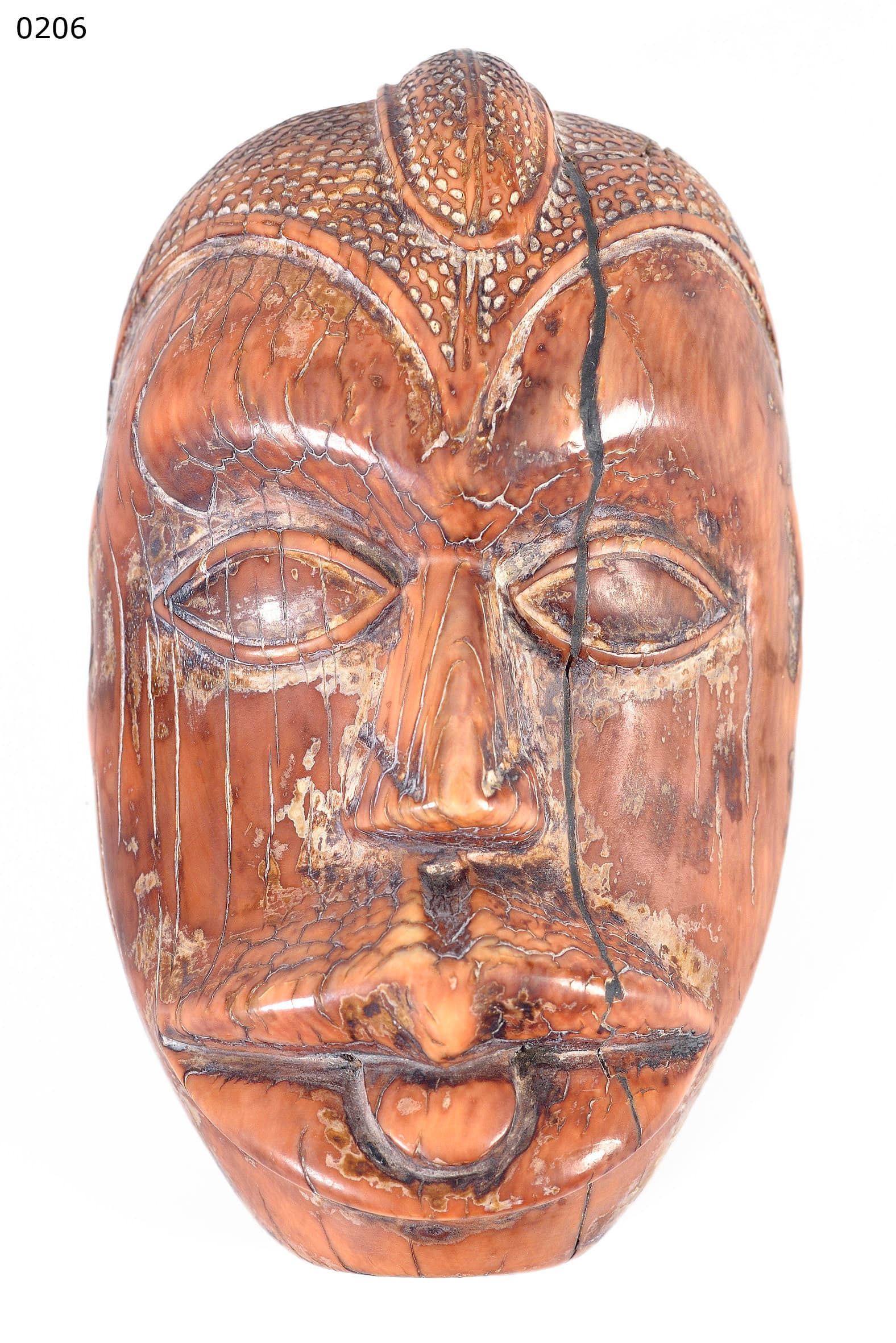
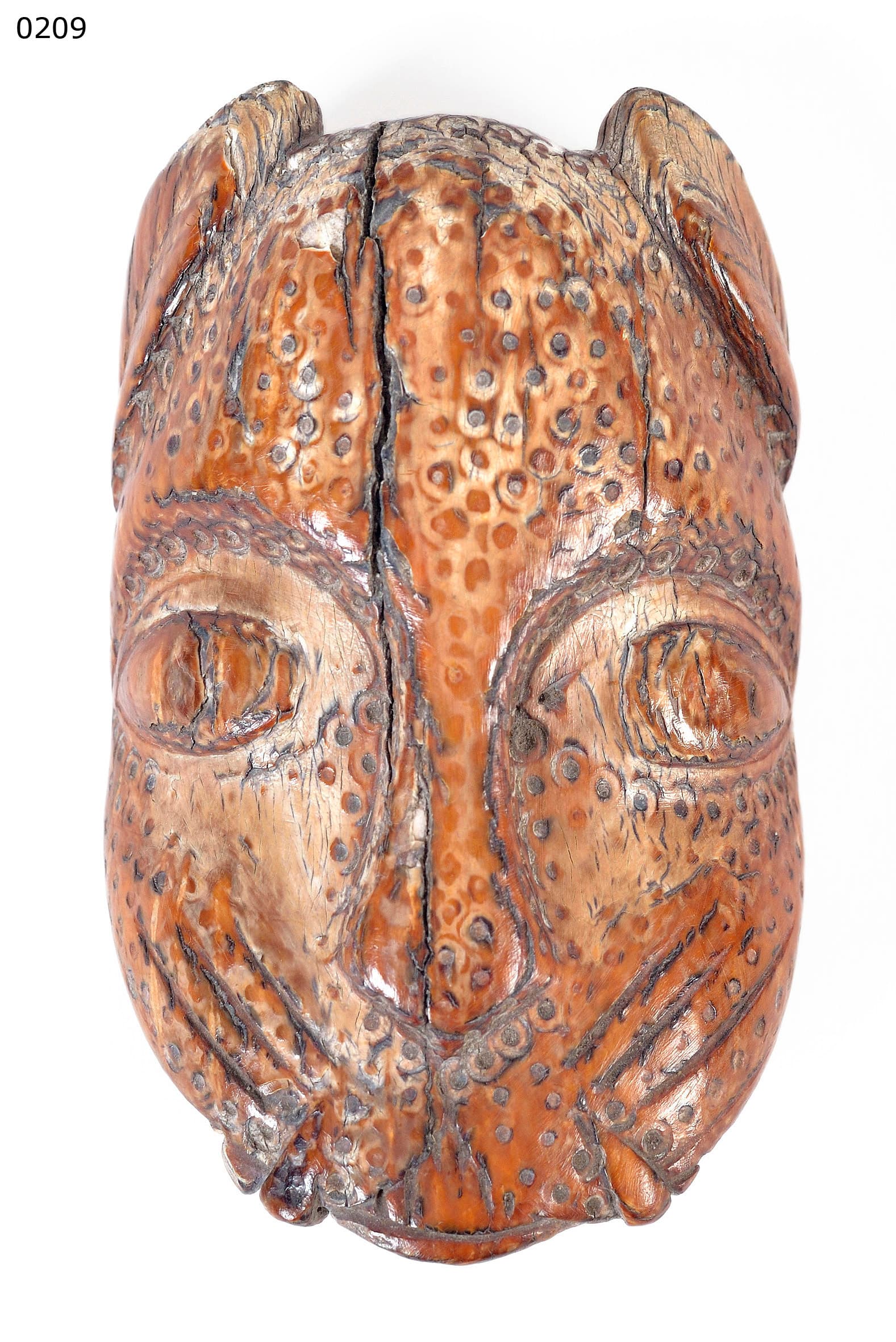
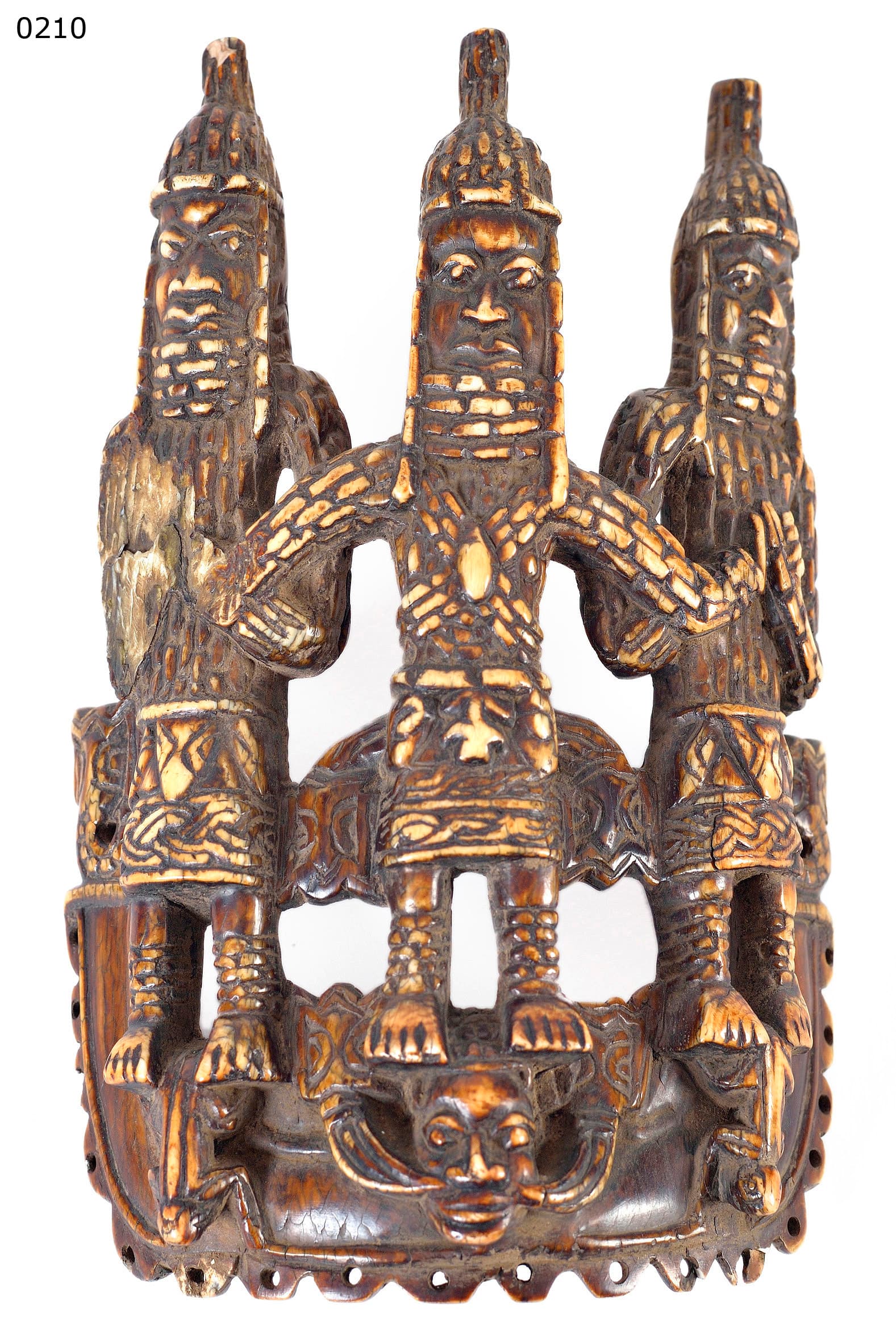
This elaborate ceremonial bronze sword features a wide, spatulate blade engraved with intricate looping patterns, mounted on a complex, tiered hilt cast with stacked, fully realized human figures in courtly regalia. The dark, oxidized bronze displays localized areas of green cuprite, highlighting its significant age and metallic composition.
1. Aesthetic style — Edo courtly regalia and the lost-wax guilds
In the Kingdom of Benin, ceremonial swords — known as ada or eben — were the ultimate symbols of the Oba's (king's) authority and his power over life and death. The exceptional lost-wax casting of this hilt, produced by the royal Igun Eronmwon brass-casting guild, features stacked figures of high-ranking chiefs or priests. This tiered, sculptural handle elevates the object from a functional weapon to a narrative scepter. The broad, flat blade is etched with guilloche (interlacing) motifs, a pattern reserved strictly for royal court objects to symbolize the infinite, unbreakable nature of the Edo monarchy.
2. Ritual function — ceremonial brandishing and the ancestral altar
This heavy bronze sword was not utilized in warfare; it was a pure instrument of statecraft and ritual display. During royal festivals such as the Igue (celebrating the Oba's spiritual head), chiefs are traditionally understood to have brandished these heavy ceremonial swords in complex, acrobatic dances to honor the king and reaffirm their loyalty. When not in active use, a sword of this intricate, figurative magnitude was likely placed upon the raised earthen ancestral altars of the palace, serving to anchor the martial power of the deceased Obas.
3. Physical patina — late Benin patination and metallurgical wear
The "Late Benin" dating (typically 18th–19th century) is physically supported by the rich, undisturbed patina on the bronze. Rather than the highly polished surfaces seen in modern reproductions, this sword exhibits a deep, matte, dark-brown oxidation consistent with generations of indoor palace storage. The subtle softening of the figures' facial features on the hilt suggests ceremonial handling, while the micro-pitting and localized green verdigris are consistent with natural, historic metallic aging.
Summary
An accomplished work in the style of the Benin royal casting guilds, this figurative bronze sword visually encapsulates the martial and spiritual authority of the Oba. Its deeply oxidized, handling-softened patina is consistent with its use as an important object of Edo statecraft and ceremonial dance.
Written with AI assistance from the collection appraisal, object photography and our own research; editorially reviewed. Mistakes are possible — corrections are welcome. How we work →