The Benin are a West African people in the southern Nigerian state of Edo, known for their administrative and courtly architecture, specialised craft guilds, and Lower Niger bronzes.
Overview
The historical Kingdom of Benin (also Great Benin; dates of existence c. 1180-1897 as a sovereign state, then continued as a non-sovereign monarchy until today), whose core area lies in the present-day southern Nigerian state of Edo, is one of the most intensively researched pre-colonial civilisations in West Africa, although its early history and regional boundaries are still debated. The current population of Edo speakers in the state is estimated at around 4.77 million people (Lewis 2018: 42). Linguistically, Edo (or Bini) is assigned to the Edoid language family, but its exact taxometric positioning within the African language diversity is the subject of scientific debate. While earlier linguistic taxonomies primarily assigned the language to the so-called "Eastern Kwa" (Armstrong 1967: 12), contemporary linguistics favours its inclusion in the Benue-Congo branch of the Niger-Congo language family. This has far-reaching implications for migration and colonisation research in the entire region.
The nomenclature of the ethnic group and its historical territory is characterised by a dichotomy of self-designation and foreign designation. The indigenous self-designation of the people and the language is "Edo". The widely used exonym "Benin" (or "Bini") is a Portuguese corruption of the term "Ubini". The sources are ambiguous with regard to the exact genesis of this term, but it is generally assumed that the term "Ubini" was coined under the rule of Oba Ewuare around 1440 to define the centre of the empire as a place worth living in, before the Europeanised form "Benin" was established through transcultural trade relations from 1485 (Bondarenko & Roese 1999: 542). A strict distinction must be made here between the historical kingdom of Benin (Edo) in present-day Nigeria and the modern nation state of Benin (the former Dahomey/Fon region).
The social structure of the Edo is characterised by a strictly hierarchical, centralised monarchical order, at the head of which stands the Oba as an absolute and divinely legitimised authority. The administrative and courtly architecture is divided into a complex stratification of palace officials (eghaevbo n'ogbe), representative city chiefs (eghaevbo n'ore) and a system of over thirty specialised craft guilds that are directly subordinate to the monarch. At the village level, however, away from the direct courtly epicentre, the social system exhibits clear acephalous traits, which are regulated by age groups (age-grades) and kinship lines (Bondarenko & Roese 1999: 548).
Historically, the economic subsistence basis was a form of agriculture (shifting cultivation) based on the cultivation of yams, taro and later manioc. This agriculture was supplemented by the production of palm oil and palm kernels, which became the most important cash crops and export goods, particularly in the 19th century (Onakuse 2012: 61).
The relationship between the Edo and their immediate neighbours, especially the Yoruba in the west and the Igbo in the east, was historically characterised by phases of military expansion and tribute obligations, but also by intensive cultural and linguistic exchange. However, the exact demographic and linguistic demarcation of pre-colonial dominions is highly fluid. This is exemplified by the current academic Bini Ife controversy: There is intense academic debate as to whether the Edoid branch represents a chronologically earlier split-off than the Yoruboid, which would grant the Edo an autochthonous priority and historical preeminence in the region (Lewis 2018: 45). These intercultural interdependencies are also reflected in the historical collections of Western institutions. In its most recent ethnographic research projects and collection documentation (especially in the context of the Lower Niger Bronzes), the British Museum explicitly refers to the permeable borders and reciprocal ritual exchange between the court of Benin, peripheral centres such as Owo (Yoruba) and the settlements in the Niger Delta (Coulson, Hudson & Nixon 2019: 12). Classification controversies thus concern not only linguistic kinship, but also the categorisation of peripheral artworks, which are often simplistically and erroneously attributed to the exclusive "Benin canon" in the Western art market, although they represent transcultural hybrid forms.
| Linguistic classification (Edoid cluster) | Sub-groupings according to current linguistic models |
|---|
| Delta-Edoid | Comprises 3 languages (border area with the Niger Delta) |
| Southwest Edoid | Comprises 5 languages (including Urhobo, Isoko) |
| North-Central Edoid | Comprises 6 languages (Edo/Bini, Esan) |
| Northwest Edoid | Comprises 7 languages (strong contact zones with neighbouring ethnic groups) |
Cultural context
The religious and cosmological system of the Edo is structurally polytheistic, but operates under the premise of a distanced creator god, Osanobua. Instead, ancestor worship and a differentiated pantheon of natural and spiritual beings capable of acting are at the active ritual and performative centre of cosmology. Olokun, the primary deity of the sea, the waters, wealth and fertility, occupies a prominent position here. As historical wealth in the form of coral beads, brass manillas and European textiles entered the empire by sea through the harbour of Ughoton, the cult of Olokun is inextricably linked to the economic prosperity and political power of the palace (Peavy 2010: 18). The ritual association of the Oba with Olokun manifests itself in the materiality of courtly art, where coral and ivory refer directly to the liminal sphere of water.
The ritual authorities split into various specialised factions. Alongside the Oba are priests (ohen) and divinators (oguega), who consult the complex Iha Ominigbon oracle system to diagnose cosmological disturbances. Powerful secret societies such as the Ovia cult and the Ekpo mask societies exist alongside the courtly religion. The latter function as a bridge between the living and the dead and act as a vector for social stability and village justice. The role of women in the cult is complex, paradoxical and often restrictive: while women are physically excluded from the central initiation rites of the Ovia cult and are only allowed to take on the role of distanced observers during mask performances, they are ascribed immense, often feared esoteric power on a cosmological level (Peavy 2010: 90). However, the Iyoba (Queen Mother) possesses a singular ritual-political authority. By being elevated to this title, she receives her own court, dedicated altars and the masculine authority to wield the ceremonial even sword, which structurally elevates her to the male canon of power in the empire and radically demarcates her position from all other female actors (Ben-Amos 1995: 32).
What structurally distinguishes the Edo religion most strongly from that of the neighbouring peoples (such as the Yoruba or the decentralised Igbo) is the absolute, ontological centrality of the monarch. The Oba does not merely function as a political ruler or delegated high priest, but is understood as a living, divine substance. His physical and spiritual well-being is cosmologically congruent with the fertility, security and stability of the entire empire (Nevadomsky 1993: 3).
In ethnographic research, there are significant controversies regarding the genesis and priority of certain cult forms. For example, Peavy and Izevbigie debate the exact historical nature and origin of the Olokun cult. While Peavy (2010) postulates the institutional fusion of the deity with the royal ancestral line and refers to the legend of the expulsion of the mythical prince Ekaladerhan to Ughoton, Izevbigie analyses Olokun primarily as an archaic, pan-regional fertility authority of the common people, which was only co-opted and monopolised by the palace in a later historical phase (Peavy 2010: 88 vs. Izevbigie 1978). The sources for such myth complexes are chronologically ambiguous. In museum mediation concepts, as exemplified in the Africa rooms of the Musée du quai Branly in Paris, this cosmological duality - centralised courtly palace power versus spiritual nature and secret society beings of the villages - is curatorially taken up and reflected in the spatial juxtaposition of royal bronze objects and archaic-looking wooden masks.
Aesthetic features
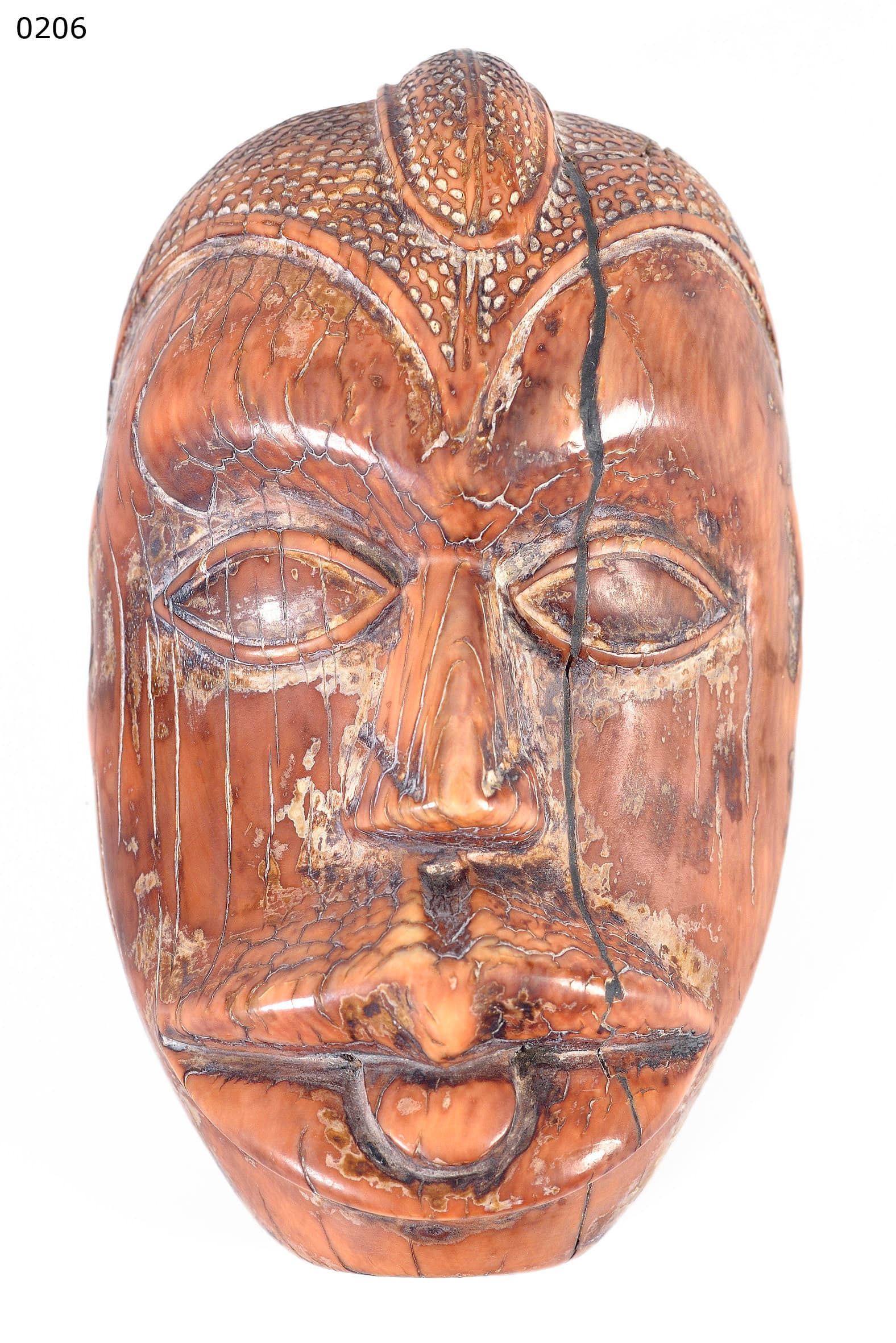
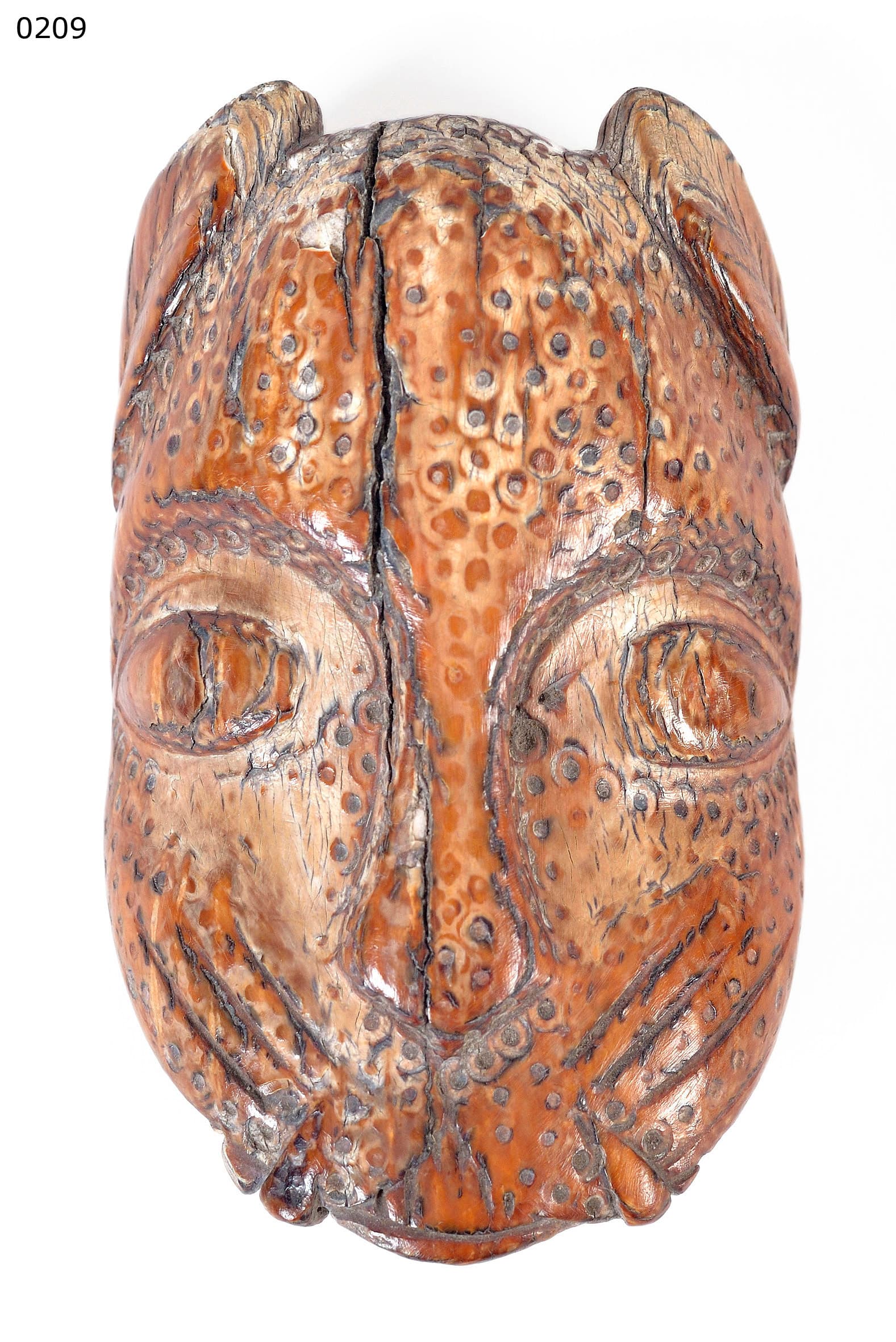
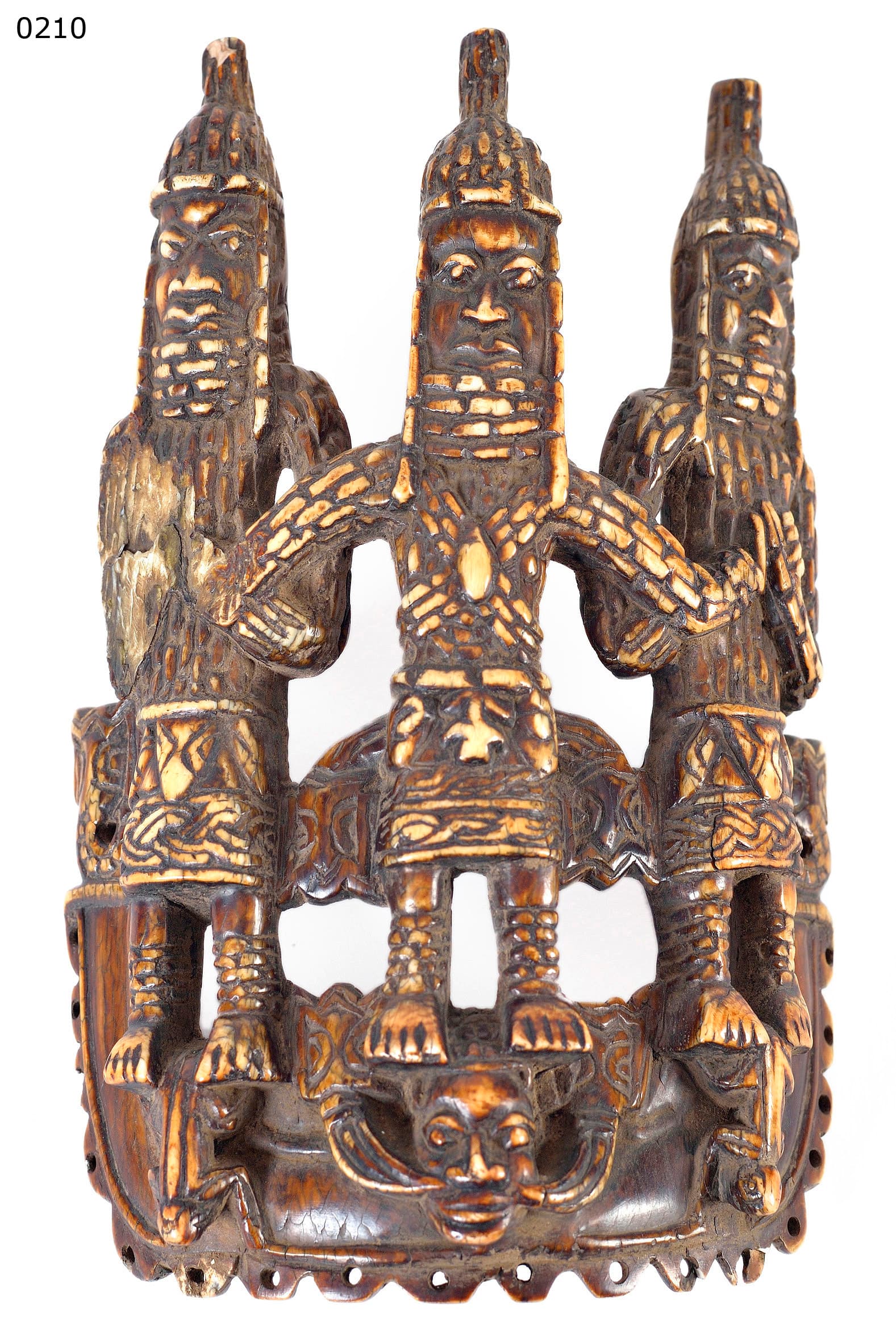
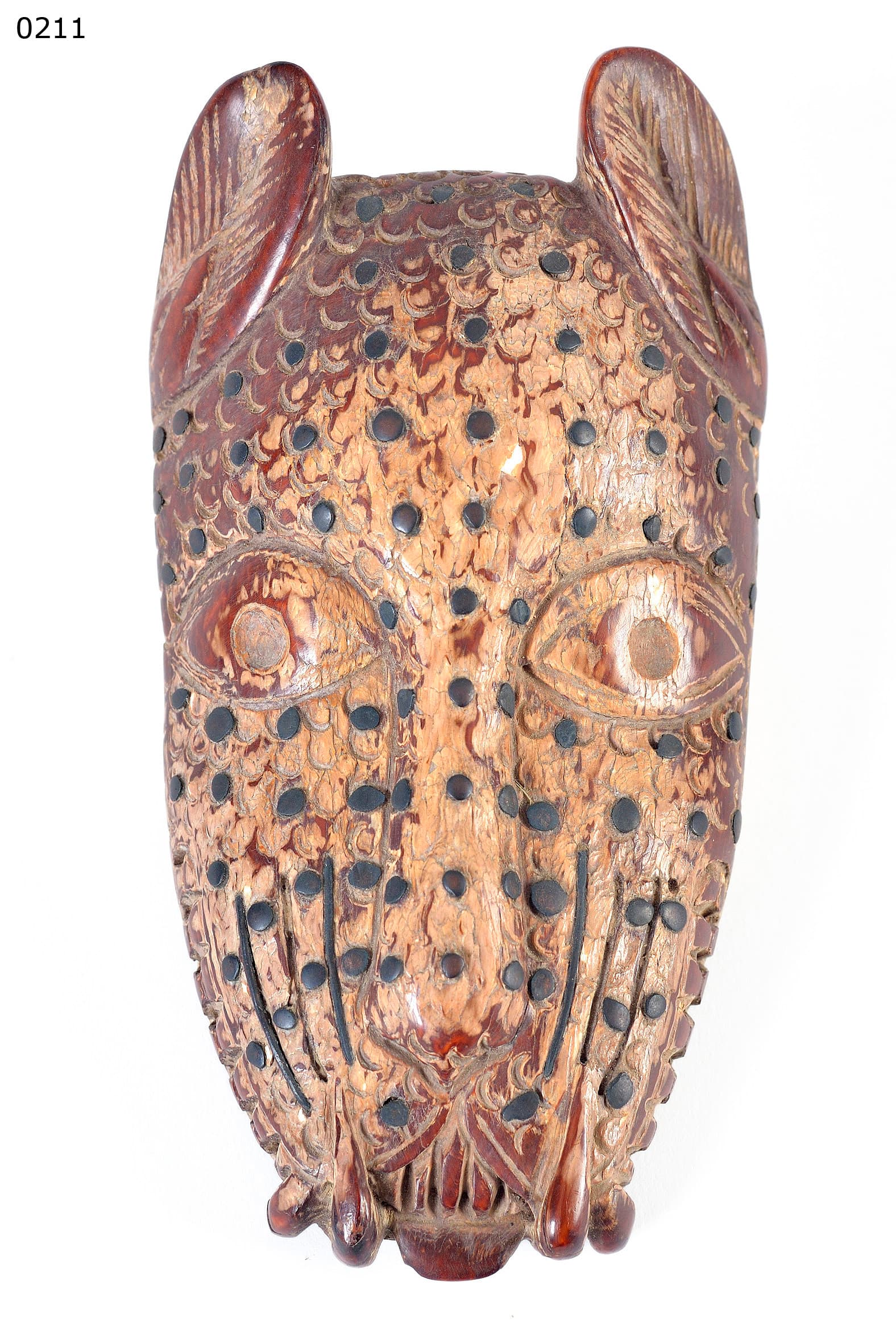
The courtly art of the Kingdom of Benin is characterised by a strictly canonical, highly formalised typology of objects, whose mastery of craftsmanship is one of the most elaborate traditions on the African continent. The central canonical subtypes include the moulded memorial heads of the kings (uhunmwun elao) and the queen mothers, the monumental architectural relief panels, delicately carved ivory tusks, ivory hip masks (such as the famous mask of Iyoba Idia), aquamanilia in the shape of leopards and the ceremonial swords eben and ada.
The iconography of these objects is primarily institutional and not portrait-like and individual; it focuses on idealisation and the insignia of power. The canon of proportions is subject to a strict perspective of meaning (Hieratic Scale): The oba or high-ranking dignitary dominates the flanking, significantly smaller depicted warriors, European merchants or animals through oversized size and central positioning (Ben-Amos 1995: 54). A recurring iconographic element of the uhunmwun elao are the high collars and caps made of coral beads, which visualise the spiritual power (ase) of the ruler. Other recurring motifs include the leopard ("king of the forest" and alter ego of the oba), the elephant (symbolising rebellious chiefs who are dominated by the oba) and the mudskipper (otter/mudfish). The mudskipper functions as a liminal creature that can navigate between water and land, thus metaphorically linking the aquatic domain of Olokun with the terrestrial sphere of the Oba (Blackmun 1992: 30; Metropolitan Museum of Art 1978: 8).
The choice of materials was strictly hierarchically determined in the kingdom. The use of copper alloys (technically mostly lead-zinc-brass, although colloquially referred to as "bronze") and ivory was subject to an exclusive royal monopoly. The alloys imply durability and symbolise the immortality of royalty, while the white ivory is ritually connoted with purity, peace and the water world of Olokun. There is a fundamental conceptual difference between the "profane" work of art and the activated ritual object: a bronze head completed in the workshop is initially a secular vessel. It is only through the application of ritual substances and offerings (palm wine, chalk, animal blood) that the object acquires its effectiveness as a sacred medium of communication with the ancestors and develops a thick, encrusted sacrificial patina over decades.
Although the artworks were historically produced anonymously within the strictly organised palace guilds - primarily the metal casters of the Igun Eronmwon and the ivory carvers of the Igbesanmwan - using the lost wax technique (cire perdue), stylistic criticism has identified a few master craftsmen and specific workshops. One of the most prominent iconographic controversies in art history centred on the classification of the relief panels. William Fagg isolated the manuscript of the so-called "Master of the Circled Cross", characterised by extremely flat relief, specific anatomical foreshortening and a punched background with circled crosses, which he interpreted as an individual genius of the 16th century (Fagg 1963: 33). Kathryn Gunsch (2018), however, vehemently deconstructs this approach: she argues against the projection of European concepts of authorship onto African guilds and postulates that the "Circled Cross" style is the result of an early, collaborative experimental workshop phase, not the work of a singular master (Gunsch 2018: 26).
Another massive research conflict, characterised by the authors Philip Dark on the one hand and Paula Ben-Amos and Frank Willett on the other, concerns the dating of the memorial heads. A dates (Philip Dark 1973) the development of the bronze heads in a linear chronology: very naturalistic heads with flat collars are classified as early works (14th/15th century) under the influence of the art of Ife, while highly stylised heads with sweeping collars and winged bonnets are understood as late 18th/19th century developments. B, on the other hand, argues (Ben-Amos 1995; Plankensteiner 2007) that stylistic variations cannot be primarily chronological, but rather functional. The source situation here is controversial: local oral traditions suggest that the "early", naturalistic heads without elaborate insignia do not represent ancestors, but trophy heads of defeated enemies, which were cast at the same time as the stylised ancestor heads (Ben-Amos 1995: 35). If objects do not fit into the royal canon, they are often stylistically relocated to Udo, a rival settlement, which further complicates the classification.
For private collectors, the problem of forgery is highly relevant. As the Igun Eronmwon guild continues to produce excellent replicas to this day, forensic authenticity criteria are essential. Forgeries of bronzes are unmasked by thermoluminescence analyses (TL dating) of the clay cores and by spectroscopic metal analyses. Objects with a zinc content of over 33% or traces of aluminium are considered to be modern 20th century replicas. In the case of wooden objects, artificially created termite damage, the use of unsuitable heartwood with recent cracks and the artificial application of fats and modern pigments to simulate a ritual patina are key exclusion criteria (Craddock 1985: 5; Nevadomsky 2019). Reference works such as the panels of the Master of the Circled Cross can be studied at the Metropolitan Museum of Art, among others.
| Analytical criteria for authenticity testing (copper alloys / Benin art) | Forensic findings & historical classification |
|---|
| Zinc content (Zn) < 28 % | Indicator for pre-16th century (high probability of authenticity) |
| Zinc content (Zn) < 33 % | Indicator for pre-19th century (historically authentic) |
| Zinc content (Zn) > 33 % or aluminium traces | Indicator for modern casting / forgery (mostly after 1897) |
| Thermoluminescence (TL) of the casting core | Dating of the heating of the clay; susceptible to manipulation by forgers |
Ritual practice
Ritual practice in the palace of Benin centred architecturally and performatively around the extensive ancestral altars in the specific courtyards of the royal complex. Each newly installed oba was religiously obliged to erect a semi-circular altar of rammed earth in honour of his immediate predecessor and to activate it ritually. The structure and construction of these altars followed a strict ritual syntax, as it is still didactically conveyed today in museum reconstructions, exemplified by the Art Institute of Chicago (Berzock 2008: 22). Several cast memorial heads were placed in a symmetrical arrangement on the base of the altar. Monumental, narratively carved ivory tusks were inserted into the open apex of these bronze heads. This majestic assemblage was typically flanked by freestanding leopard figures (aquamanilia), bronze bells (eroro) and carved wooden rattle sticks (ukhure).
The ritual activation and continued use of these objects is based on the conviction that a work of art is not sacred per se, but must be prepared as a spiritual vessel through rituals. The Oba acted as the central celebrant. Acoustic stimuli were used to invite the spirits of the ancestors (erinmwin) to participate in the ceremony: The rhythmic thudding of the ukhure on the ground and the ringing of the eroro bells signalled the beginning of communication (Penn Museum 1922). Only after this acoustic opening did the substantial offerings follow. Depending on the occasion, the offerings consisted of palm wine, mashed yams, white chalk (orhue, a symbol of peace and purity) and blood. Historically, animal sacrifices and, in specific contexts, human sacrifices were offered in the event of decisive state crises or the death of a king, with blood being poured over the heads and altars. The ritual accumulation of these organic materials over generations led to the development of the characteristic, thick sacrificial patina, which for collectors today is a key indicator of the actual ritual biography of an object (Plankensteiner 2007: 85).
The central occasions for these sacrifices were cyclical ceremonies, in particular the Igue festival. This highly complex ritual served to spiritually renew the mystical power of the head of the living Oba. An integral part of the Igue cycle is the Emobo ritual. Here, the oba is often depicted in a specific iconography with an outstretched hand in a "tapping" or stroking gesture. This performative gesture, accompanied by the striking of special ivory bells, serves to gently but firmly drive away malevolent or restless spirits from the borders of the kingdom (Art Institute of Chicago 2013).
However, the lifecycle of ritual entities in Benin is not purely linear and raises questions in ethnographic research. From new carving to decades of use to disposal or deactivation, there are considerable variations. The sources are ambiguous with regard to the question of whether and how objects were systematically ritually "desecrated". However, there is archaeological and historical evidence that not all works of art were in uninterrupted ritual use until the fall of the empire in 1897. Examination of the palace architecture reveals that the several hundred bronze relief panels, which still clad the wooden pillars of the galleries in the 16th century, were dismantled by the Oba as early as the early 18th century - possibly due to changes in style, economic decline or ritual reorientation. They were deposited in an inconspicuous storage room, virtually deactivated, where the British troops later found them en bloc (Gunsch 2018: 26). The Igun Eronmwon guild also melted down damaged or politically inappropriate bronze objects in phases on the orders of the court in order to recycle the precious metal for new commissions. This practice of ritual material recycling makes modern metallurgical age determination significantly more difficult (Coulson, Hudson & Nixon 2019: 15). Ritual wooden objects, such as altars in the peripheral villages or masks of the Ovia cult, were also often left to decay naturally through termite infestation as soon as their ritual-temporal function was fulfilled (Nevadomsky 1993).
Historical context
The historiography of the Kingdom of Benin is characterised by phases of rapid expansion, far-reaching intercontinental trade relations and a traumatic colonial rupture. In the oral tradition, the migration and early history of the kingdom is divided into two main dynasties: The semi-mythical Ogiso dynasty (until ca. 12th century), which ruled the predecessor empire Igodomigodo (Edo Kingdom of Igodomigodo), and the subsequent Oranmiyan dynasty, which according to tradition was initiated from the Yoruba centre of Ife and led the empire into its imperial phase (Bondarenko & Roese 1999: 544). Parallel to these developments, diplomatic and mercantile contacts with Portuguese seafarers were already established in the late 15th century, which led to the introduction of brass manillas as a trading currency and the integration of European motifs into relief art.
The decisive turning point in the production and reception history of Edo art was the colonial encounter in 1897, when the British Empire initiated the "Punitive Expedition" following an ambush on an unarmed British trade delegation under James Phillips. British naval troops conquered and burnt down Benin City, exiled Oba Ovonramwen to Calabar and dismantled the entire ritual infrastructure of the palace. In the course of this systematic looting, an estimated 3,000 to over 4,000 art objects (bronzes, ivories, shrine inventory) were confiscated as spoils of war, transported away and auctioned in London to cover the expedition costs (Sarr & Savoy 2018: 22).
This colonial act radically transformed Edo art production. The guilds fled to the surrounding countryside and the production of royal art came to a standstill until Oba Eweka II reorganised the guilds after the restoration of the throne in 1914. They were relocated to Igun Street in Benin City, where they have since produced not only for the court, but increasingly also replicas for the Western art and tourist market (Nevadomsky 2005).
Meanwhile, an unprecedented development took place on the Western art market. The first dealers such as W.D. Webster and ethnologists such as Felix von Luschan (who systematically secured large collections for the Ethnological Museum in Berlin) recognised the technical brilliance of the bronzes. This early appreciation refuted the racist narrative of the colonial era that African societies were incapable of such metallurgical masterpieces, but paradoxically led to a total commoditisation of ritual objects. The price trend exploded in the 20th century, which inevitably led to the massive forgery problem already discussed, in which patina manipulations and artificial heartwood cracks can only be deciphered today using state-of-the-art forensics (Kasfir 1992: 44).
Historically, 2007 marked a turning point in the history of reception with the groundbreaking exhibition "Benin: Kings and Rituals" (curated by Barbara Plankensteiner in Vienna). This exhibition was the first to prominently integrate the indigenous Edo understanding of history and the voices of the Nigerian royal family into Western discourse. Benin's art is currently at the epicentre of the global restitution debate, fuelled by the Sarr-Savoy Report (2018) commissioned by the French government. Germany and the UK began significant restitutions in 2022, with the Prussian Cultural Heritage Foundation formally transferring ownership of over 500 objects to Nigeria, some of which are permanently leaving the Humboldt Forum in Berlin (Museum am Rothenbaum - MARKK and Humboldt Forum as central institutional actors in this process).
Nevertheless, this restitution process is by no means uncontroversial and has led to one of the most complex ethical controversies in contemporary provenance research. While the Nigerian government, the National Commission for Museums and Monuments (NCMM) and the Oba are demanding unconditional restitution as an act of decolonial justice, legal resistance is forming in the USA through the Restitution Study Group (led by Deadria Farmer-Paellmann). This African-American interest group is taking legal action against restitution (such as that of the Smithsonian Institute). Their controversial argument is that the Edo were historically actively involved in the transatlantic slave trade. The European traders paid human captives with brass manillas. As the palace guilds melted down these manillas to cast the memorial heads and relief panels, the artworks are literally moulded from the "blood money" of enslavement. The group consequently argues that the bronzes represent the cultural and moral heritage of the DNA descendants of the enslaved in the Western diaspora and should therefore remain in Western institutions accessible to the diaspora, rather than being returned to the institutions of the historical profiteers (Farmer-Paellmann in Plankensteiner et al., Conference Proceedings Columbia University 2025). This highly political debate illustrates that the art of the Kingdom of Benin not only represents an aesthetic heritage, but remains a contested site of global historical responsibility to this day.