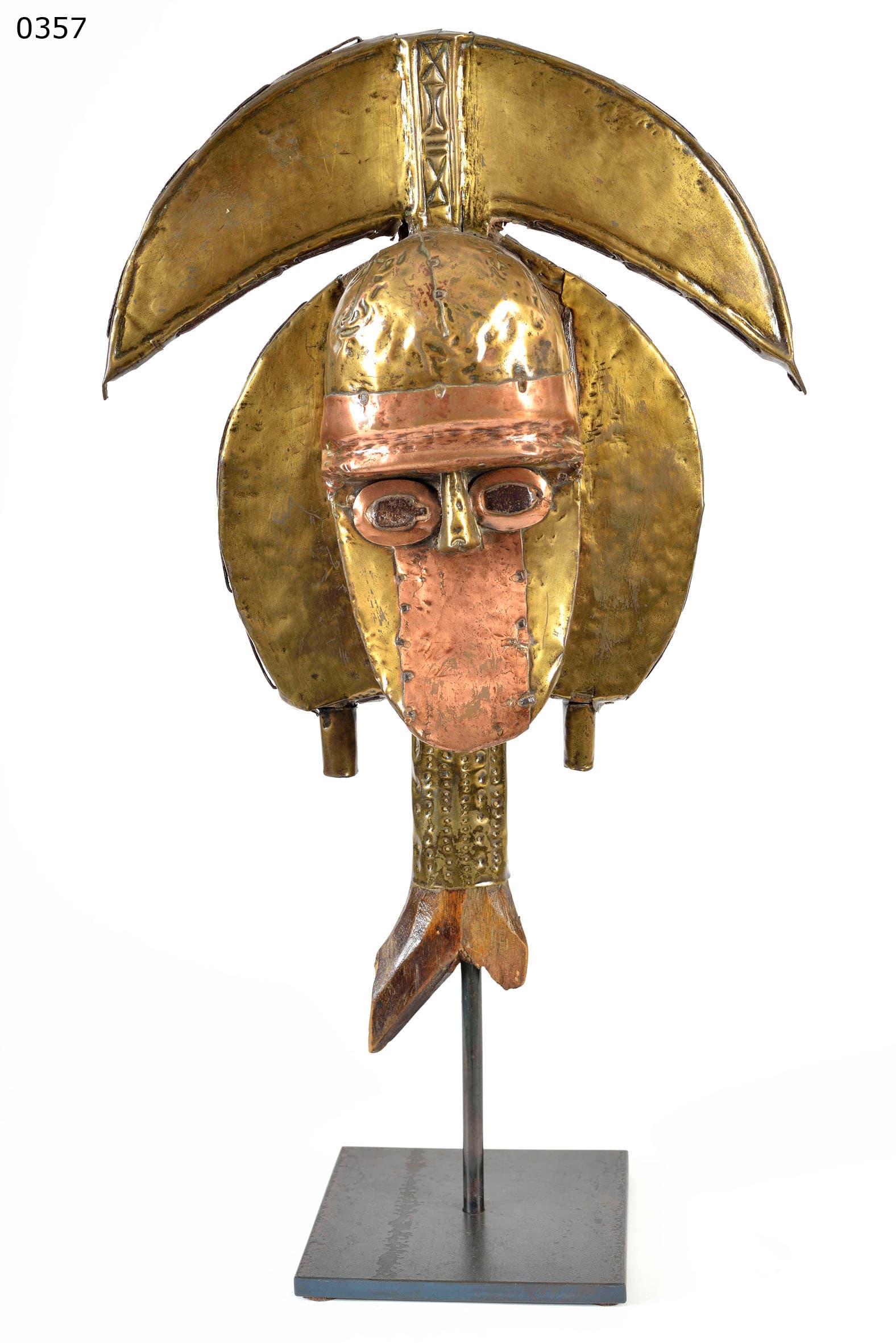
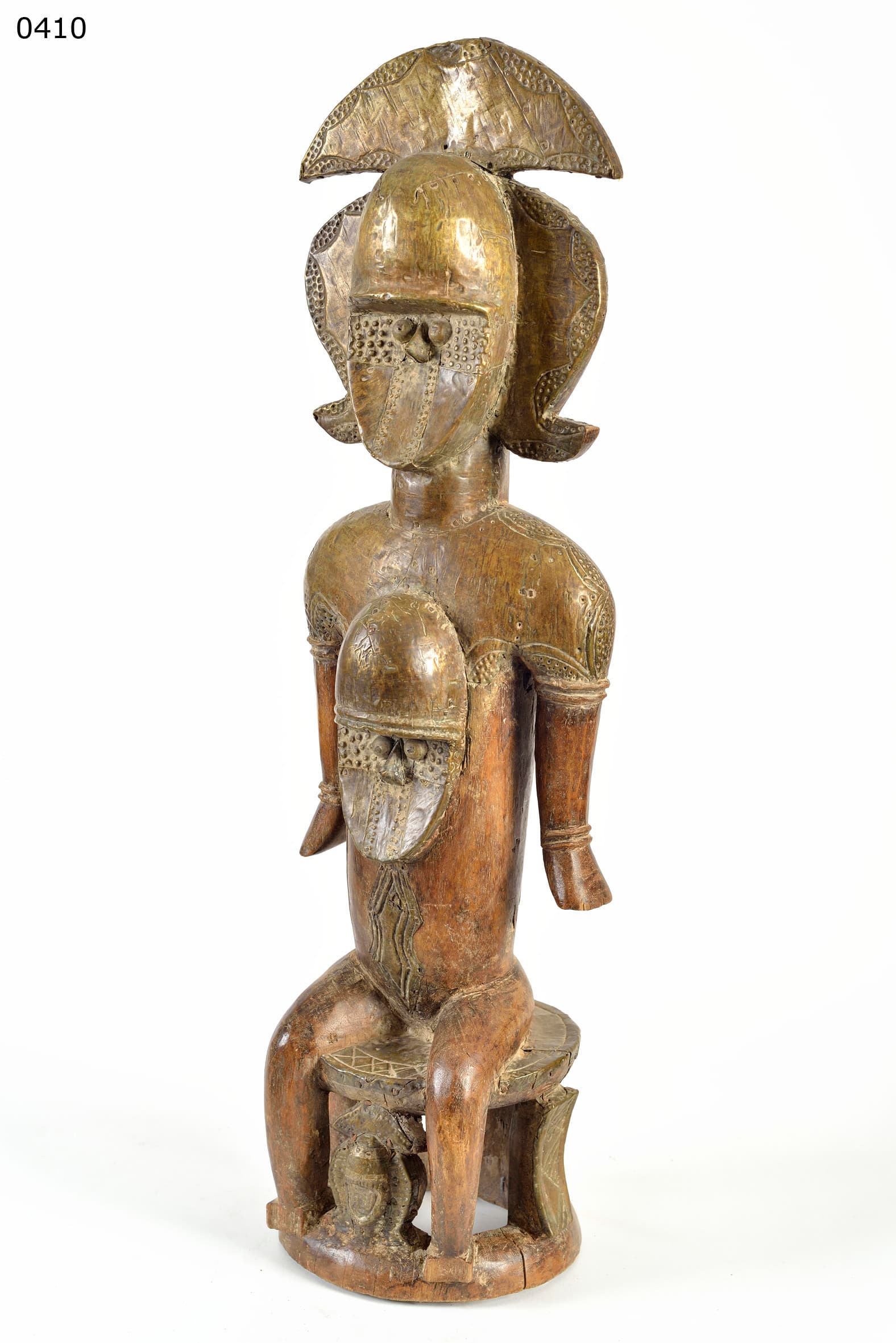
This mbulu ngulu (reliquary guardian) features a highly abstract, two-dimensional wooden face covered in meticulously applied brass and copper sheeting, displaying raised, crescent-shaped brows and cylindrical eyes. It is securely mounted atop a woven rattan basket filled with organic matter.
1. Aesthetic style — the aesthetics of two-dimensional metalwork
The Kota people of Gabon approached reliquary guardianship with a radically different aesthetic than the neighboring Fang. Instead of three-dimensional wood carving, they utilized a severe, two-dimensional wooden armature completely clad in precious metals. The geometric face, dominated by a prominent cross motif in repoussé and large, staring eyes, acts as a reflective mirror. This brilliant use of brass and copper sheeting was designed to flash in the firelight of the shrine, creating a blinding, supernatural presence that terrified uninitiated trespassers and malevolent spirits alike.
2. Ritual function — the Bwete cult and the survival of the basket
Like the previous Fang piece, this Kota figure is a breathtaking survivor because it remains attached to its original woven reliquary basket, central to the Bwete cult. The basket housed the cranial fragments and metacarpals of the most distinguished lineage ancestors. The metallic "head" of the figure is conceptually mounted on a lozenge-shaped "body" that is specifically designed to be tied to the neck of this basket. To view the complete ensemble is to witness the exact spiritual architecture that anchored Gabonese village life before intense colonial disruption.
3. Physical patina — multi-metallic oxidation and handled patina
The age and authenticity of this piece are supported by the specific oxidation patterns of the applied metals. The brass and copper sheets show a highly varied, dull, and earthy patina, with localized green verdigris accumulating around the edges of the metal strips and the iron staples used to affix them. The prominent facial features (the nose and the brows) display a soft, frictional wear where the metal has been repeatedly touched and polished, consistent with ritual handling over time.
Summary
A classic example of Gabonese geometric abstraction, this Kota reliquary head utilizes flashing brass and copper to deflect spiritual danger. The rare survival of its underlying ancestral basket distinguishes it as a highly significant example of the Bwete cult.
Written with AI assistance from the collection appraisal, object photography and our own research; editorially reviewed. Mistakes are possible — corrections are welcome. How we work →