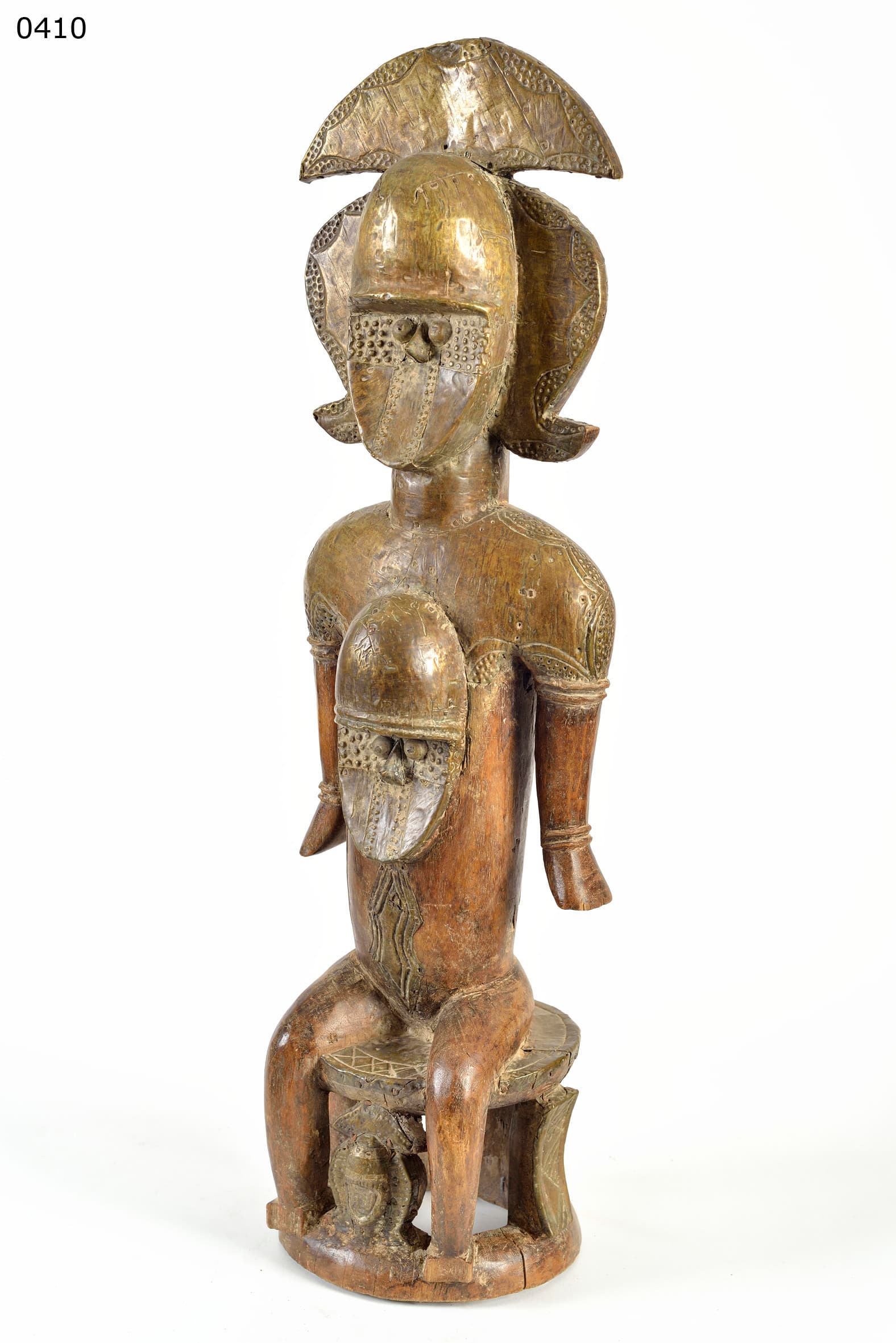
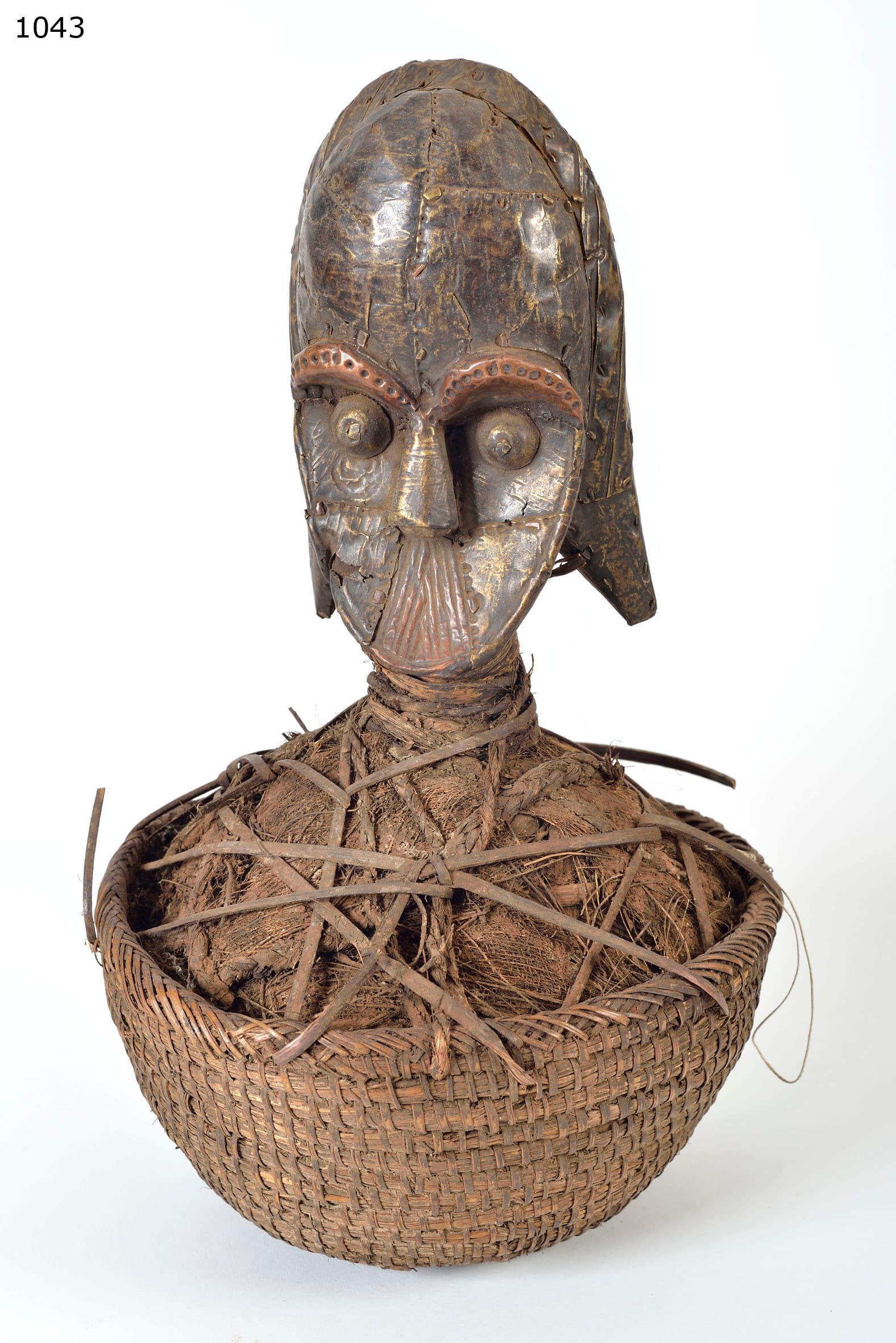
A classic Kota mbulu ngulu (1st half 20th C., 48 cm) from Gabon — a carved wooden core wrapped entirely in meticulously applied brass and copper sheeting, forming an oval face with raised cross-shaped intersecting lines, flanked by lateral geometric flanges and a large crescent-shaped crest, the metal exhibiting a warm oxidized varied patina.
1. Refined metallurgic geometry
The Kota reliquary guardians of Gabon are widely recognized for their two-dimensional abstraction and their use of contrasting metals.
- Copper and Brass Interplay: This piece exemplifies the mbulu ngulu form — warm reddish copper (the intersecting facial cross and eyes) against bright yellow brass sheeting.
- Reflective Architecture: The artists flattened the human face into a reflective plane — framed by the sweeping architectural curves of the lateral cheeks and the grand moon-like upper crest.
2. Bwete and the guardians of the bone basket
These objects were not standalone sculptures — the lozenge-shaped wooden base was originally inserted into a woven basket or bark box containing the skull and bones of a venerated lineage ancestor (the Bwete).
- Functional Spiritual Flash: The highly reflective metal surface was functionally spiritual — designed to deflect the gaze of uninitiated viewers and repel malevolent forces.
- Anti-Theft Warning: The flashing metal acted as a warning to anyone attempting to steal or profane the sacred ancestral remains guarded within the basket.
3. Oxidized patination and handling wear
The first-half-20th-century dating is consistent with the specific wear patterns on the metal.
- Sand and Citrus Polish: Kota figures were traditionally polished with sand and citrus juice during ceremonies to maintain spiritual flash — this piece shows the resulting micro-abrasions alongside a rich natural oxidation settled into the recessed staples and repoussé dots.
- Oily Base Wear: The exposed wooden base at the bottom shows dark oily handling wear from decades of being inserted into and removed from the reliquary basket.
Summary
This mbulu ngulu is a classic expression of Gabonese reliquary art — defined by its balanced geometric proportions and use of contrasting metals. Its oxidation and handling wear are consistent with those of a traditional guardian.
Written with AI assistance from the collection appraisal, object photography and our own research; editorially reviewed. Mistakes are possible — corrections are welcome. How we work →