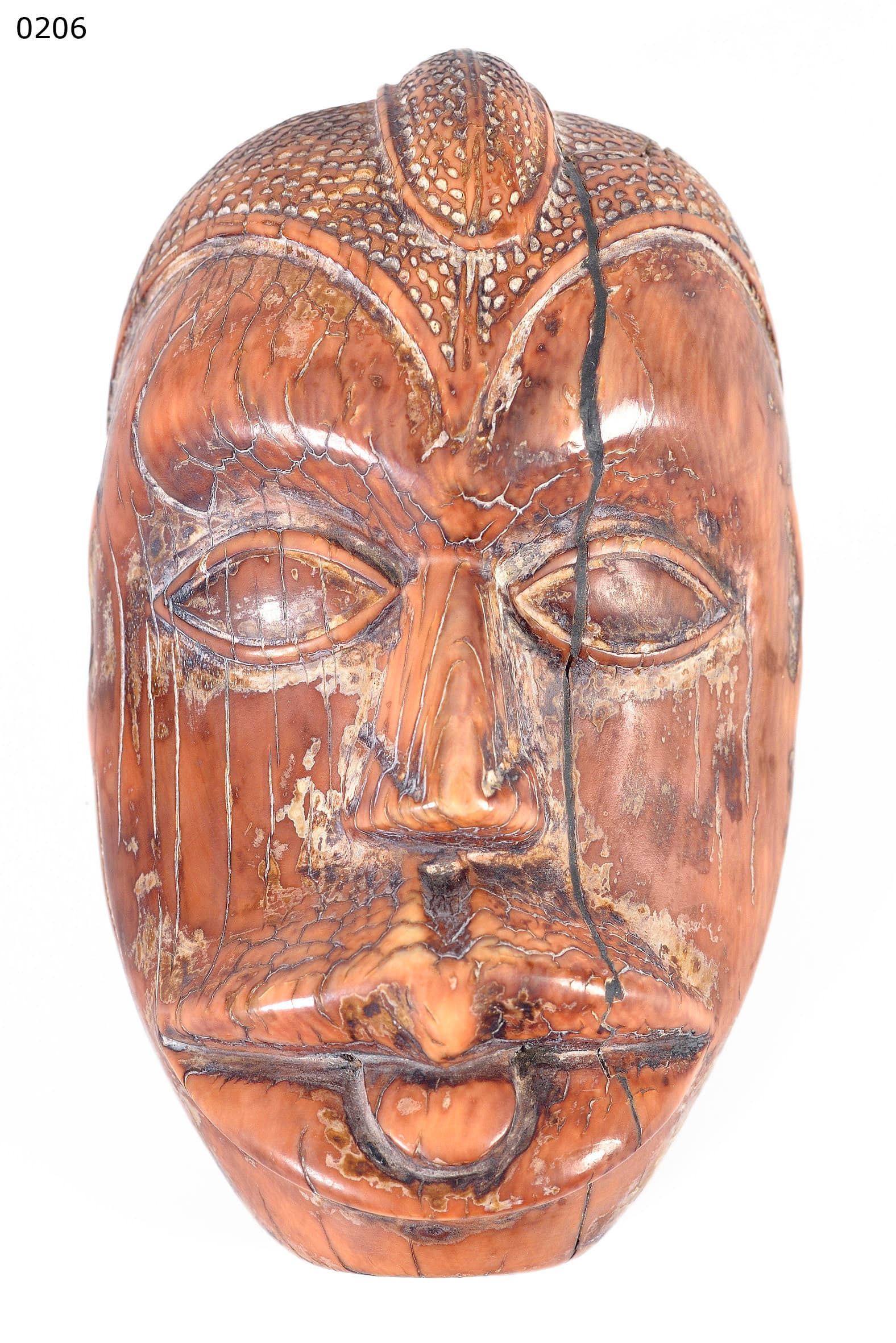
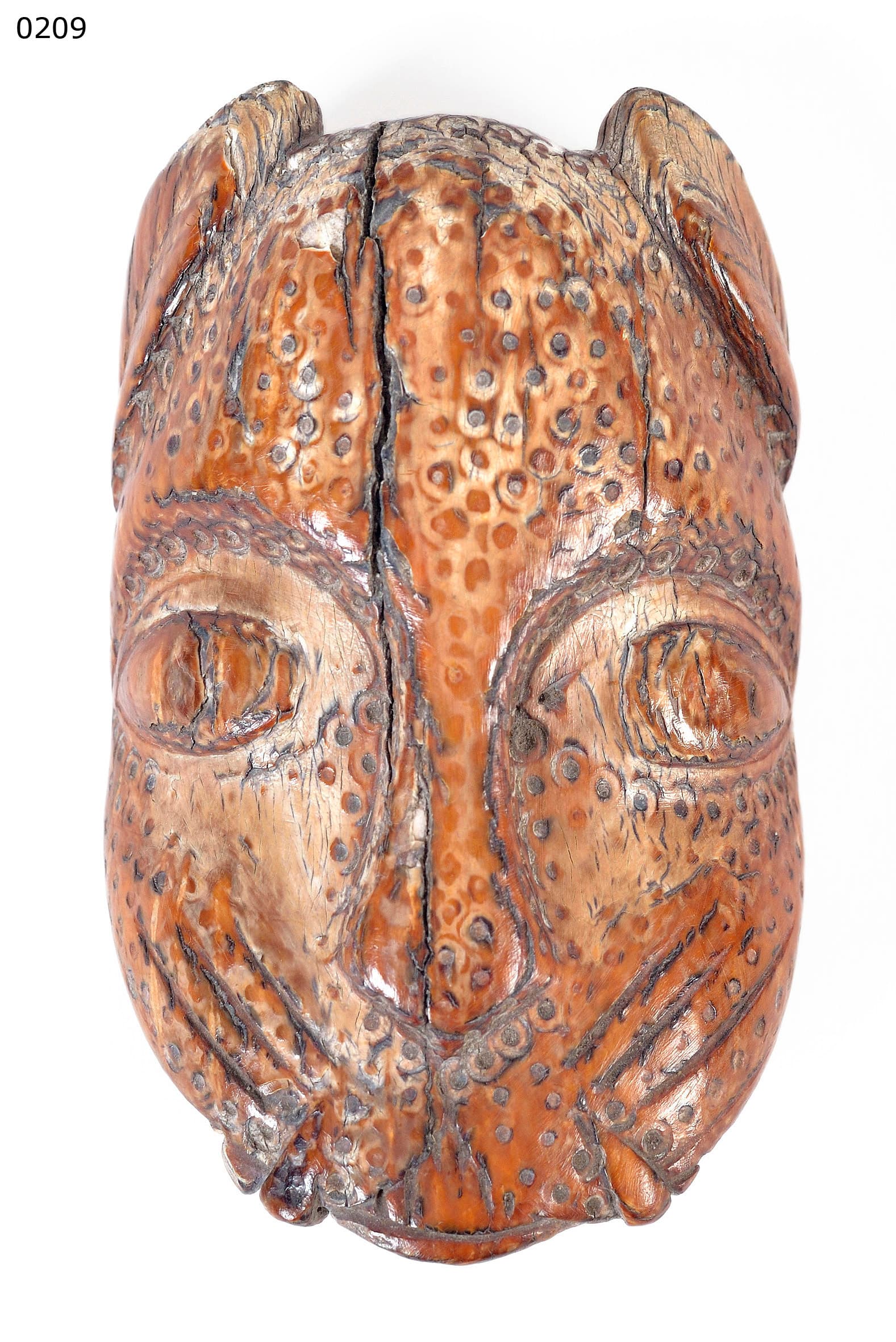
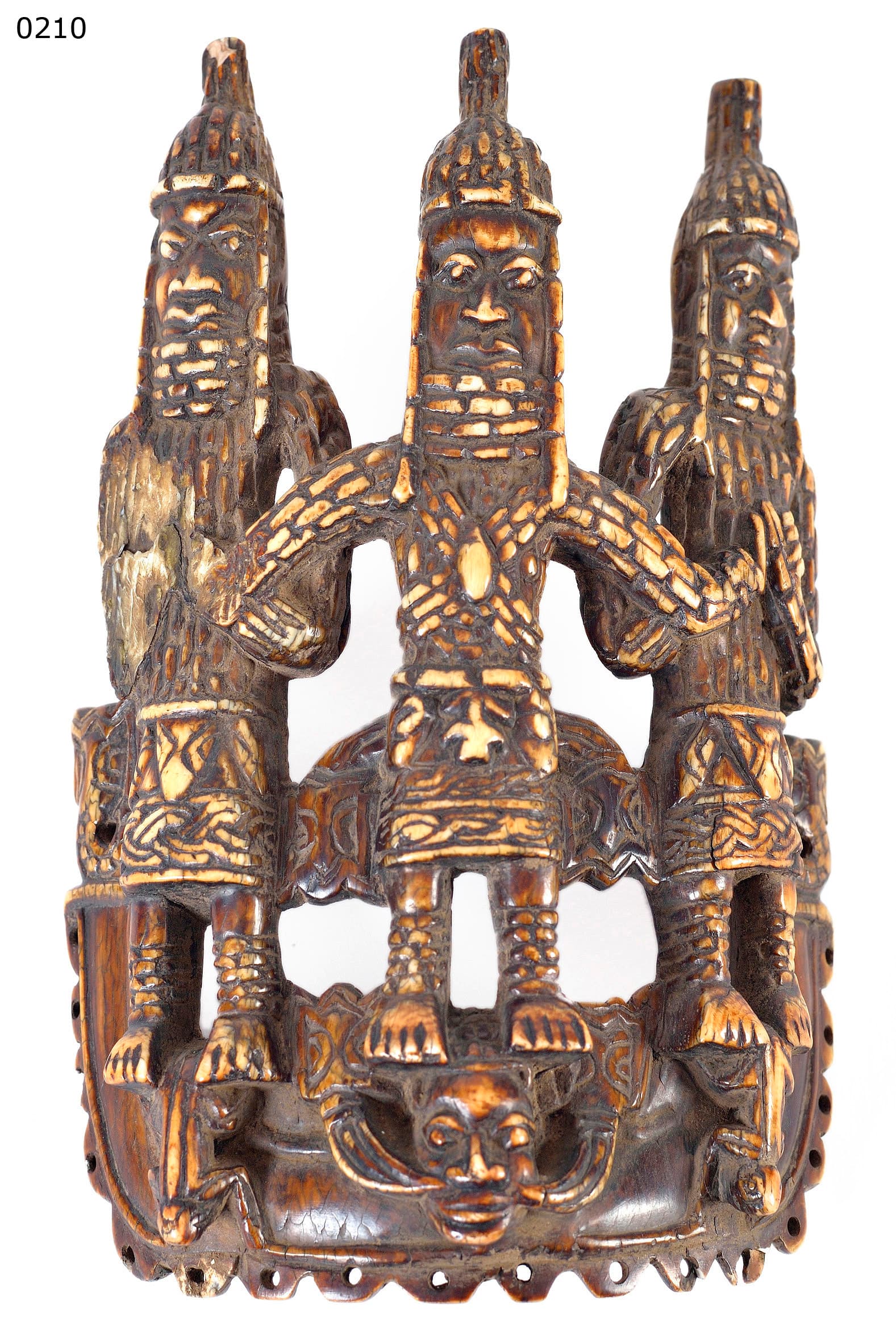
This highly detailed ivory pendant mask depicts an idealized Edo face, crowned with an intricate, openwork headdress of stylized mudfish or coral beads, and framed by a collar of similar braided motifs. The ivory possesses a deep, rich, reddish-amber patination.
1. Aesthetic style — idealized Edo portraiture and the igbesanmwan
This hip mask is characteristic of the Igbesanmwan, the royal ivory carving guild of the Kingdom of Benin. The face follows strict, idealized Edo conventions: heavy, dropping eyelids, flared nostrils, and the prominent parallel iron inlays (though missing here, the carved channels remain) above the nose, representing scarification. The complex, openwork carving of the headdress and collar — often depicting mudfish, a symbol of the Oba's divine, amphibious nature — reflects the refined skill associated with carving the dense, unforgiving medium of elephant ivory.
2. Ritual function — ododua regalia and the power of the oba
In the highly structured Benin court, ivory hip ornaments (uhunmwun ekhoko) were exclusive royal regalia. They were worn suspended from the waist by the Oba and his highest-ranking chiefs during elaborate state ceremonies, particularly those aimed at pacifying spiritual forces and honoring the Queen Mother (Iyoba). The stark white of the ivory originally symbolized ritual purity and connection to Olokun, the god of the sea and wealth, emphasizing the king's divine right to rule and his control over maritime trade.
3. Physical patina — the Tukula/Palm oil patina
While fresh ivory is white, this mask exhibits a deep reddish-amber patina. This coloration is consistent with a "power patina" associated with ritual anointment. To spiritually charge the mask and honor the deity it represented, Edo priests repeatedly rubbed the ivory with a mixture of palm oil and camwood powder (a red wood associated with transformative spiritual heat and royalty). Over time, this mixture oxidized and sank into the porous ivory grain, suggesting its active life within the late Benin court.
Summary
This ivory hip mask is a notable example of Edo royal carving, utilizing idealized portraiture and mudfish iconography to project divine authority. Its deep, reddish-amber palm oil patination supports its attribution as active, prestigious regalia in the late Benin kingdom.
Written with AI assistance from the collection appraisal, object photography and our own research; editorially reviewed. Mistakes are possible — corrections are welcome. How we work →