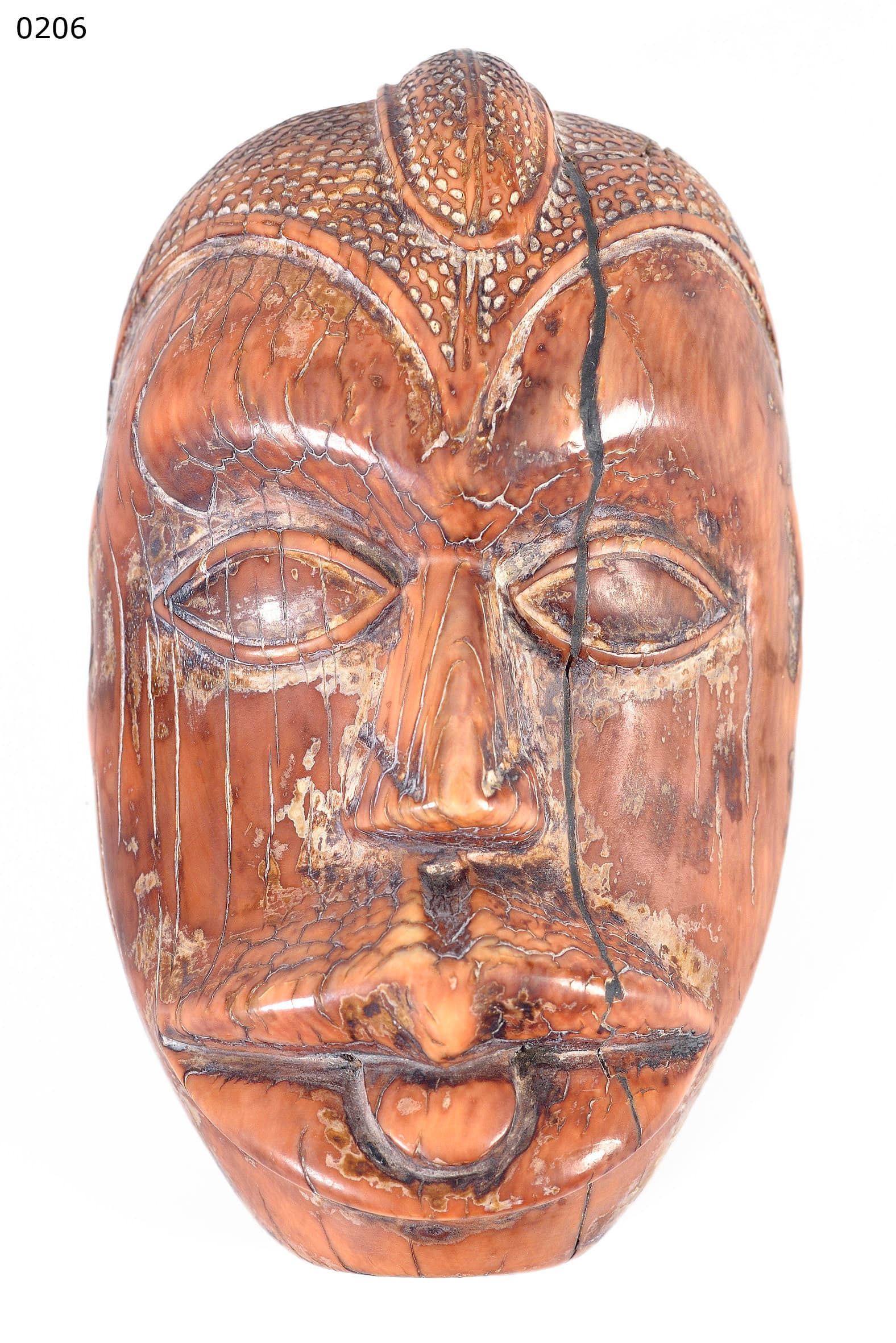
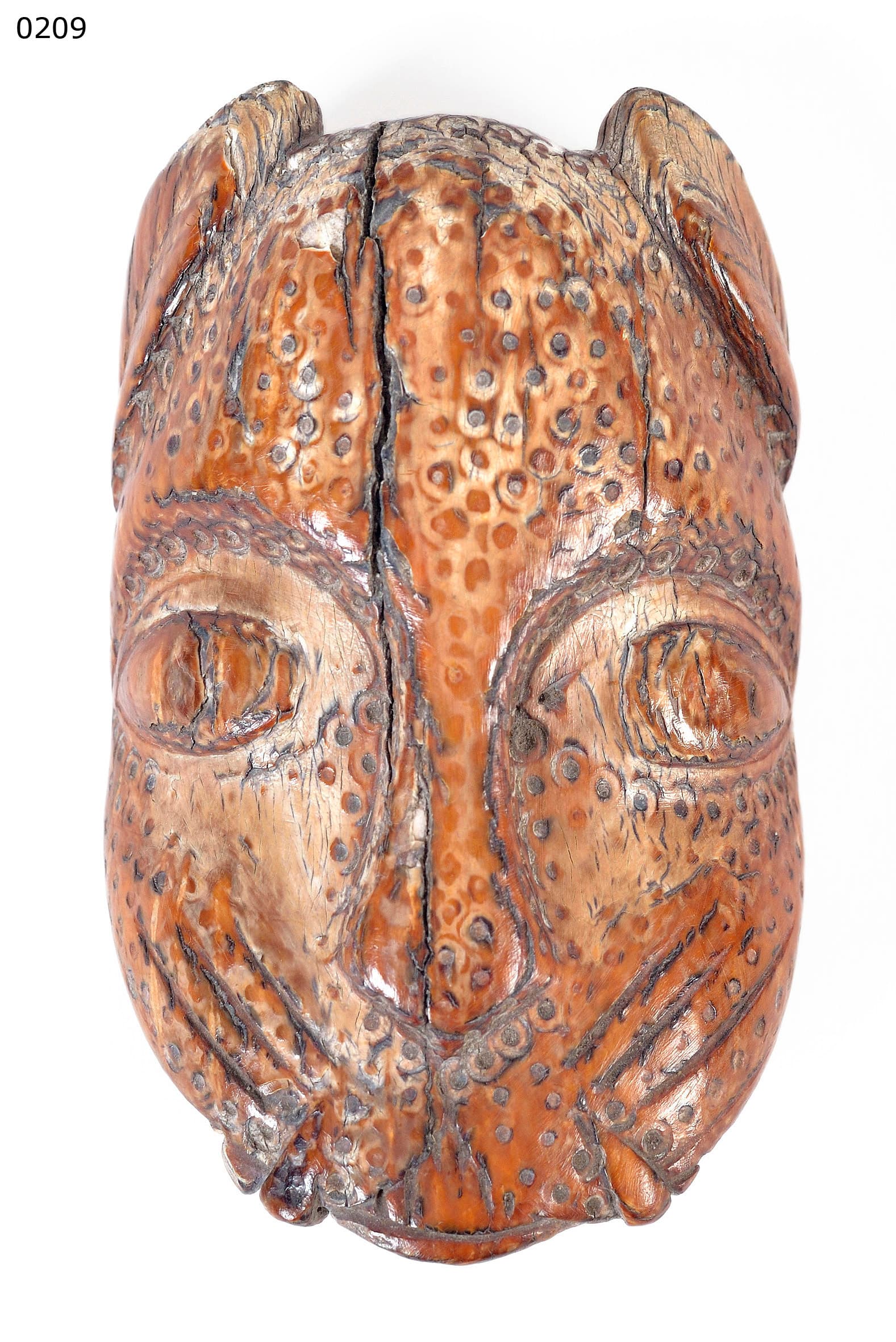
Carved from pale ivory, this mask depicts a highly stylized leopard face characterized by large, leaf-shaped ears, massive almond eyes, and a prominent, tooth-baring snout. Dozens of small, circular metal pegs (copper or iron) are driven into the ivory across the face to represent the animal's spots.
1. Aesthetic style — the leopard as the avatar of the oba
In the symbolic vocabulary of the Benin Kingdom, the leopard is the ultimate avatar of the Oba. Just as the leopard is the unquestioned king of the wilderness (the bush), the Oba is the absolute ruler of the civilized realm (the city). This ivory mask captures the terrifying, watchful power of the feline. The massive, overlapping eyes project unblinking vigilance, while the bared fangs convey lethal authority. The carver's integration of metal pegs to represent the leopard's spots adds a brilliant mixed-media contrast, highlighting the guild's technical ingenuity.
2. Ritual function — royal hip ornaments and martial festivals
Like the human-faced uhunmwun ekhoko, this leopard mask was worn at the hip over a heavy, layered cloth kilt during major military or royal festivals (such as the Igue). When the Oba or a supreme war commander danced, the mask stared out from the hip, serving as a secondary face that protected the leader's vulnerable flank. It visually reminded all onlookers, subjects and enemies alike, of the swift, predatory violence the king was capable of unleashing.
3. Physical patina — material desiccation and peg integration
The aging on this mask is a fascinating study in material interaction. The pale ivory exhibits a dense network of micro-craquelure (fine cracking) consistent with long-term exposure to varying humidity levels in West Africa. More importantly, the areas around the metal pegs show localized, dark oxidation where the metal has reacted with the organic ivory over generations. This integration of rust and ivory is consistent with a late Benin (18th/19th century) historical origin.
Summary
A terrifying and exquisite symbol of royal predatory power, this ivory leopard mask brilliantly utilizes embedded metal pegs to convey the absolute authority of the Edo king. Its natural age craquelure and localized metal oxidation are consistent with works associated with the Benin court.
Written with AI assistance from the collection appraisal, object photography and our own research; editorially reviewed. Mistakes are possible — corrections are welcome. How we work →