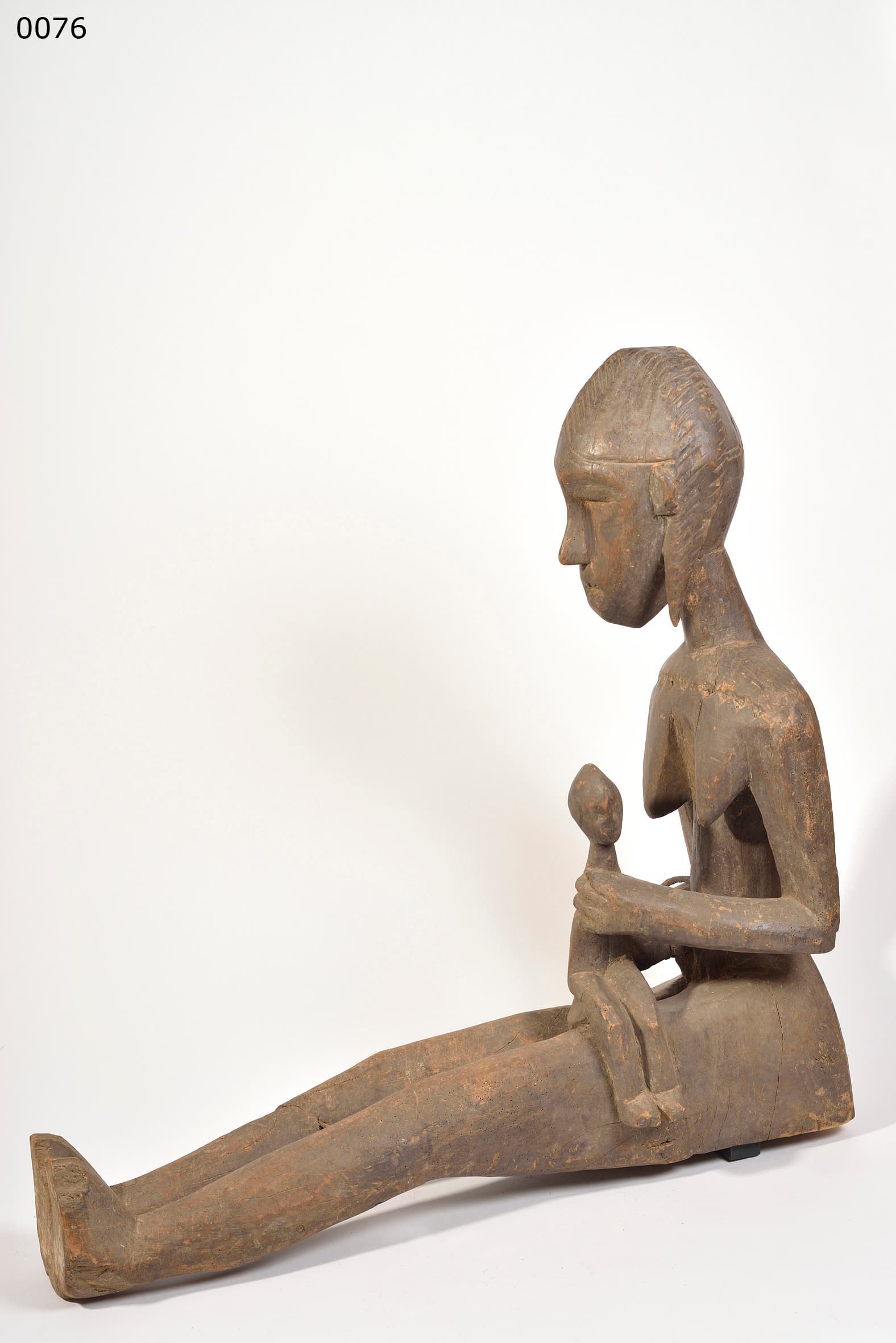
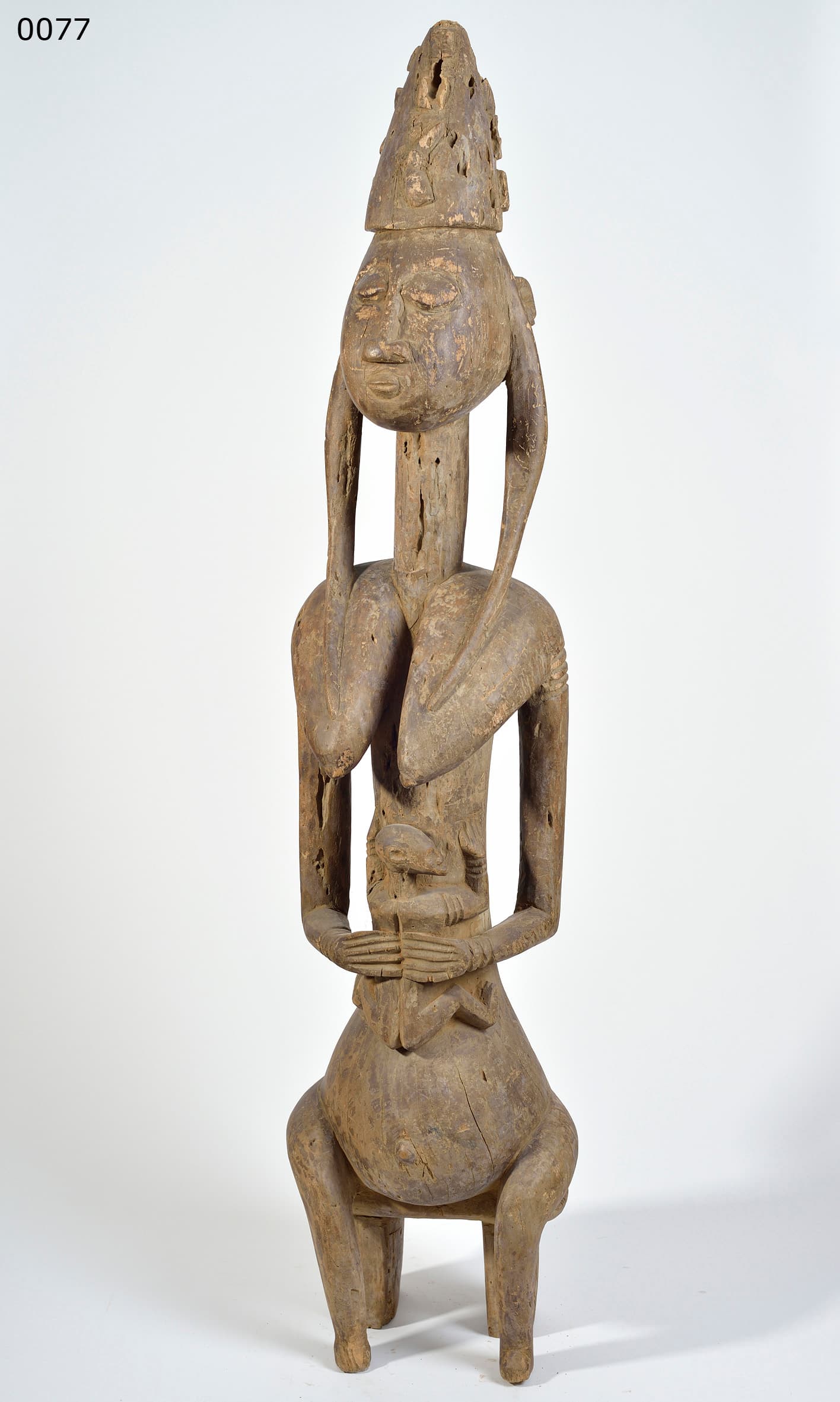
This highly stylized wooden female figure features a wide, flat face with stylized ears and prominent, conical breasts, supported by a columnar torso that flares at the base. The entire object is engulfed in a thick, cracked, and heavily textured crust of black, organic material.
1. Aesthetic style — jo and gwan society aesthetics
This figure belongs to the deeply traditional sculptural corpus of the Bamana Jo and Gwan initiation societies, which govern the complex social and spiritual progression of men and women. The figure's severe, columnar torso and exaggerated, conical breasts emphasize maternal capability and female endurance. The large, stylized ears and flat face are classic Bamana sculptural conventions, indicating that the figure is attuned to the spiritual world, listening for the guidance of the ancestors to ensure the successful continuation of the lineage.
2. Ritual function — the Boli crust and active shrines
What separates this object from a simple wooden carving is its surface. It is entirely coated in a thick, black, "boli-like" sacrificial crust. In Bamana culture, spiritual power (nyama) is activated and sustained through the application of organic materials — often a mixture of chewed kola nuts, millet, animal blood, and earth. By repeatedly coating this fertility figure in these substances, the priest or owner transformed a piece of carved wood into a dense battery of spiritual energy, utilized to cure barrenness or protect a pregnancy.
3. Physical patina — patina fissures and deep desiccation
The attribution of this object is closely linked to the condition of its sacrificial crust. Over decades of application followed by drying, the thick organic layer has shrunk, creating deep, wide fissures and cracks that expose the wood beneath. This profound "mud-crack" desiccation is the result of long-term environmental aging in the arid Malian climate. This suggests that the object was a primary-use ritual artifact, heavily sustained by a devotee before eventually retiring from its active shrine life.
Summary
Associated with the Gwan society, this Bamana fertility figure features a deeply fissured, sacrificial crust consistent with active, early 20th-century maternal devotion.
Written with AI assistance from the collection appraisal, object photography and our own research; editorially reviewed. Mistakes are possible — corrections are welcome. How we work →