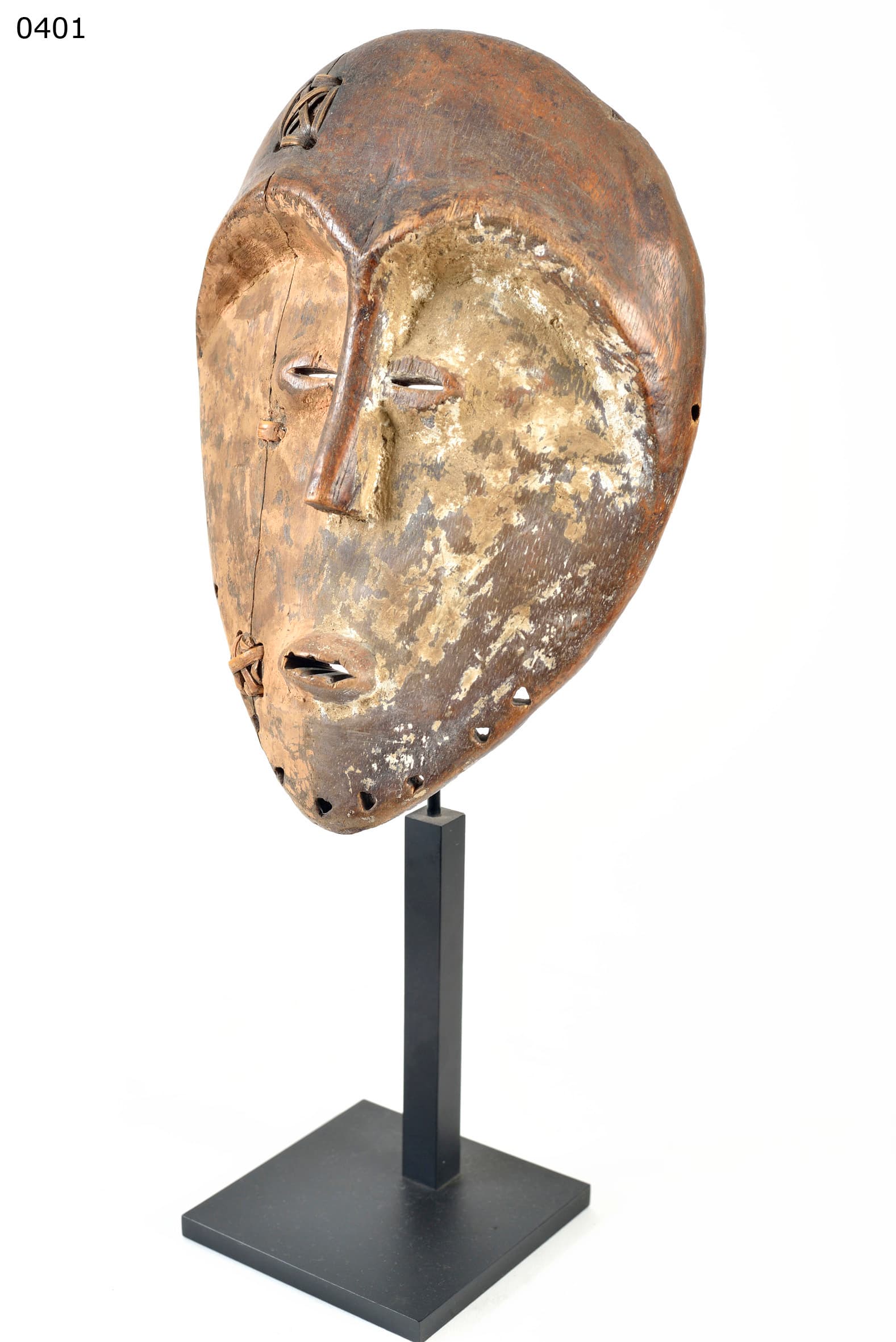
This highly stylized, 15 cm ivory figure is characterized by a heart-shaped, concave face punctuated by a classic "circle-dot" motif running around the perimeter, atop an abstracted body with angular, zigzag legs. The ivory presents a glossy, honey-gold patina.
1. Aesthetic style — the iginga and concave abstraction
This figure is a classic example of an iginga (plural: maginga), an anthropomorphic carving utilized by the Lega people of the Democratic Republic of Congo. The sculptor achieved a notable level of geometric abstraction: the face is carved as a deep, concave, heart-shaped dish, a hallmark of Lega aesthetics. The prominent use of the "circle-dot" (circumpunct) motif, which rings the face, is not merely decorative. In Lega visual vocabulary, these markings often represent the eyes of the ancestors, multiple perspectives, or the scarification marks of high-ranking initiates.
2. Ritual function — the bwami society and the kindi grade
Lega art is entirely subordinate to the Bwami society, a highly complex, graded association that governs all social, political, and moral life in the culture. Objects made from ivory were strictly reserved for the Kindi, the highest and most powerful grade of Bwami initiates. This iginga was not a public idol; it was an educational tool. During closed ceremonies, high-ranking elders would display, handle, and arrange these ivory figures to visually illustrate proverbs, teaching profound moral lessons and social responsibilities to the younger initiates rising through the ranks.
3. Physical patina — ritual anointment and the golden patina
The deep, honey-gold patina of this figure is consistent with intense, specific Bwami ritual handling. Kindi initiates regularly rubbed their ivory maginga with palm oil to "feed" them and to give the ivory a deep, lustrous shine, which they associated with health, vitality, and high moral standing. The soft, buttery wear on the edges of the zigzag legs and the rim of the concave face suggests that this object was passed from hand to hand during initiation ceremonies, consistent with use during the first half of the 20th century.
Summary
A refined execution of the Lega concave aesthetic and circle-dot motif, this ivory figure is an educational tool of the elite Bwami society. Its smooth, honey-gold, lipid-rich patina is consistent with generations of active, secretive ritual handling.
Written with AI assistance from the collection appraisal, object photography and our own research; editorially reviewed. Mistakes are possible — corrections are welcome. How we work →