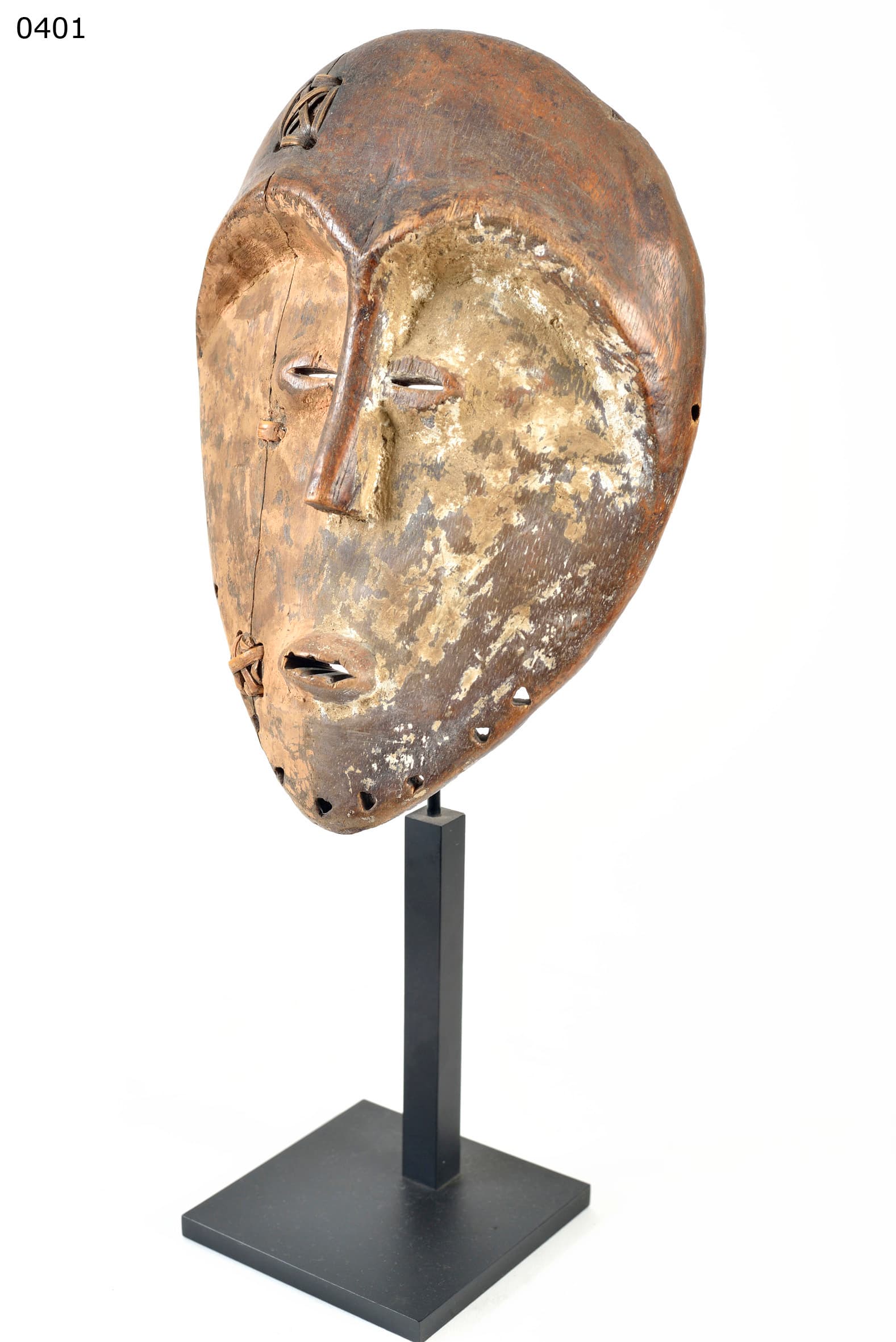
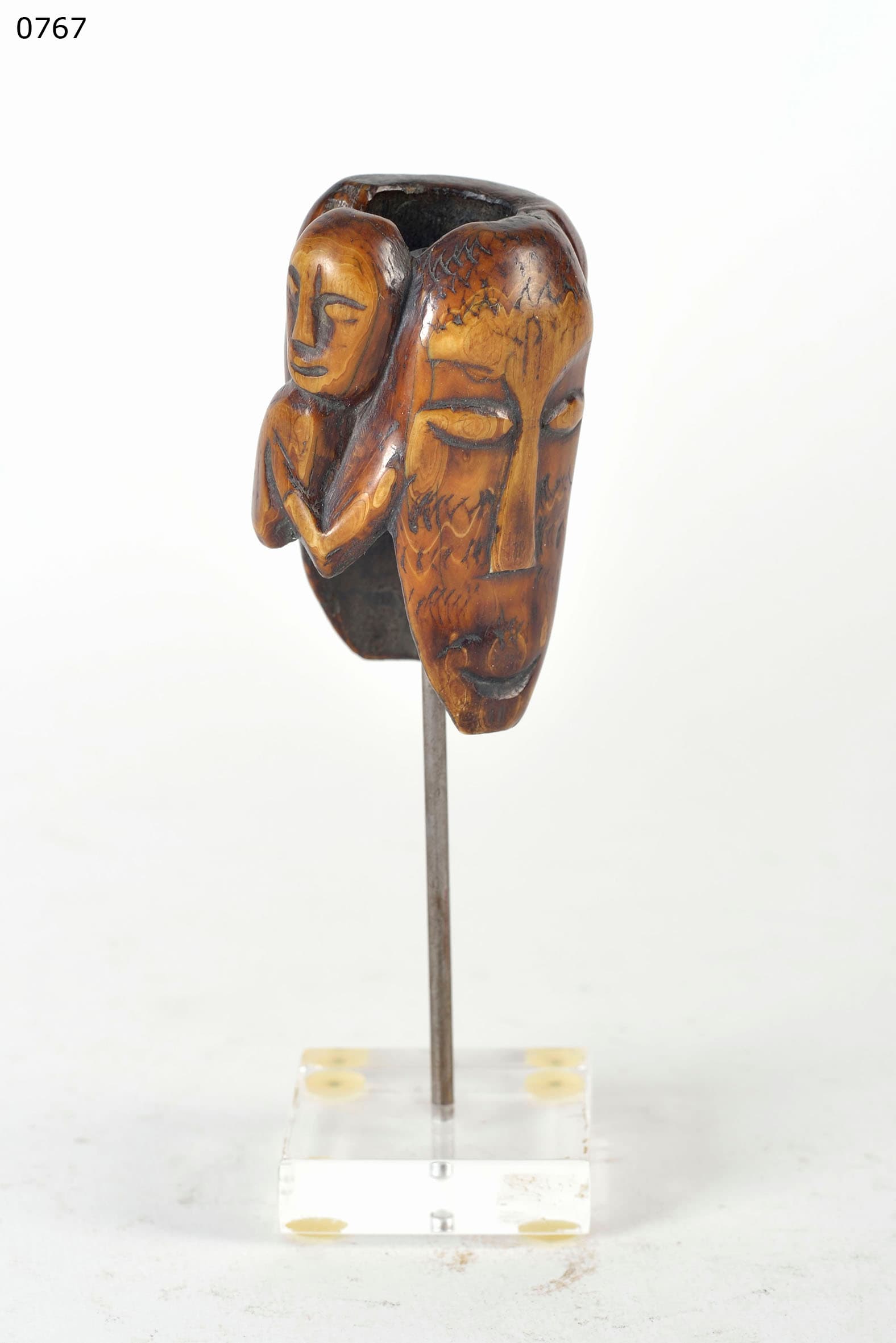
A profoundly minimalist slender Lega iginga figure (1st half 20th C.) from DR Congo — carved from bone or ivory with an oversized heart-shaped face, concave profile, no arms, and a peg-like lower body, the material exhibiting an intensely crackled pale surface with dark oxidized matter highlighting the deep age fissures. Tribe, object, material, country, and age are extrapolated from visual characteristics — this item does not appear in the source Excel registry.
1. The bwami society and aesthetic economy
The Lega are internationally celebrated for highly reductive abstract carvings traditionally associated with the Bwami society.
- Aesthetic of Reduction: This iginga (plural maginga) exemplifies that aesthetic economy — the carver removes anatomical details (arms, legs) to focus entirely on the heart-shaped face, traditionally associated with wisdom and character.
- Clarity Through Simplicity: The abstraction reflects the Lega philosophy that spiritual and moral clarity is simple, direct, and unadorned.
2. Didactic tools of moral instruction
Bwami is a complex graded association governing all aspects of Lega social, political, and moral life.
- Not Worshipped, Taught With: Figures like this are not worshipped as gods — they are didactic tools used by the highest grades of the society (Yananio and Kindi).
- Proverbs and Archetypes: During closed initiation ceremonies, these figures are drawn from a basket and displayed to initiates alongside specific proverbs and songs — each figure representing a moral archetype or flawed character trait, serving as a visual memory aid for a balanced civilized life.
3. Taphonomy of bone and Ivory
The physical condition shows characteristics consistent with significant age.
- Deep Craquelure: The material (elephant ivory or large animal bone) shows desiccation — loss of internal moisture producing deep erratic age-checking across the surface.
- Anointing Oil Patina: The dark patination filling these cracks is consistent with a mixture of anointing oils and handling dirt, suggesting extensive tactile use during Bwami ceremonies.
Summary
Demonstrating conceptual reduction, this Lega initiation figure distills complex moral philosophy into minimalist geometry. Its profound age-checking and deep handling patina are consistent with a history of significant ritual use within Congolese social history.
Written with AI assistance from the collection appraisal, object photography and our own research; editorially reviewed. Mistakes are possible — corrections are welcome. How we work →