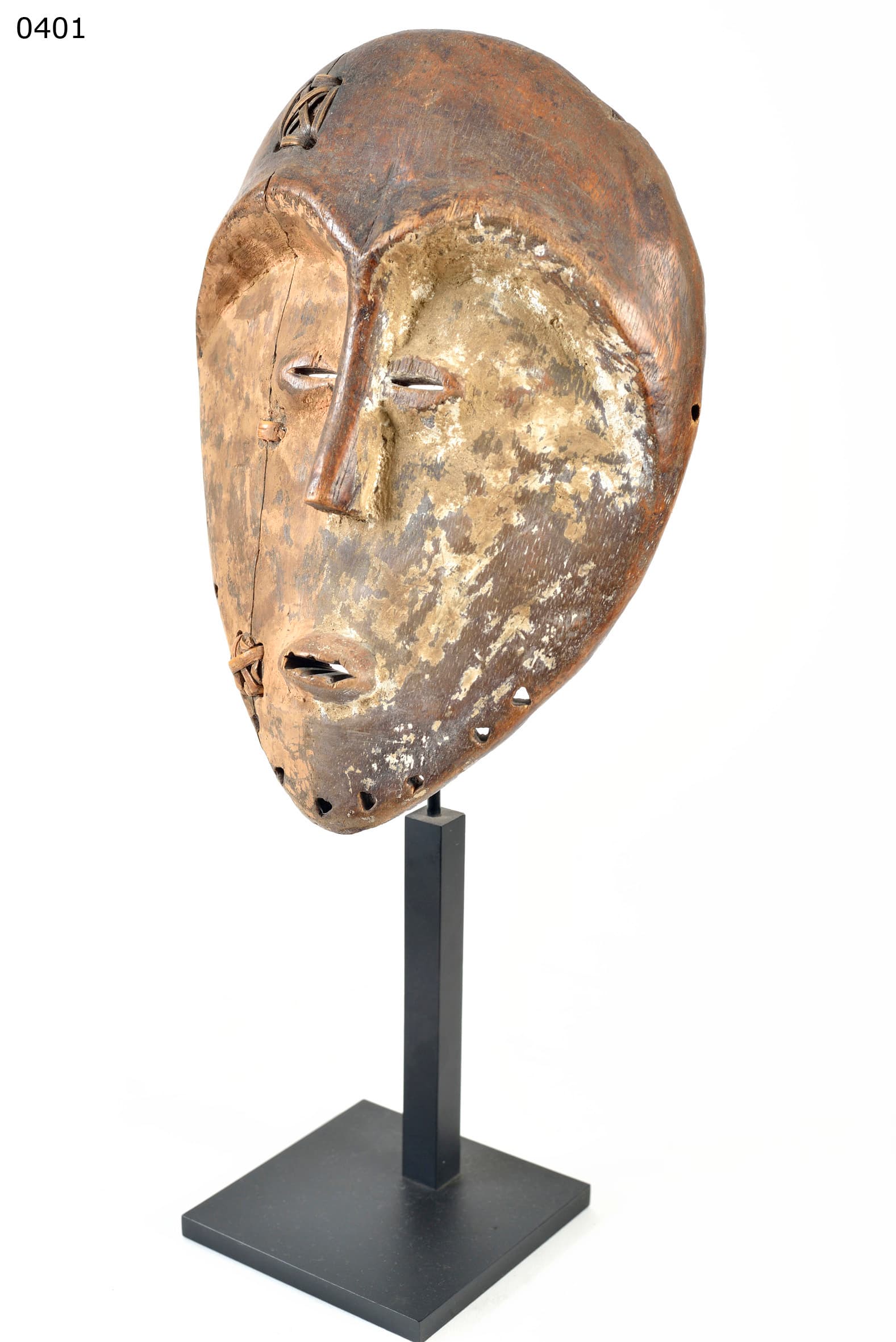
This oval, 15 cm ivory mask (lukwakongo or idumu) features a smooth, concave, heart-shaped facial plane with narrow slit eyes and a small, toothed mouth. The perimeter of the face is decorated with the classic Lega "circle-dot" motif, and the ivory displays a deep, honey-gold patina.
1. Aesthetic style — Lega concave aesthetics and bwami insignia
This ivory mask is a classic expression of Lega artistry, defined by its stark, heart-shaped concave face and severe minimalism. Known as a lukwakongo (if small) or idumu (if slightly larger), masks of this type were never worn over the face. Instead, they were tied to the arm, knee, or hip, or displayed on fences during the closed ceremonies of the Bwami society. The carved "circle-dot" motifs that ring the face represent the multifaceted vision, profound wisdom, and continuous surveillance of the ancestors.
2. Ritual function — the kindi grade and moral education
The Bwami society regulates all aspects of Lega life, teaching complex moral philosophy through art. Ivory masks were the exclusive prerogative of the Kindi, the highest, most revered rank of initiates. During initiation rites, an elder would reveal this mask, utilizing it as a mnemonic device to sing specific proverbs about leadership, continuity, and moral restraint. Owning an ivory mask signaled that the individual had reached an advanced level of Lega social, political, and philosophical development.
3. Physical patina — handled maturation and lipid absorption
The deep honey-gold patina is a key indicator of this mask's age and use. Fresh ivory is white; this rich, amber hue is the direct result of decades of intense ritual handling. Kindi initiates regularly rubbed their ivory insignia with palm oil and camwood to "feed" the spirit and to achieve a glossy finish that symbolized health and aesthetic perfection. The buttery smoothness of the facial edges and the deep color penetration suggest it was actively used during the early 20th century.
Summary
A refined manifestation of the Lega concave aesthetic, this ivory hip mask is an insignia of the elite Bwami society. Its deeply polished, honey-gold lipid patina is consistent with its use as an actively utilized tool of Congolese moral education.
Written with AI assistance from the collection appraisal, object photography and our own research; editorially reviewed. Mistakes are possible — corrections are welcome. How we work →