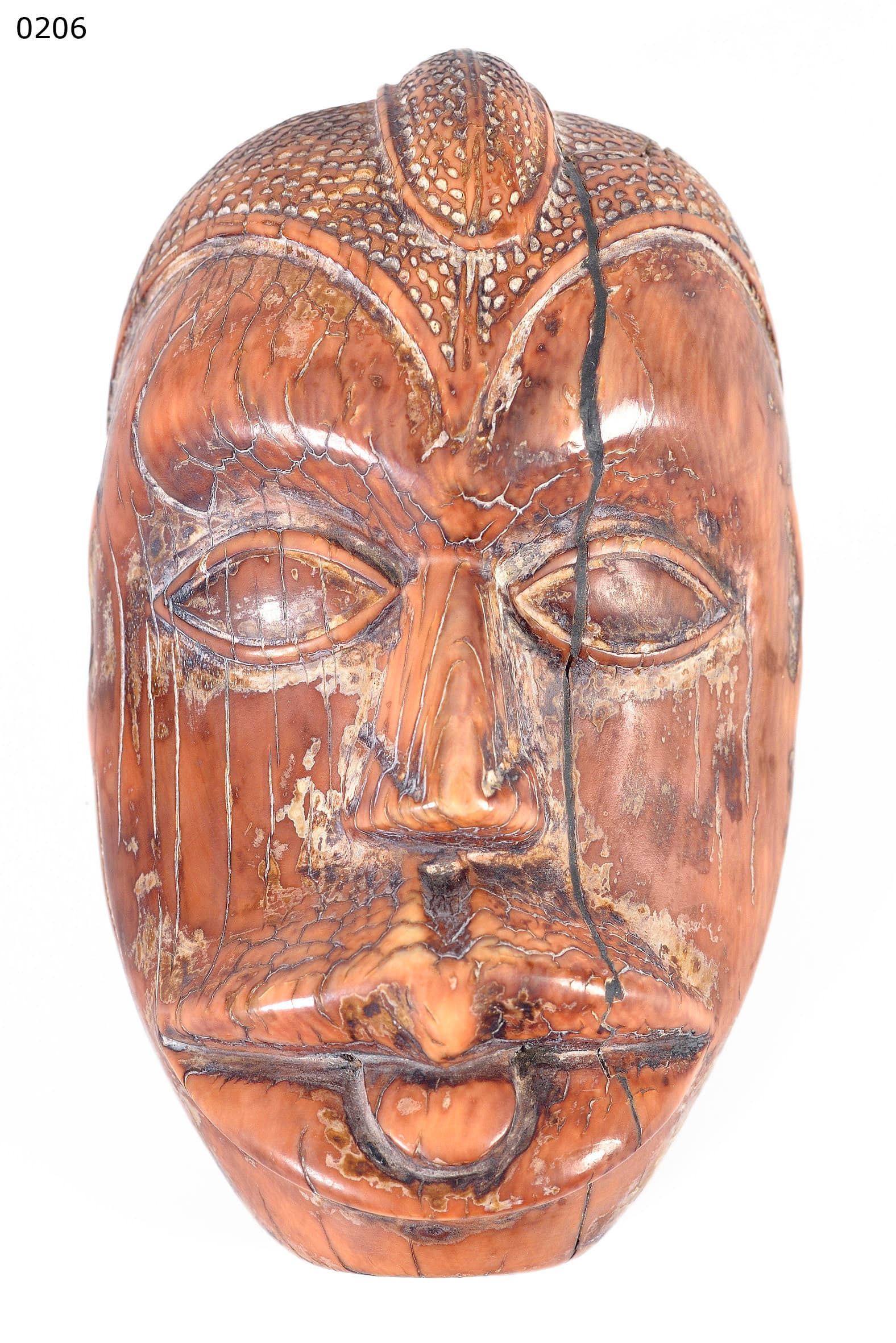
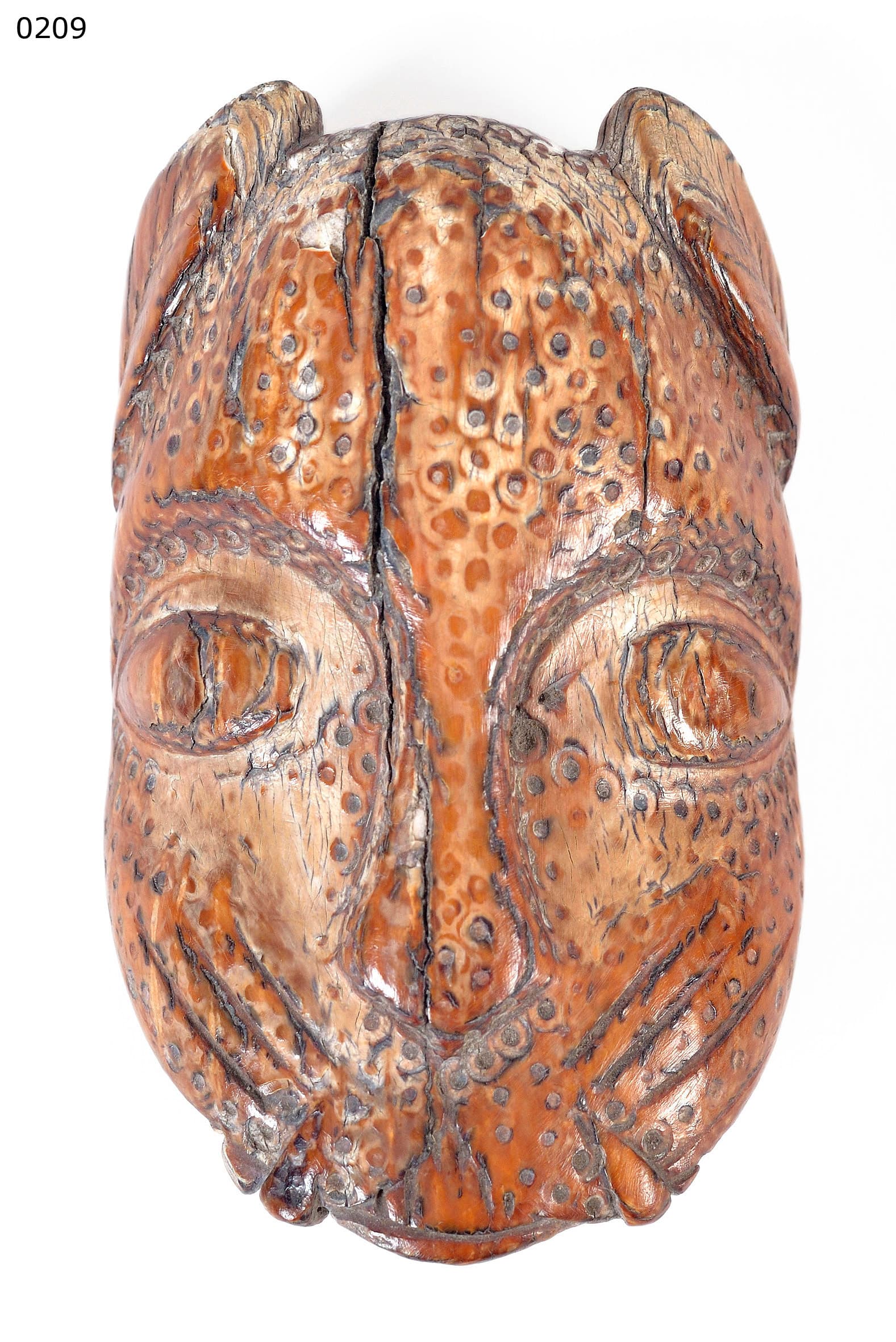
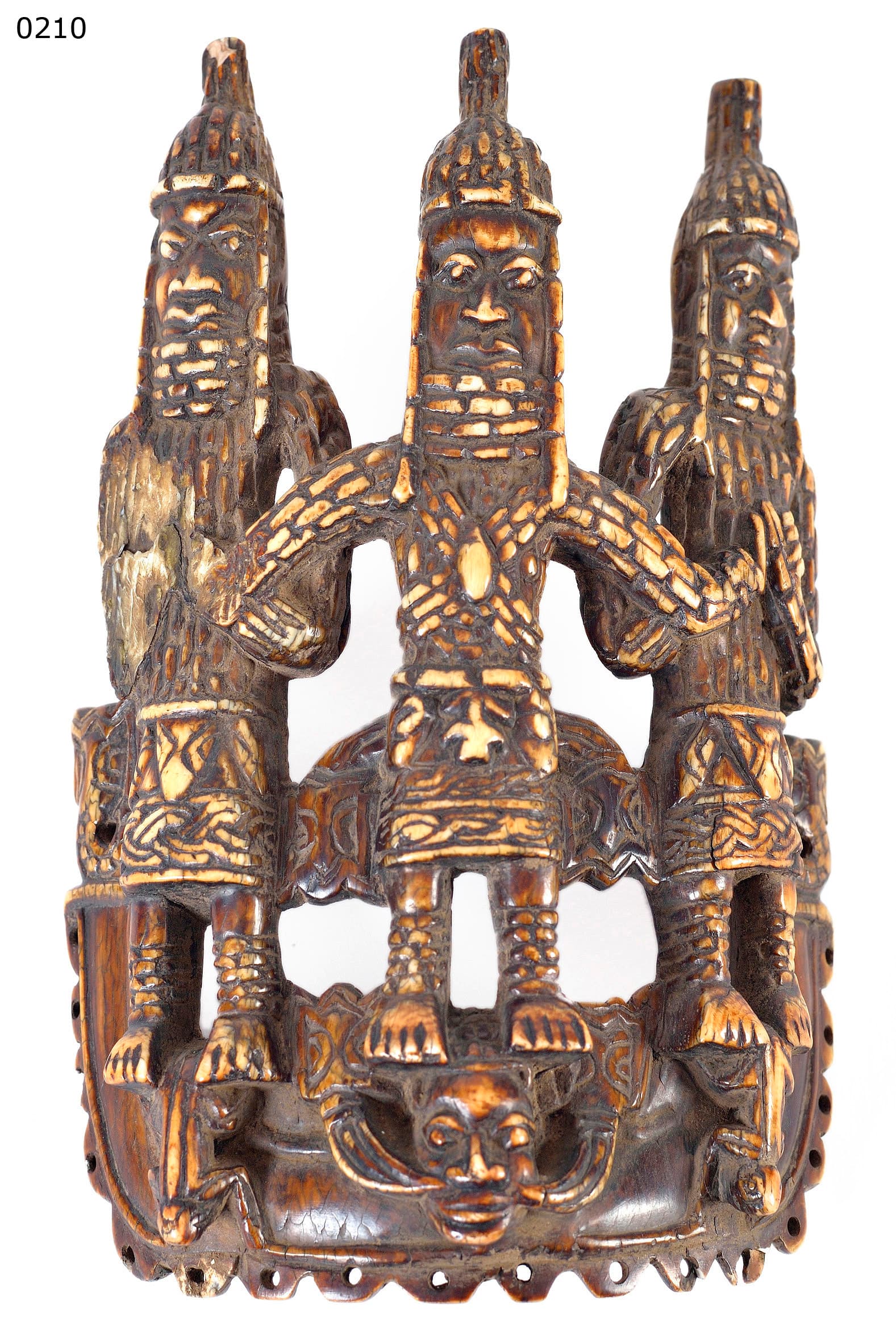
This 41 cm rectangular bronze plaque depicts a central, high-ranking Edo warrior or chief in deep relief, holding a staff or weapon and wearing an elaborate, bell-adorned collar, set against a heavily stippled background of incised floral (quatrefoil) motifs. The bronze displays a varied, dusty, and oxidized patina with localized earthy accretions.
1. Aesthetic style — the igun eronmwon guild and narrative relief
The bronze plaques of the Kingdom of Benin are globally recognized as one of Africa's greatest artistic and historical achievements. Cast by the royal Igun Eronmwon guild using the lost-wax process, this plaque employs high, three-dimensional relief to project the figure outward from a flat, meticulously stippled background. The background is adorned with the classic "river leaf" (quatrefoil) motif, a symbol of Olokun, the god of water and wealth. The extreme detail in the figure's beaded collar, wrap, and weapon serves as a precise, permanent archival record of Edo courtly rank and regalia.
2. Ritual function — palace architecture and royal history
These heavy bronze plates were not standalone artworks; they were architectural cladding. During the 16th and 17th centuries, hundreds of these plaques were nailed directly to the massive wooden pillars holding up the roofs of the Oba's expansive palace courtyards. Arranged in sweeping narrative sequences, they functioned as a visual history book, chronicling the kingdom's military victories, diplomatic treaties, and the immense, specialized hierarchy of the royal court, dazzling visiting dignitaries with the Oba's absolute wealth and power.
3. Physical patina — late Benin metallurgy and punitive patina
The surface of this plaque tells the story of its tumultuous history. Rather than being artificially polished to a bright shine, the bronze retains a dusty, matte, dark-brown oxidation with localized areas of green cuprite and earthen accretions in the deep recesses. The slightly irregular edges and the presence of mounting holes (some showing stress) reflect its original architectural installation and its subsequent, forceful removal — often associated with the catastrophic events of the 1897 British Punitive Expedition, making it a profound historical survivor.
Summary
A magnificent triumph of lost-wax casting, this Edo bronze plaque provides a highly detailed, three-dimensional archive of royal Benin court hierarchy. Its dusty, unpolished oxidation and architectural mounting holes authenticate it as a primary, historical survivor from the Oba's palace pillars.
Written with AI assistance from the collection appraisal, object photography and our own research; editorially reviewed. Mistakes are possible — corrections are welcome. How we work →