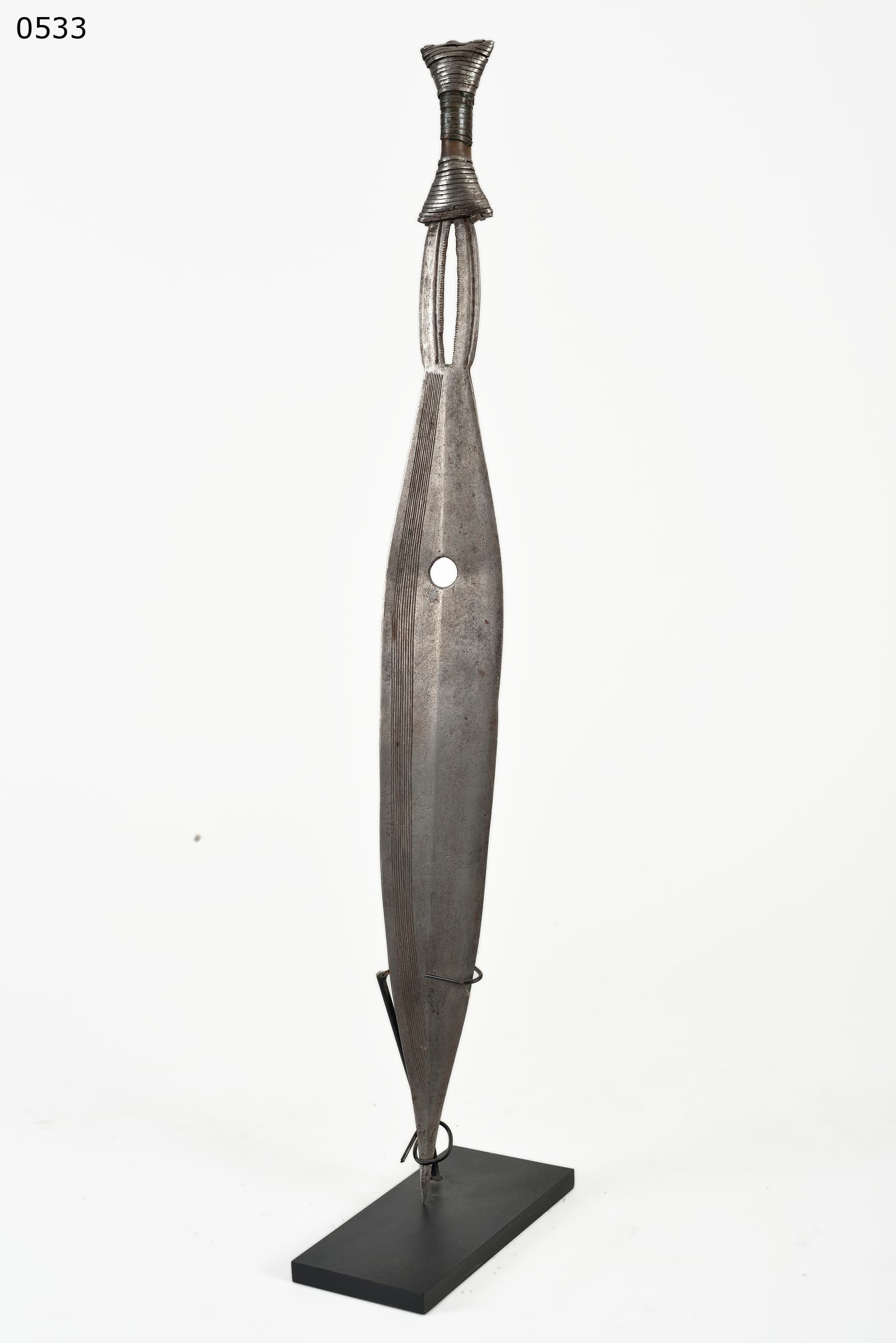
This 52 cm slit drum is finely carved into an anthropomorphic form, featuring a hollowed, cylindrical torso acting as the resonance chamber, surmounted by a highly idealized Mangbetu head with the distinctive, elongated lipombo coiffure. A wooden drumstick is attached via an aged fiber cord.
1. Aesthetic style — the lipombo aesthetic and courtly elegance
The Mangbetu people of northeastern Congo are globally celebrated for their highly refined court art, defined by a devotion to extreme elegance and bodily modification. This slit drum seamlessly integrates their most famous aesthetic marker: the elongated, flared skull and sweeping, fan-like coiffure known as lipombo, achieved historically through infant cranial binding. The face is serene, aristocratic, and highly polished, transforming a functional percussion instrument into a majestic portrait of Mangbetu royal beauty and intellectual prestige.
2. Ritual function — the voice of the king
Anthropomorphic slit drums were the acoustic centerpieces of the Mangbetu royal court. They were not musical instruments for general entertainment; they were communication devices strictly controlled by the king or high-ranking chiefs. By striking the edges of the hollowed torso with the mallet, specific, codified rhythmic patterns could be broadcast for miles through the dense rainforest. The drum functioned as the literal and metaphorical "voice" of the ruler, used to summon assemblies, announce visitors, or direct military maneuvers.
3. Physical patina — acoustic frictional wear and organic desiccation
The history of this drum's active use is physically etched into its wooden body. The edges of the vertical slit, where the wooden mallet repeatedly struck the resonance chamber, show severe, asymmetrical rounding and blunting from decades of impact. The deep, dark-brown patination is glossy on the face and head, resulting from continuous, respectful handling and palm-oil anointment. The highly brittle, indigenous fiber cord attaching the mallet is consistent with an early 20th-century origin.
Summary
Fusing the elegant, elongated lipombo aesthetic with profound acoustic engineering, this Mangbetu slit drum served as the literal voice of the Congolese royal court. Its deep, glossy patina and heavy impact wear along the resonance slit are consistent with its use as an active, aristocratic signaling device.
Written with AI assistance from the collection appraisal, object photography and our own research; editorially reviewed. Mistakes are possible — corrections are welcome. How we work →