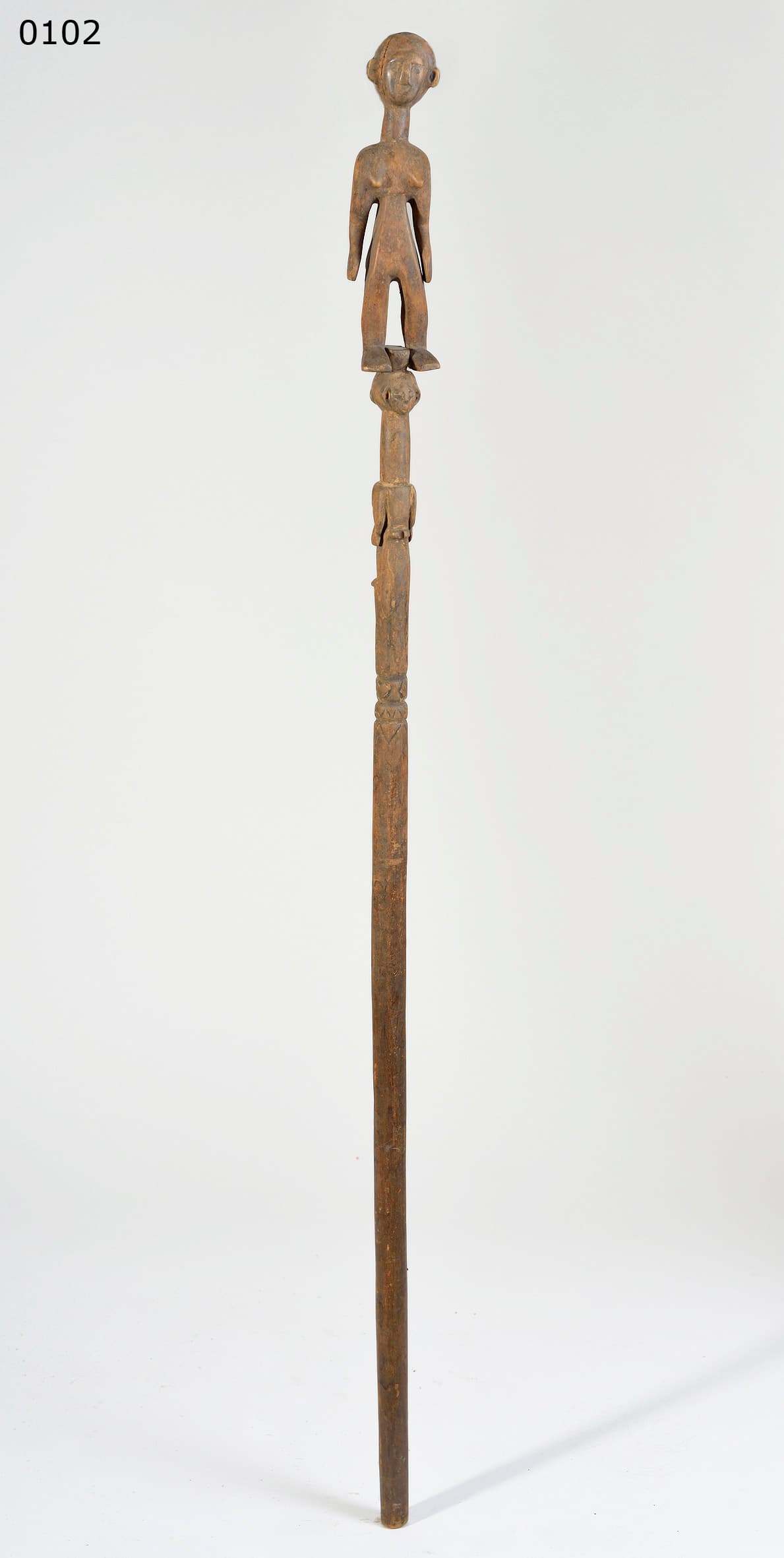
This tall (71 cm) wooden figure presents an extreme, pole-like minimalism, featuring a flat, disc-shaped head with simple, geometric facial incisions, an elongated, unadorned torso, and straight, rigid limbs. The dense wood has acquired a smooth, glossy, and deeply oxidized dark-brown surface.
1. Aesthetic style — east African pole-style abstraction
While West and Central African art often emphasizes voluminous, muscular forms, the aesthetic of East Africa (including the Kahe, Pare, and Kamba peoples of Tanzania) is defined by severe, columnar minimalism. This figure embraces the natural shape of the tree branch from which it was carved. The body is a rigid, vertical pole. The head is flattened into an austere, disk-like plane, with the eyes and mouth reduced to simple, unyielding geometric incisions. This radical subtraction of naturalistic detail creates a timeless, architectural presence that prioritizes spiritual essence over human portraiture.
2. Ritual function — ancestral posts and healing rituals
In Tanzanian cultures, pole-like figures serve as temporary, physical anchors for wandering ancestral spirits. Rather than being housed in elaborate, permanent shrines, these figures were often utilized dynamically by healers and diviners during specific ceremonies. Placed upright in the ground during initiation rites or curative rituals, the figure acted as a spiritual lightning rod, drawing the powerful, protective energy of the lineage founders directly into the physical presence of the living community, before being respectfully stored away until the next crisis.
3. Physical patina — handled maturation and wood density
The character of this early 20th-century carving is reflected in its surface quality. Carved from incredibly dense, heavy East African hardwood, the figure has resisted the severe insect damage common in softer woods. Instead, the surface has been polished to a glass-like, dark-brown sheen through decades of ritual handling, oiling, and friction against the body. The subtle softening of the sharp, geometric facial incisions and the slight organic desiccation around the feet are consistent with a history of ritual use and age.
Summary
A classic embodiment of East African pole-style minimalism, this Kahe figure distills the human ancestor into a timeless, architectural silhouette. Its dense, glass-like handling polish and softened geometry support its attribution as an active, early 20th-century ritual anchor.
Written with AI assistance from the collection appraisal, object photography and our own research; editorially reviewed. Mistakes are possible — corrections are welcome. How we work →