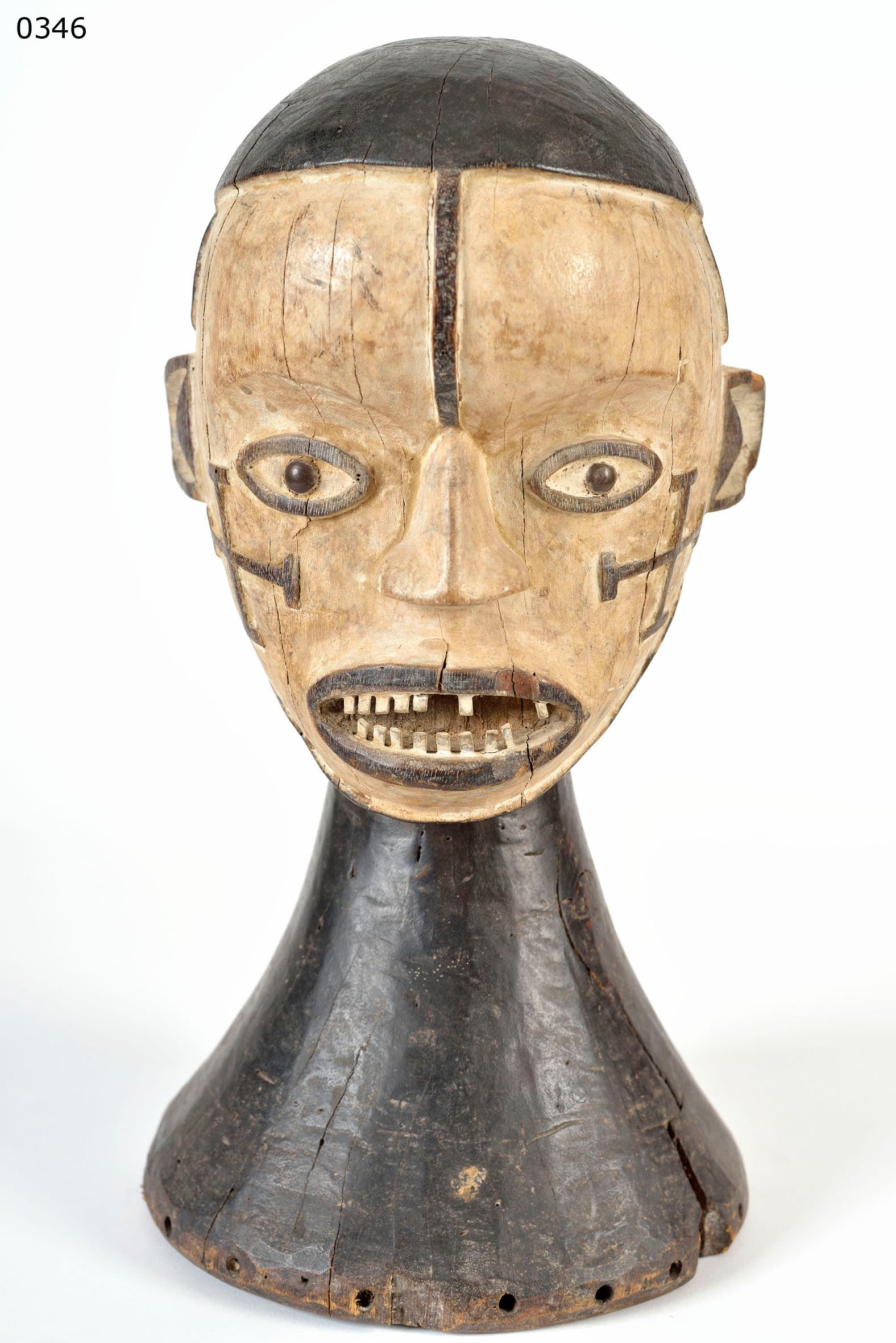
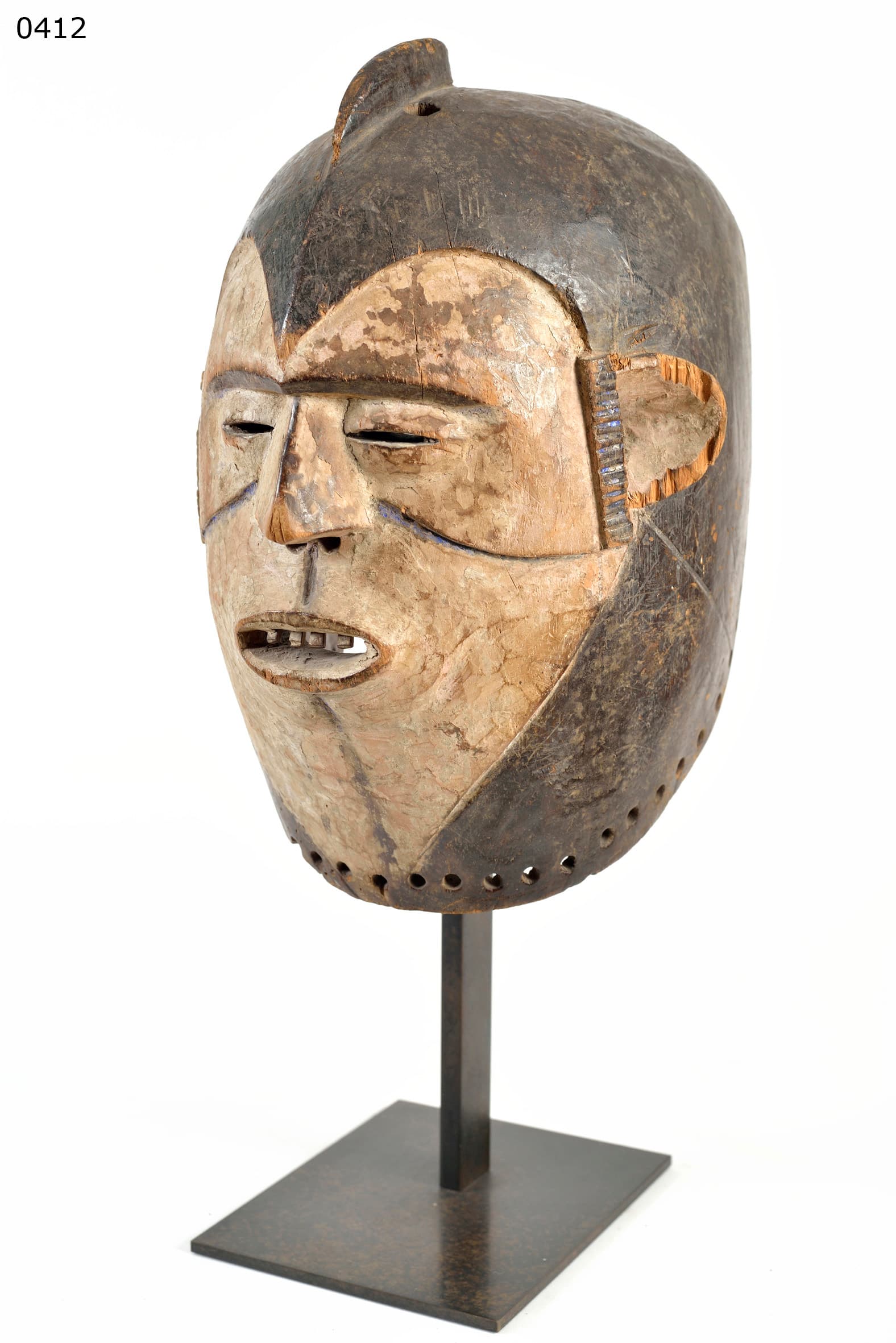
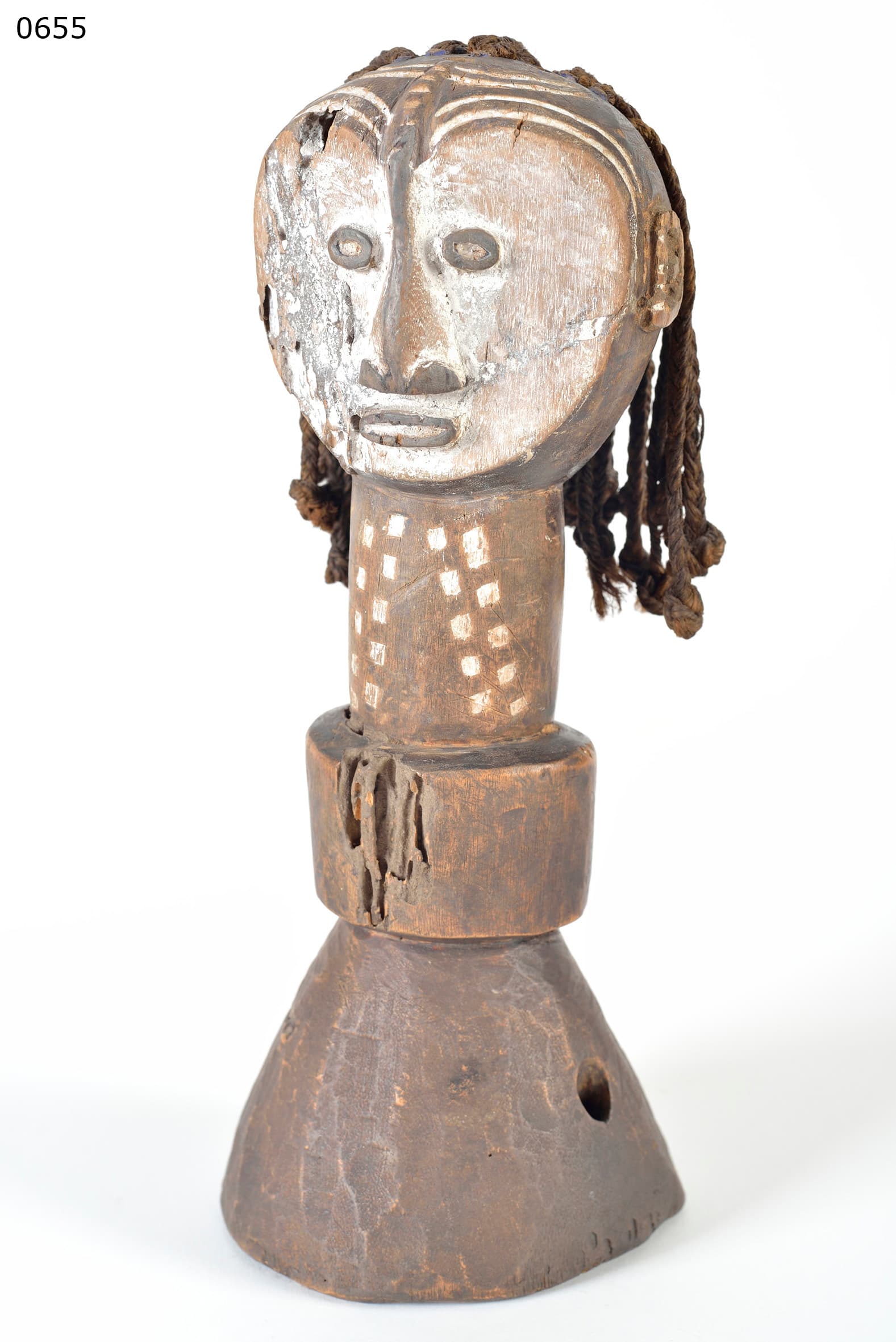
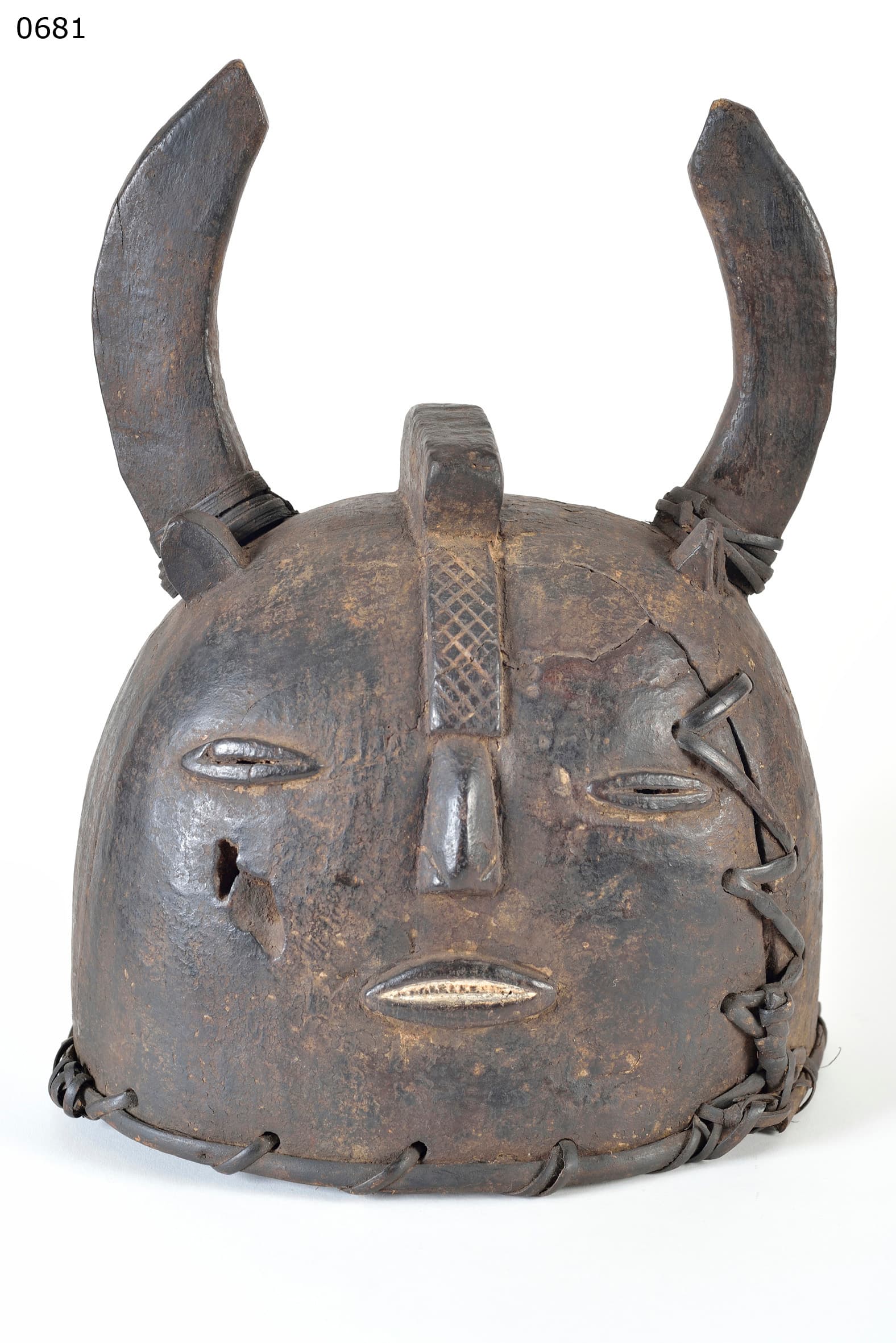
This 25 cm wooden mask presents an oval face covered in heavily degraded white kaolin pigment, featuring deep-set, slit-like eyes, an open mouth revealing carved teeth, and bold, black geometric scarification patterns framing the face. The wood shows significant organic wear around the edges.
1. Aesthetic style — white-faced aesthetics and Idoma portraiture
The Idoma people of the Benue River valley in Nigeria produce masks that masterfully balance striking naturalism with severe, high-contrast geometry. This mask exemplifies their white-faced tradition. The carver utilized smooth, naturalistic facial contours, but aggressively interrupted them with deep, blackened, vertical and horizontal scarification marks running down the forehead and temples. This stark juxtaposition of the pure, ghostly white kaolin against the dark, rhythmic scarification creates a visually arresting portrait that is simultaneously human and decidedly otherworldly.
2. Ritual function — the oglinye and ancestral masquerades
In Idoma culture, the color white is universally associated with the spirit world, the ancestors, and purity. A mask of this type was likely utilized in the Oglinye or Anjenu masquerade societies. Worn during funerals of important elders or at annual agricultural festivals, the white-faced dancer represented a benevolent ancestral spirit returning from the realm of the dead to bless the community, ensure fertility, and maintain social order. The bared, carved teeth add a subtle dimension of aggression, reminding the audience of the spirit's power to enforce justice.
3. Physical patina — kaolin degradation and frictional wear
The authenticity of this early 20th-century mask is confirmed by the specific degradation of its pigments. The white kaolin clay is not a fresh, superficial layer; it has sunken deeply into the porous grain of the wood, fading and flaking unevenly to reveal the dark timber beneath. Furthermore, the edges of the mask and the prominent facial features (the nose and chin) exhibit a smooth, dark patination. This frictional wear is the organic result of the dancer's hands repeatedly adjusting the mask during intense, sweaty performances over many decades.
Summary
Balancing naturalistic portraiture with striking, high-contrast scarification, this Idoma mask is a vivid, ghostly representation of the returning ancestors. Its deeply sunken kaolin pigment and authentic handling wear guarantee its history as an active, utilized centerpiece of Nigerian masquerade.
Written with AI assistance from the collection appraisal, object photography and our own research; editorially reviewed. Mistakes are possible — corrections are welcome. How we work →