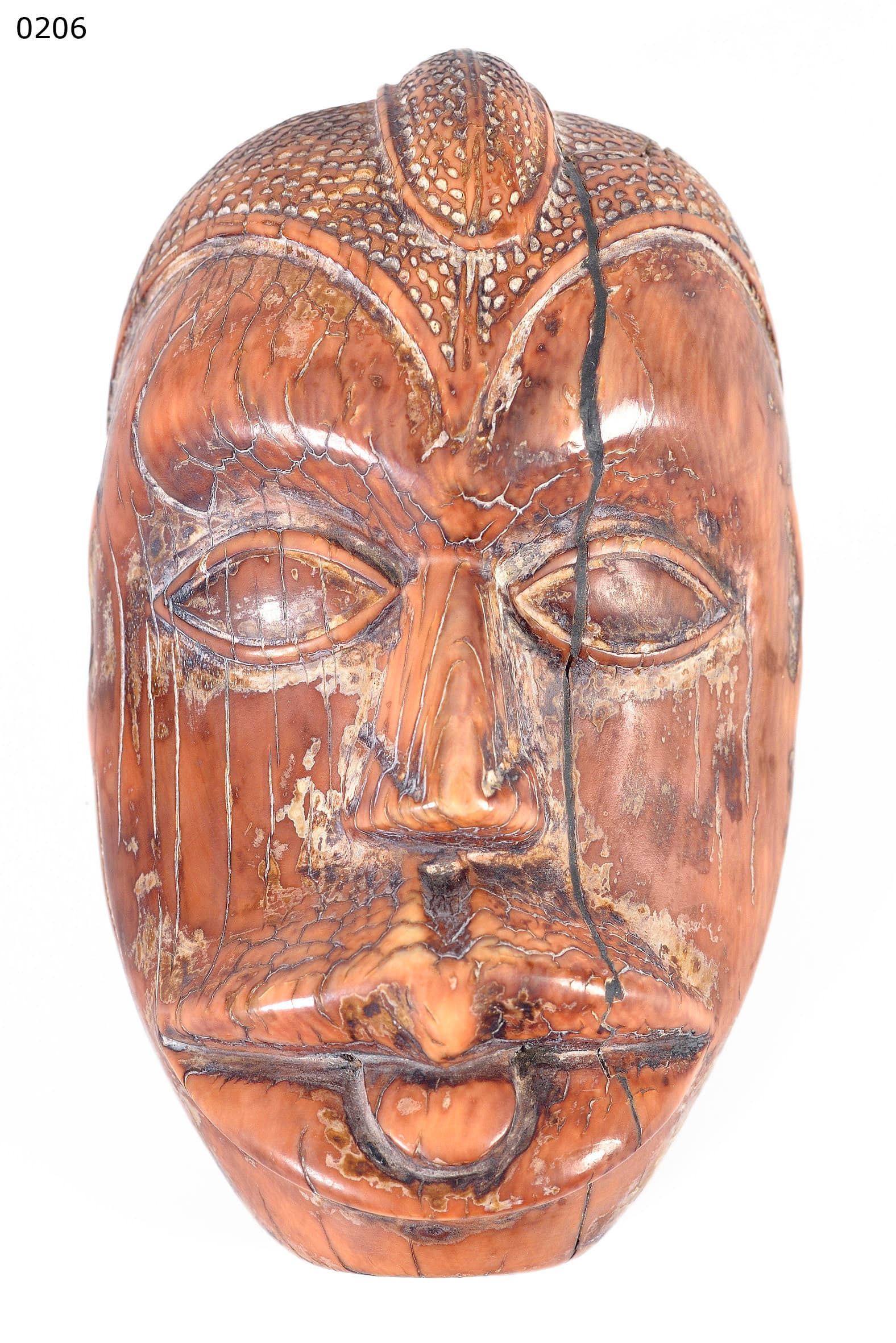
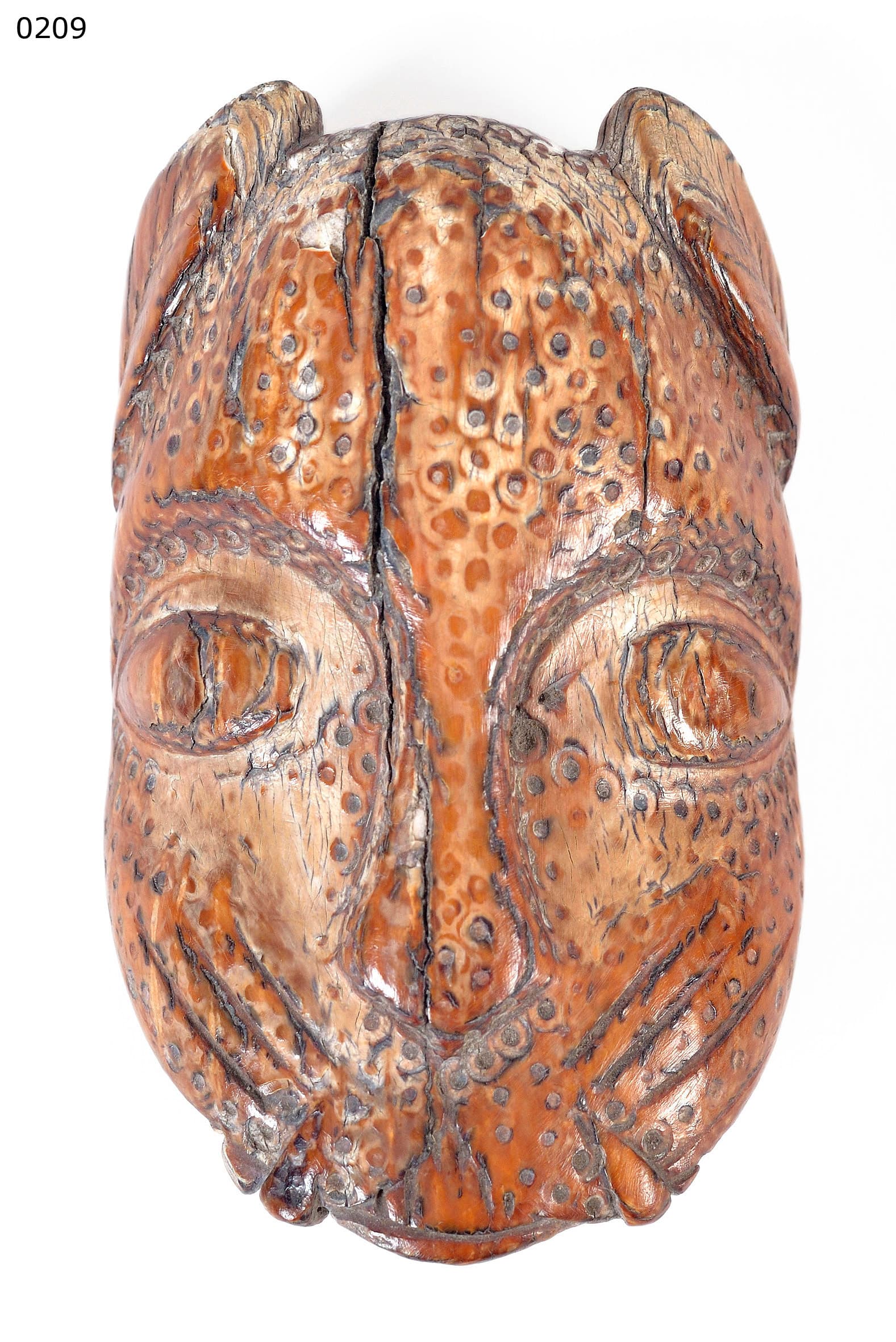
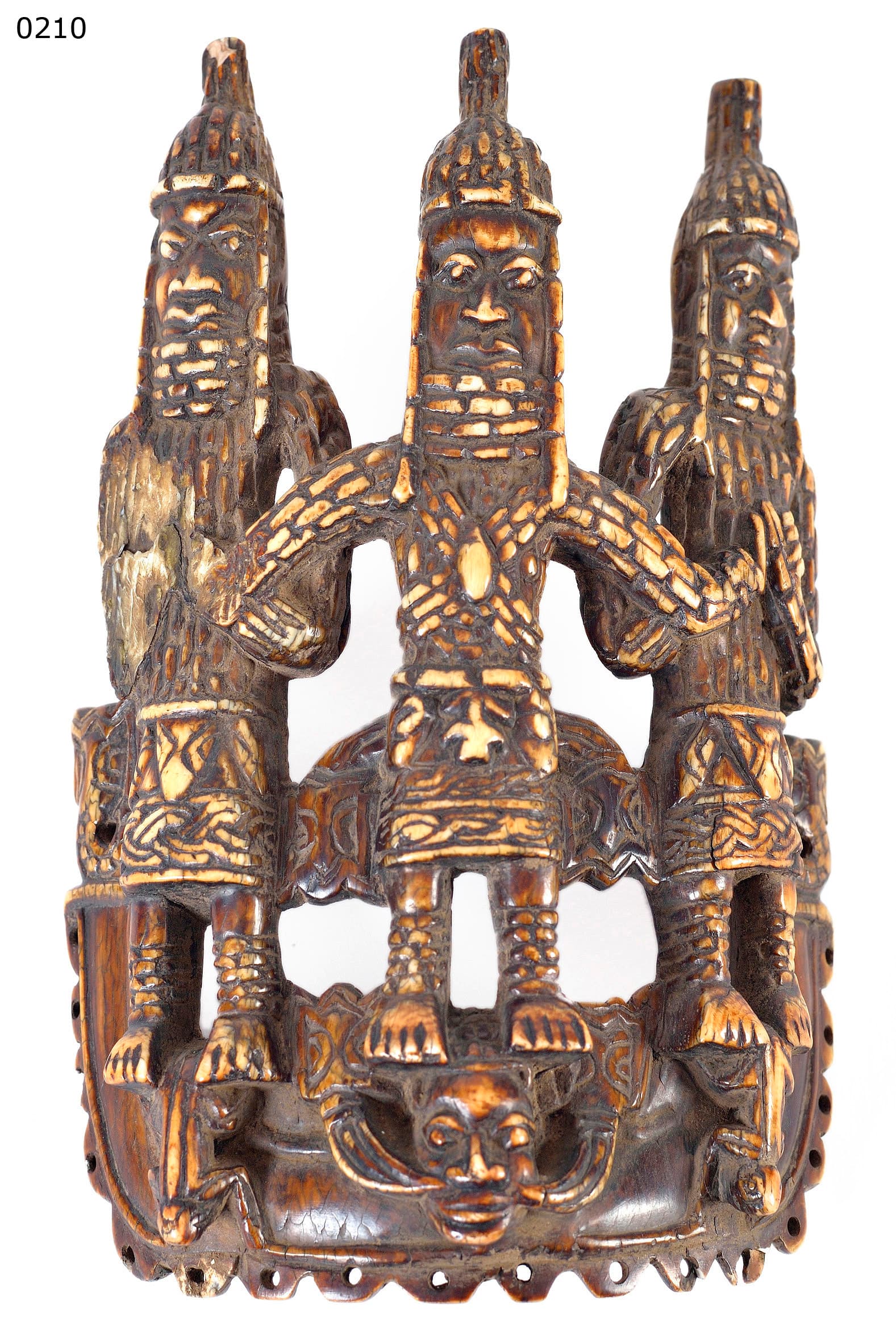
This 30 cm ceremonial double-bell (gong) is carved from a solid piece of ivory, featuring incredibly dense, intricate relief carving of multiple Edo figures, interlacing patterns, and a row of projecting, peg-like nodes along the striking edge. The ivory possesses a deep, heavily crazed, yellowish-brown patination.
1. Aesthetic style — the egong eronmwon and royal Ivory carving
The ivory double-bell (or sistrum) is one of the most sacred, technically demanding objects produced by the Igbesanmwan (the royal ivory carving guild of Benin). Carving a functional acoustic instrument from dense elephant tusk, while covering the entire outer surface in deep, narrative relief, requires supreme virtuosity. The complex iconography — featuring the Oba supported by attendants and surrounded by interlacing guilloche patterns — is a deliberate, physical manifestation of divine kingship, representing the Oba as the central pillar supporting the entire Edo universe.
2. Ritual function — the emaba ceremony and acoustic purification
This object is not a passive sculpture; it is an active, acoustic weapon of royal purification. During the sacred Emaba and Igue festivals, the Oba himself (or his highest-ranking priests) would hold this heavy ivory instrument, striking it with an ivory wand. The resulting sharp, percussive tone was believed to possess immense spiritual power, capable of driving away malevolent forces, cleansing the palace grounds, and calling down the blessings of the ancestors to renew the king's divine right to rule.
3. Physical patina — profound age craquelure and tonal maturation
While the spreadsheet notes an early 20th-century date, the physical aging of the ivory is profound. The once-white tusk has matured into a deep, rich, yellowish-brown, a tonal shift caused by decades of absorbing palm oil, ritual libations, and atmospheric oxidation. Most importantly, the surface is covered in a dense, interlocking network of deep age cracks (craquelure). This structural crazing occurs as the ivory naturally desiccates over generations, which is consistent with significant historical and ritual age.
Summary
Associated with the traditions of the Edo ivory carving guilds, this royal double-bell was a significant acoustic instrument of the Oba's purification rituals. Its deep, lipid-stained maturation and profound network of age craquelure are consistent with a deeply venerated, primary-use object of the Benin court.
Written with AI assistance from the collection appraisal, object photography and our own research; editorially reviewed. Mistakes are possible — corrections are welcome. How we work →