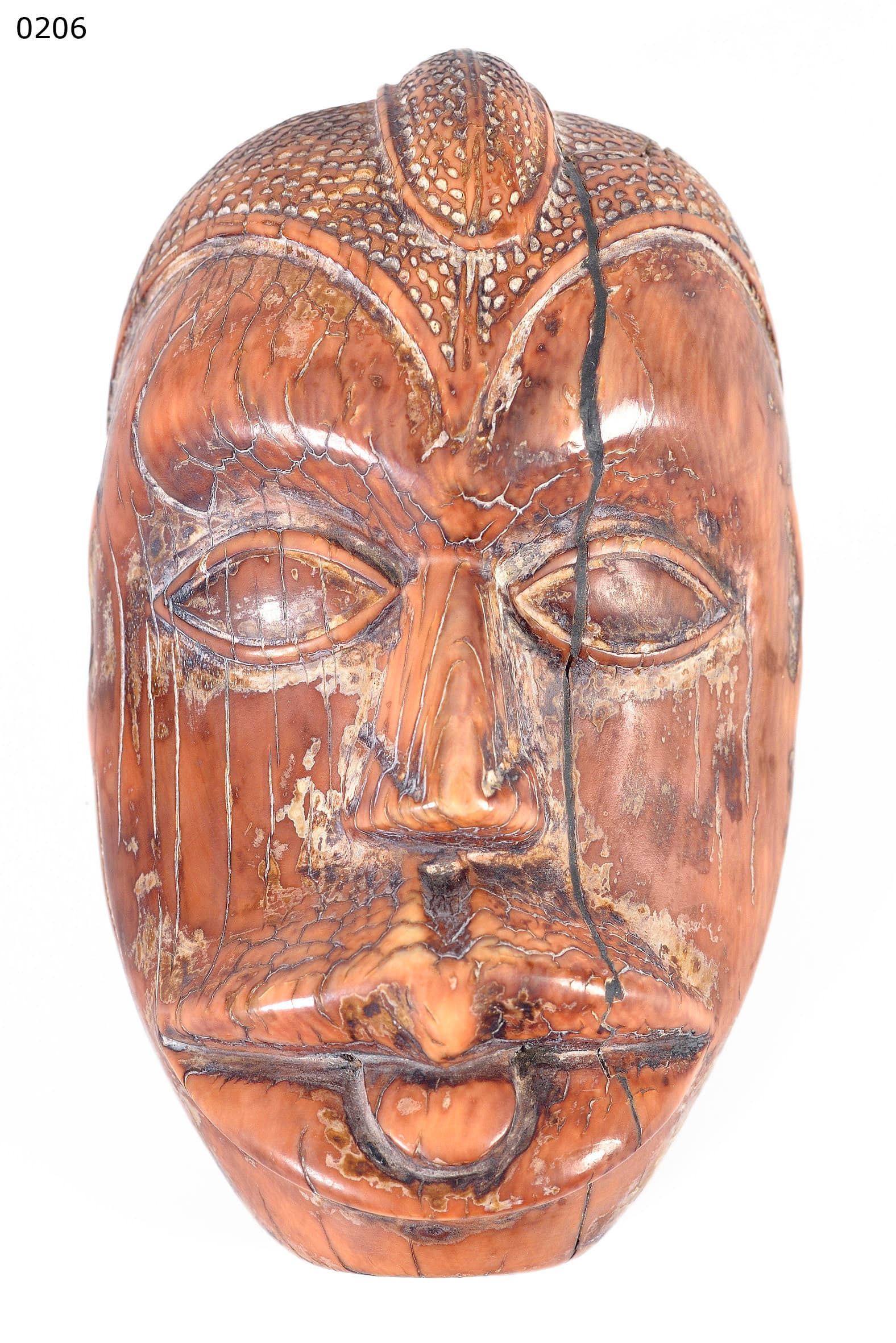
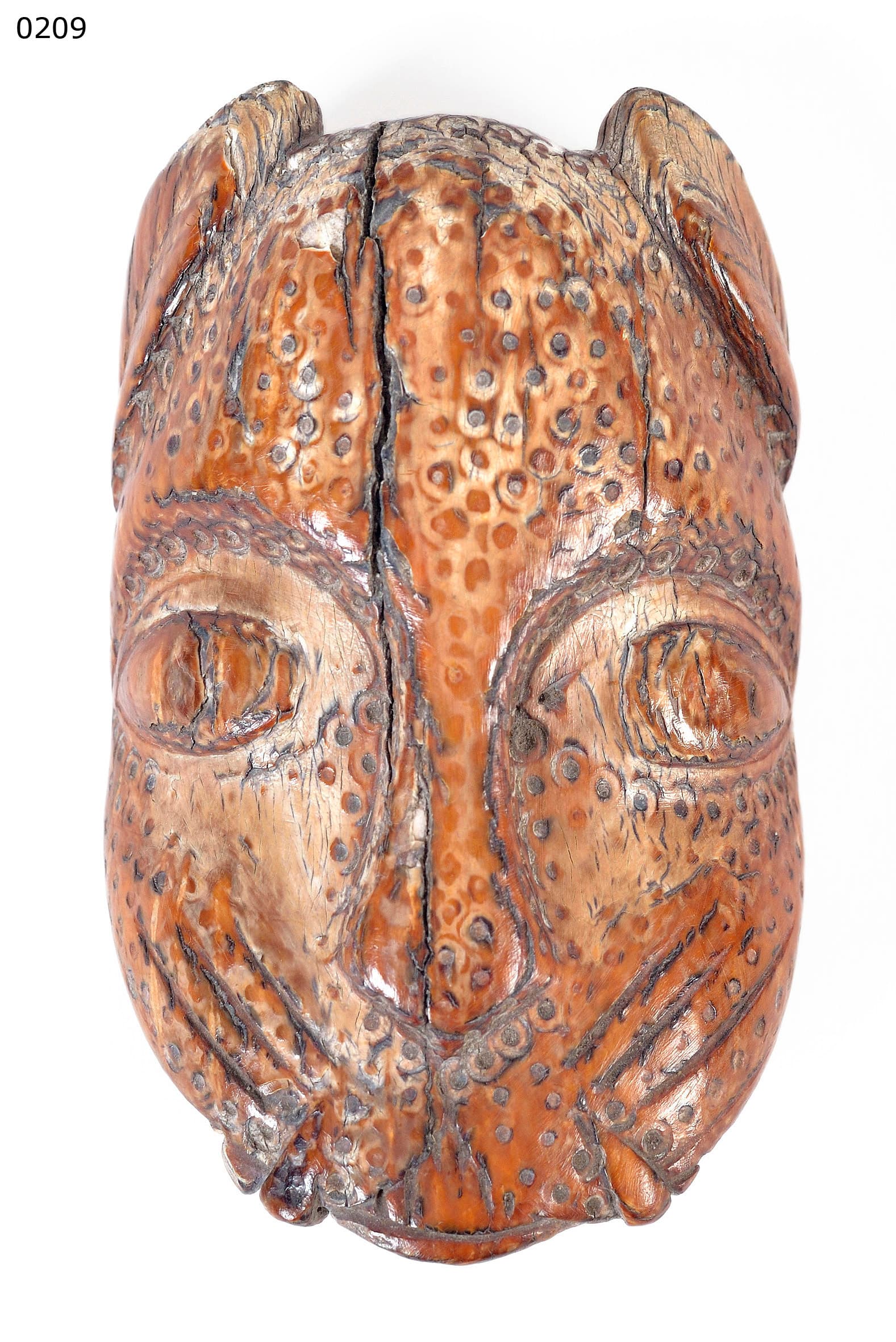
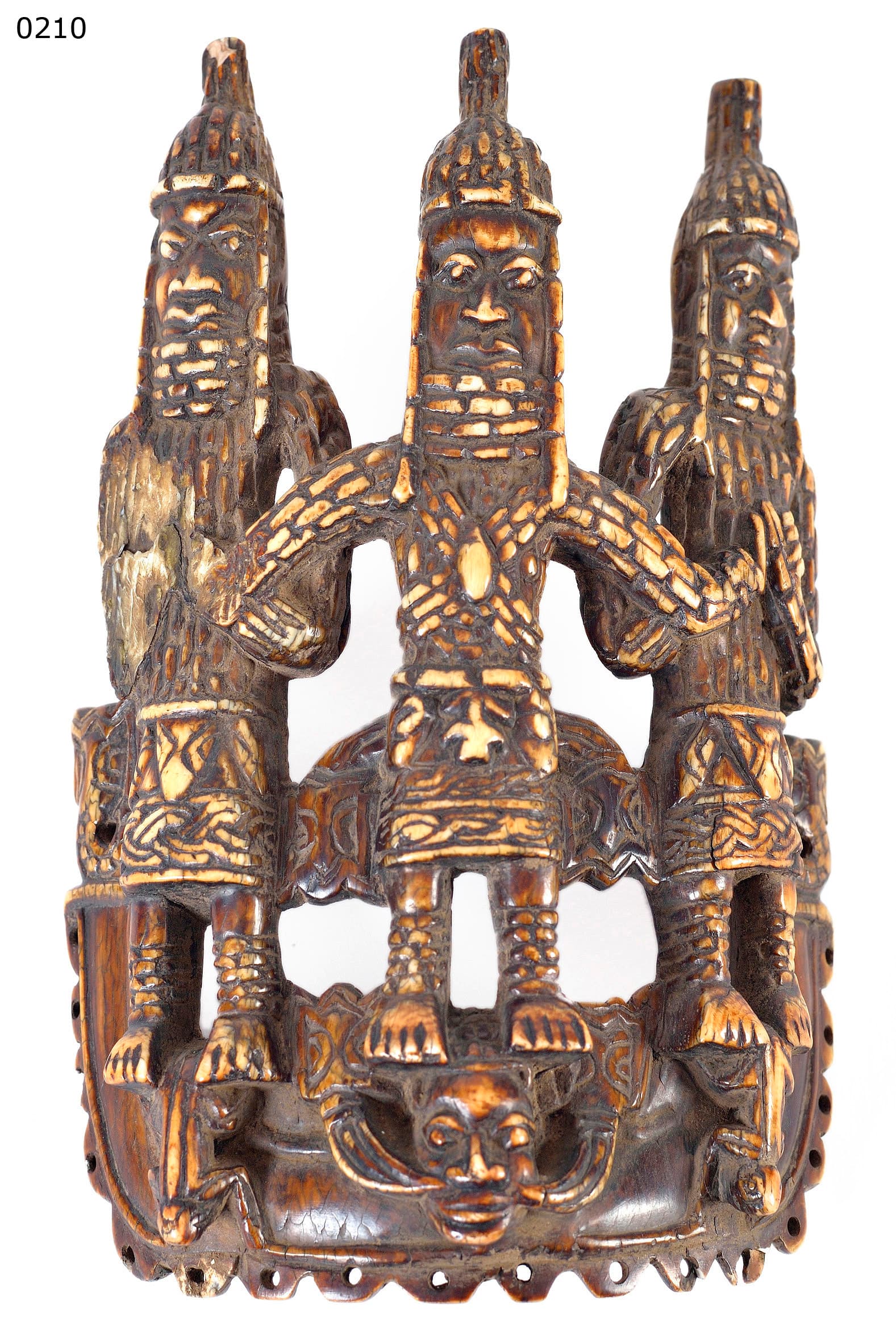
This rectangular cast brass or bronze plaque features a leopard rendered in high relief against a stippled background adorned with distinct rosette (river leaf) motifs. The metal surface shows dark oxidation, patches of green verdigris, and the slightly pitted texture of historical sand-casting.
1. Aesthetic style — the leopard motif and the igun eronmwon guild
This plaque is stylistically related to the corpus of Benin bronzes, traditionally associated with the royal guild of brasssmiths (Igun Eronmwon). The iconography is highly significant: the leopard (ekpen) is a primary symbol of the Oba (King) of Benin, representing his mastery over the wilderness, his authority, and his divine right to rule. The background is also significant; the stippled texture and the four-petaled river-leaf rosettes are characteristic of Edo court art, traditionally symbolizing Olokun, the god of the waters, wealth, and the spiritual realm.
2. Ritual function — architectural ornamentation of the Edo court
Historically, bronze plaques of this nature were created specifically to adorn the massive wooden pillars of the Oba's palace complex in the capital of the Benin Kingdom. They served as a visual archive of court life, military triumphs, and royal symbolism. While this piece is attributed to the late Benin period — likely created after the 1897 British punitive expedition but continuing these guild traditions — it appears to have been cast to reinforce the enduring prestige of the monarchy, utilizing a visual vocabulary associated with the Edo court.
3. Physical patina — metallurgical aging and casting taphonomy
The physical characteristics of this plaque are consistent with the traditional lost-wax (cire perdue) casting method. The surface exhibits slight casting flaws and a slightly uneven thickness that are characteristic of pre-industrial African metallurgy. The patina is deeply established, featuring a dark, oxidized bronze base with accumulations of malachite (green verdigris) in the deeper recesses of the stippling and the leopard's spots. This chemical oxidation, combined with edge wear, is consistent with a historical object of the late dynastic period.
Summary
This Benin palace plaque reflects the authority and metallurgical traditions of the Edo kingdom. The high-relief leopard and the oxidized, stippled background make it a classic example of Nigerian royal court art.
Written with AI assistance from the collection appraisal, object photography and our own research; editorially reviewed. Mistakes are possible — corrections are welcome. How we work →