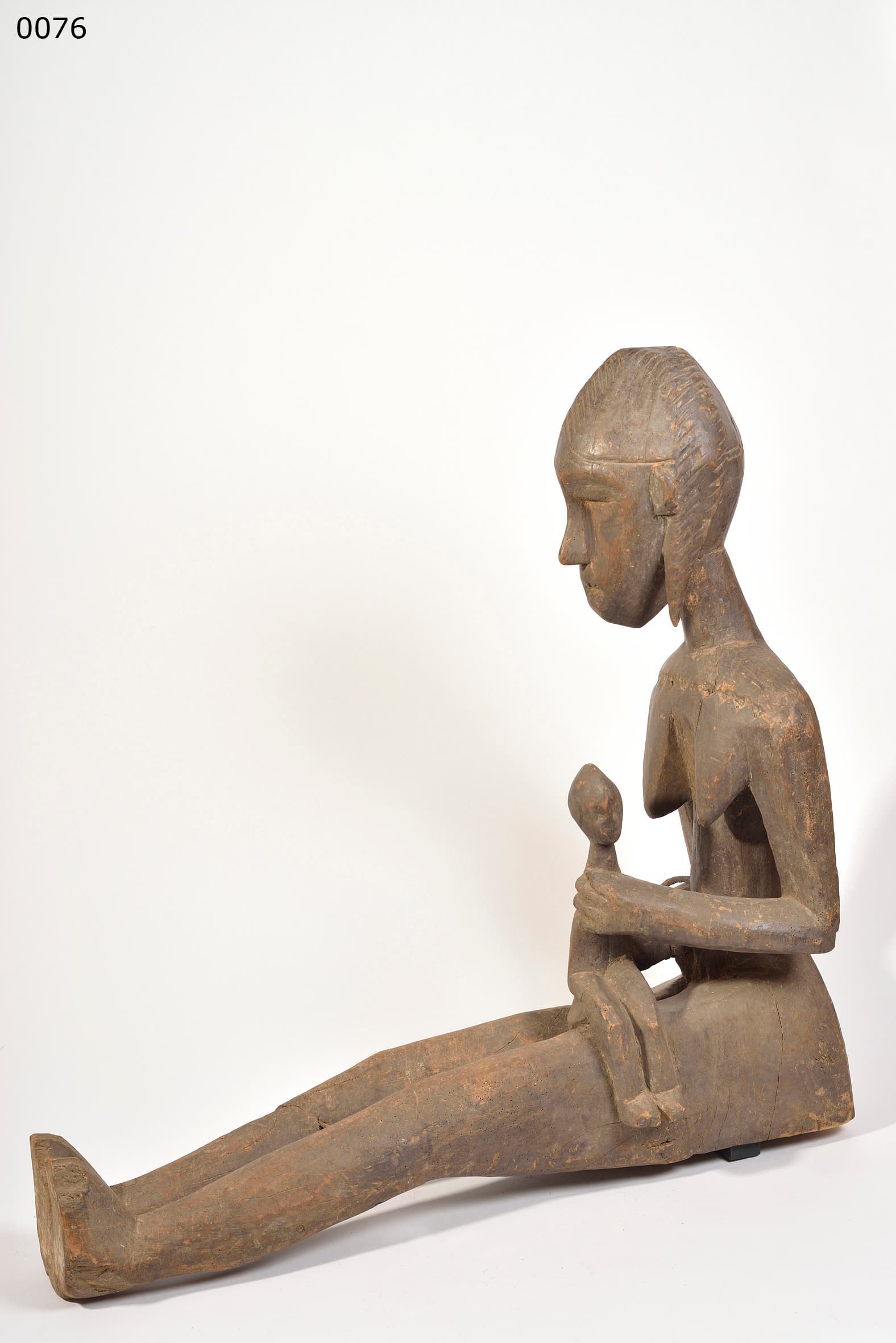
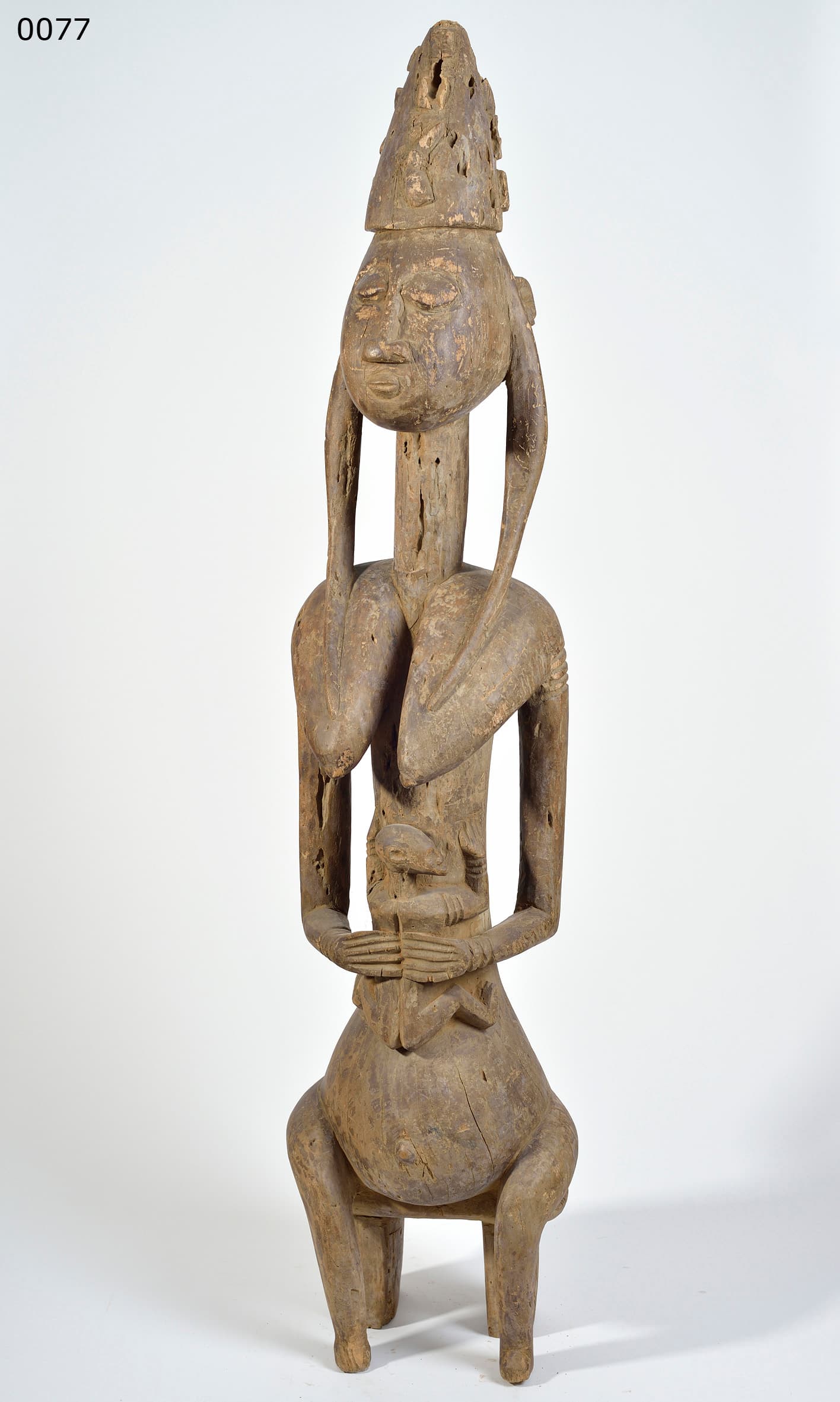
This tall, imposing wooden statue features a highly geometric rendering of a female figure, characterized by prominent conical breasts, deeply carved chest and abdominal scarification, and a sweeping, crested coiffure. The wood is severely dry, bearing a weathered, ash-grey and brown patina.
1. Aesthetic style — geometric cubism in Bamana statuary
This figure is a monumental example of the canonical Bamana approach to the human form, which heavily influenced early 20th-century Western Cubism. The sculptor has eschewed organic curves in favor of stark, intersecting geometric volumes: the torso is a rigid cylinder, the breasts are sharp cones, and the facial features are rendered as flat, angular planes. The oversized, paddle-like hands and the dynamic, sagittal crest of hair emphasize the figure's structural architecture rather than human softness, projecting an aura of stoic, enduring ancestral authority.
2. Ritual function — the jo and guan initiatory societies
Large-scale female figures of this caliber were primarily utilized by the Jo and Guan initiation societies of the southern Bamana. Rather than being hidden in shrines, these imposing statues were brought out during annual public ceremonies, washed, oiled, and dressed in cloth. They represent idealized founding ancestors or heroines, embodying the social virtues of fertility, dignified composure, and esoteric knowledge. The intricate scarification patterns carved into her torso are visual proof of her successful passage through the painful initiation rites that mark a fully socialized adult.
3. Physical patina — extreme desiccation and 19th-century wood aging
The physical condition of this statue supports an attribution to the 19th century. The wood has lost nearly all its internal moisture, resulting in a lightweight, deeply desiccated matrix. The surface exhibits a dry, heavily oxidized patina, with deep, naturally occurring longitudinal shrinkage cracks running down the torso and legs. The softening of the sharp carved edges, particularly around the hands and face, is consistent with decades of ritual washing followed by environmental exposure, suggesting its antiquity.
Summary
This Bamana ancestor figure is a notable example of West African geometric abstraction and monumental carving. Its commanding presence, deep cultural ties to the Guan society, and profoundly desiccated patina support its attribution to the 19th century.
Written with AI assistance from the collection appraisal, object photography and our own research; editorially reviewed. Mistakes are possible — corrections are welcome. How we work →