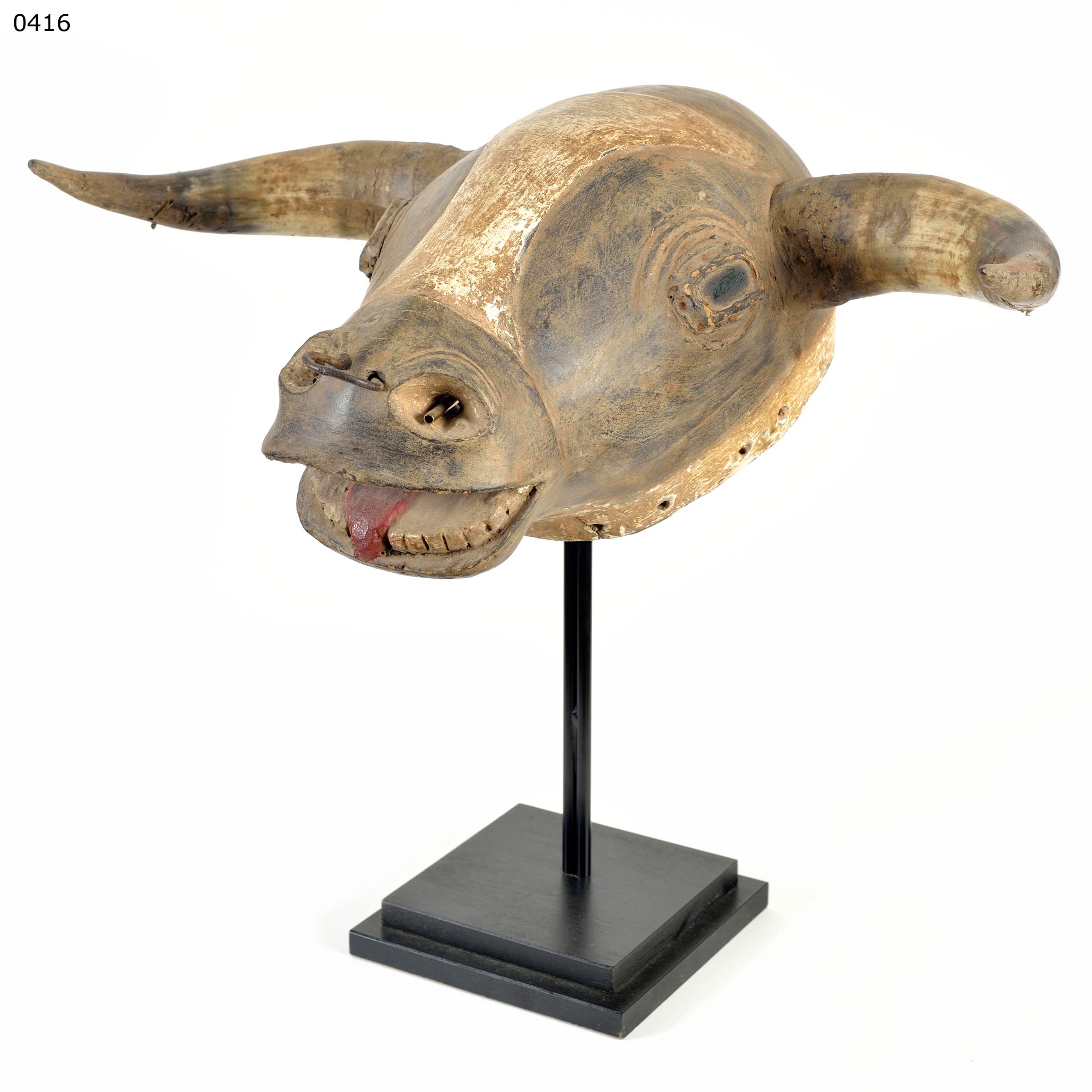
This large, triangular wooden mask represents a highly stylized sawfish, painted with faded white kaolin and red ochre pigments. It features concentric circular eyes and a long, protruding rostrum with carved serrations mimicking the animal's deadly snout.
1. Aesthetic style — zoomorphic iconography of the bissagos islands
The Bidjogo (or Bidyogo) people inhabit the Bissagos Archipelago, where their lives and spiritual systems are inextricably tied to the perilous Atlantic waters. Their art is fiercely zoomorphic, drawing upon the most powerful and dangerous marine creatures. The sawfish is a supreme predator, revered for its untamed strength and lethal capabilities. By translating the flat, geometric shape of the sawfish into a heavy, sculptural crest, the Bidjogo artist captures the essence of wild, uncultivated nature, creating a visually striking emblem of raw, masculine aggression.
2. Ritual function — age-grade initiation and the cabaro rites
Bidjogo society is strictly structured around age grades. This heavy headcrest was danced during the cabaro initiation ceremonies by young men transitioning from adolescence to adulthood. The initiates wear these massive crests — often imitating the erratic, aggressive movements of the wild animal — to physically demonstrate their vitality and to embody the untamed, dangerous forces of nature. The successful performance of this heavy mask is traditionally seen as a demonstration of the initiate's physical strength and his readiness to be integrated into civilized adult society.
3. Physical patina — pigment degradation and usage wear
The patina of this crest mask is defined by its degraded polychrome surface. The natural white kaolin and red earthen pigments have been abraded through kinetic use in aggressive dances and long-term storage in tropical environments. The edges of the serrated rostrum show rounding and impact wear, suggesting performance use rather than creation for the commercial market. The underlying wood has oxidized to a warm brown, harmonizing with the faded pigments to create a surface consistent with age and ritual use.
Summary
This Bidjogo sawfish crest is a dramatic artifact that expresses the marine-centric worldview of the Bissagos Islands. Its aggressive geometry and degraded ritual pigments make it a notable example of ethnographic art.
Written with AI assistance from the collection appraisal, object photography and our own research; editorially reviewed. Mistakes are possible — corrections are welcome. How we work →