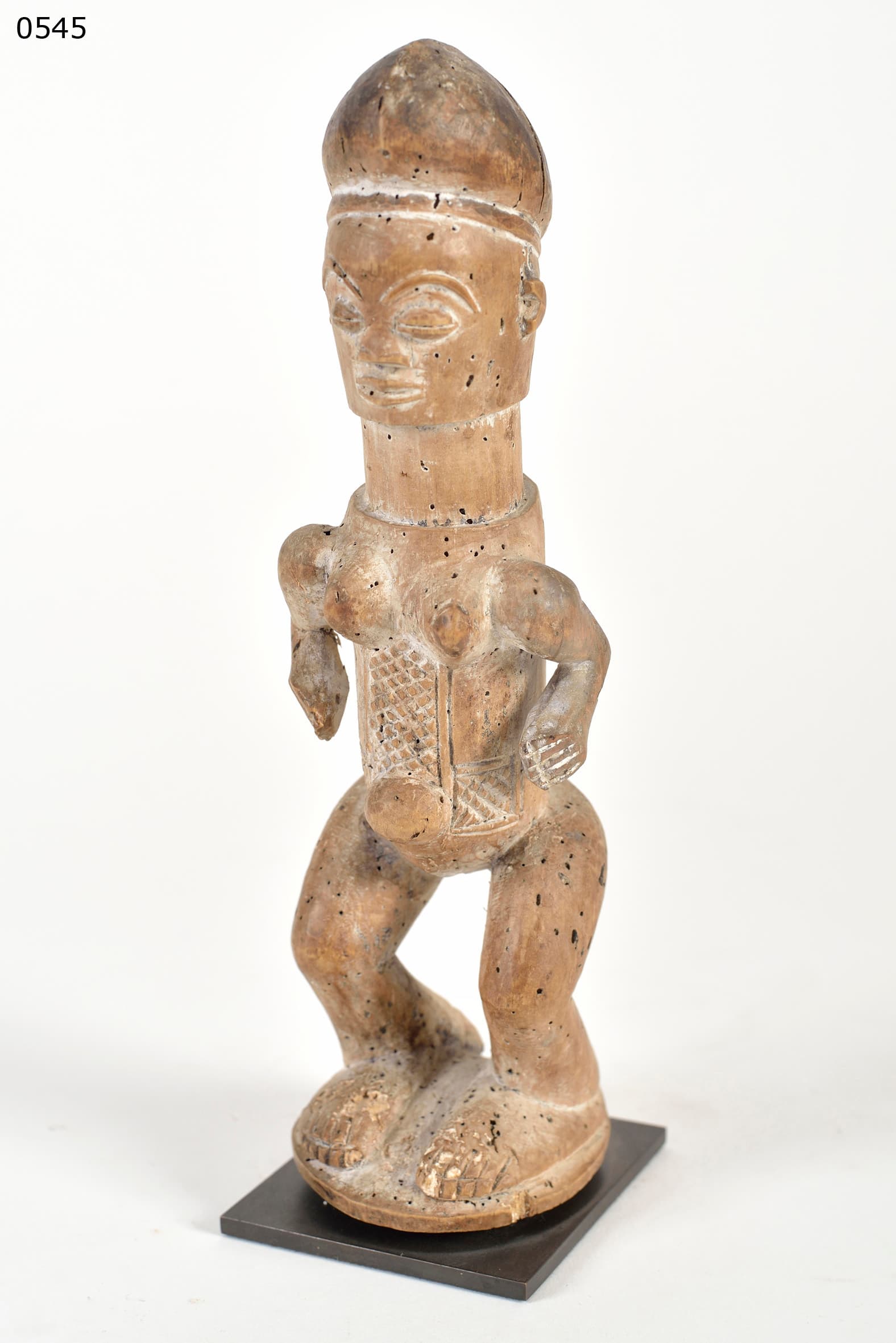
This striking mask features the canonical Orientalized features and high, crested coiffure of Punu artistry, but is distinguished by its dark, blackened surface and the thick fringe of woven raffia attached to its rim. The wood is lightweight and exhibits significant handling wear around the interior edges.
1. Aesthetic style — the ikwara sub-style in Punu aesthetics
While the Punu are universally famous for their white, kaolin-coated mukudj masks, they also produced a much rarer variant known as the ikwara or ikwara-mokulu (black mask). Stylistically, this mask retains the delicate, idealized female facial geometry — the high arched eyebrows, slit eyes, and diamond-shaped scarification motifs on the forehead and temples. However, the application of dark pigment completely alters the aesthetic reception of the piece, transforming the serene, lunar beauty of the white masks into something foreboding, heavy, and intensely nocturnal.
2. Ritual function — judicial rites and the night masquerade
Unlike the white mukudj masks, which are danced on high stilts in the daylight to celebrate female ancestors and communal joy, the black ikwara masks are exclusively associated with the night and judicial authority. They were utilized by men's secret societies to root out malevolent witchcraft, preside over difficult judgments, or appear during times of terrible crisis, such as an epidemic. The dark color visually aligns the mask with the dangerous, unpredictable forces of the wilderness and the formidable power of ancestral retribution.
3. Physical patina — organic attachments and pigment patination
The patina on this mask is a combination of dark, carbon-based pigments (likely charred wood mixed with palm oil) rubbed deep into the wood grain. Over the first half of the 20th century, this surface has been naturally burnished by use, creating a dull, authentic sheen on the prominent features like the nose and chin. The survival of the extensive woven raffia fringe is a significant marker of its ethnographic integrity, as this material was essential to obscure the identity of the dancer and complete the physical manifestation of the spirit.
Summary
This rare Punu ikwara mask provides a vital counterbalance to the ubiquitous white masks of Gabon, embodying the nocturnal, judicial power of the ancestors. Its dark, brooding aesthetic and intact raffia collar make it a well-preserved example of this ethnographic type.
Written with AI assistance from the collection appraisal, object photography and our own research; editorially reviewed. Mistakes are possible — corrections are welcome. How we work →