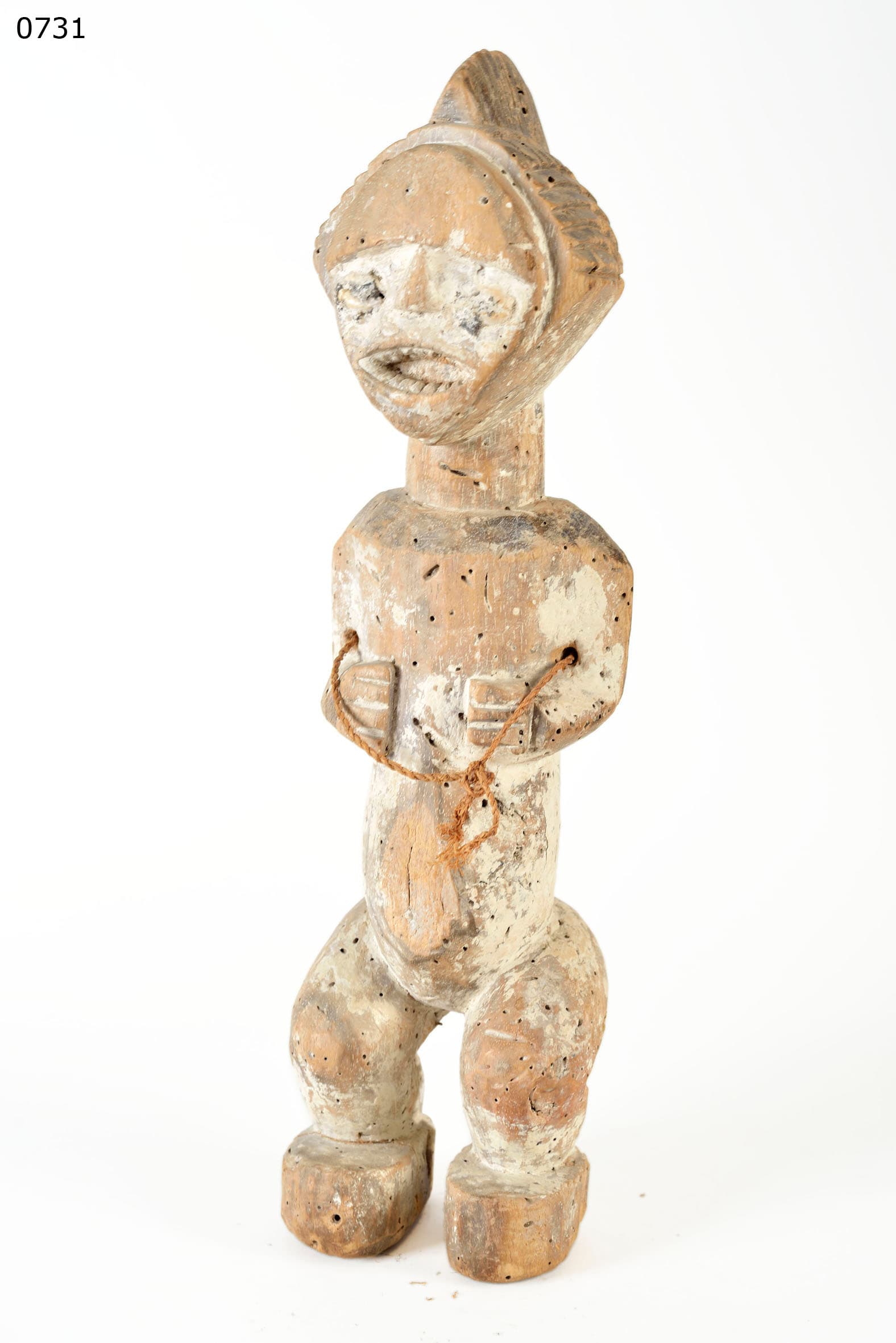
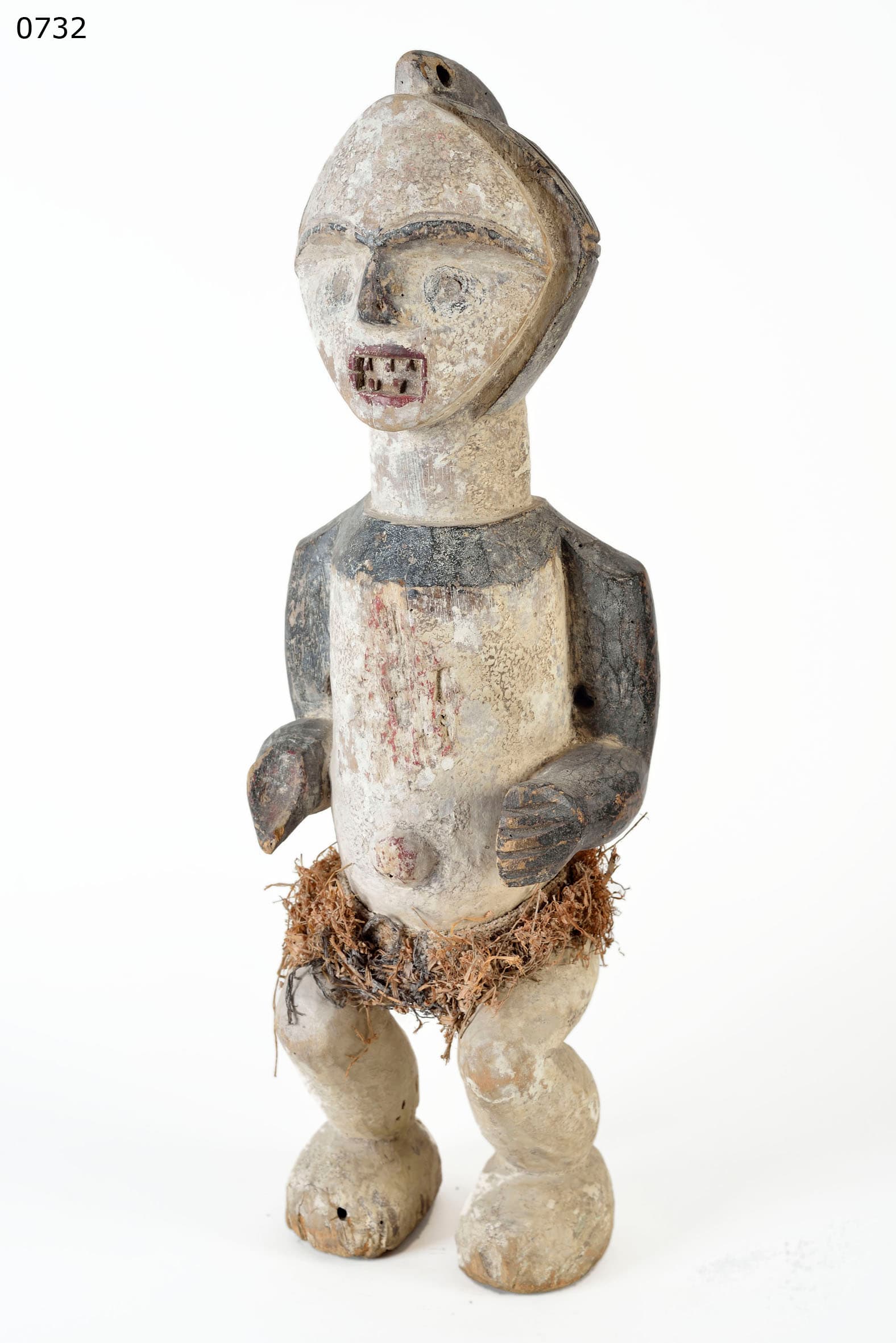
This imposing, cylindrical figure features an elongated, architectonic torso bound entirely in native, fibrous cordage, topped with a flat, heart-shaped face painted with white kaolin and a distinct sagittal crest. The underlying wood is deeply aged, with a dark, smoky patina contrasting with the pale face.
1. Aesthetic style — architectonic reliquary conceptions
The Ambete (or Mbete) people of Gabon and the Republic of Congo engineered one of the most structurally unique reliquary forms in Africa. Unlike the Fang or Kota, who placed carved figures on top of baskets containing bones, the Ambete carved massive, blocky, cylindrical torsos that functioned as the actual containers. The torso features a hidden dorsal or frontal cavity designed to directly hold the skeletal remains of the ancestors. The flat, austere face with its sweeping brows and crested coiffure acts as an impassive, eternal guardian for the sacred biomaterial housed within its own body.
2. Ritual function — the ndzimu Bwiti cult and ancestral activation
This power figure was the absolute center of the Ndzimu (or Bwiti) ancestral cult. The bones placed inside the figure were believed to retain the life force of the most important lineage founders. By packing the figure with relics and binding it with strong cords, the community physically trapped the ancestral power, allowing priests to channel it for the protection of the village, the fertility of crops, and the curing of severe illnesses. The white kaolin applied to the face visually connects the object to the realm of the dead, which is conceptually associated with the color white.
3. Physical patina — multi-media patination and ritual binding
The state of preservation of this Ambete reliquary is notable. The thick native cordage wrapping the torso is brittle and stained with decades of sacrificial oils and atmospheric soot from the shrine room. The kaolin on the face is heavily degraded, possessing a chalky, rubbed-back texture consistent with age. The exposed hardwood at the top of the crest and the base exhibits deep oxidation and softening, suggesting long-term, intensive ritual use consistent with the first half of the 20th century.
Summary
A significant example of Gabonese art, this Ambete reliquary illustrates the relationship between the sculptural body and the ancestral bones it protects. Its intense, flat facial geometry and well-preserved ritual binding make it an ethnographic artifact of notable quality.
Written with AI assistance from the collection appraisal, object photography and our own research; editorially reviewed. Mistakes are possible — corrections are welcome. How we work →