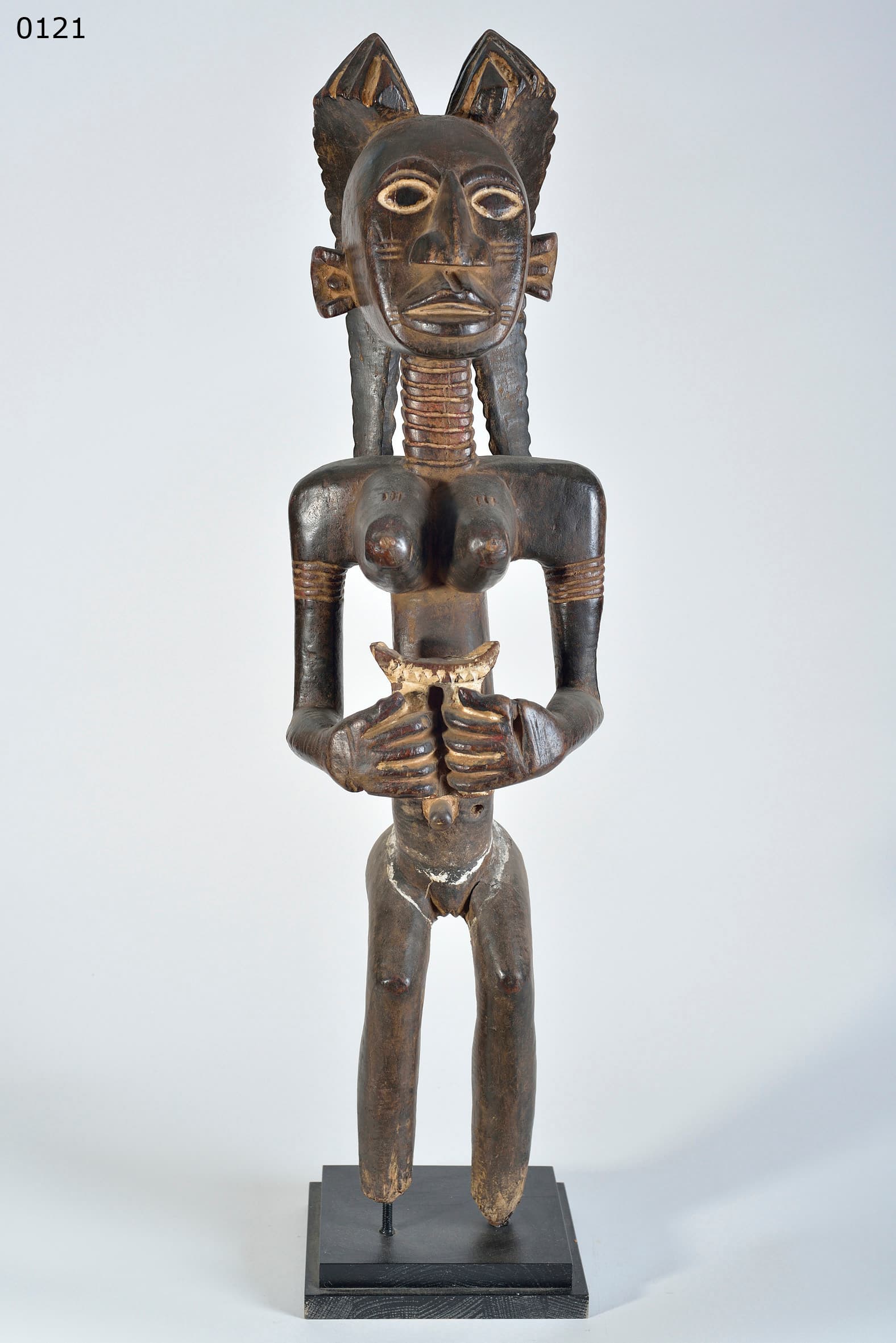
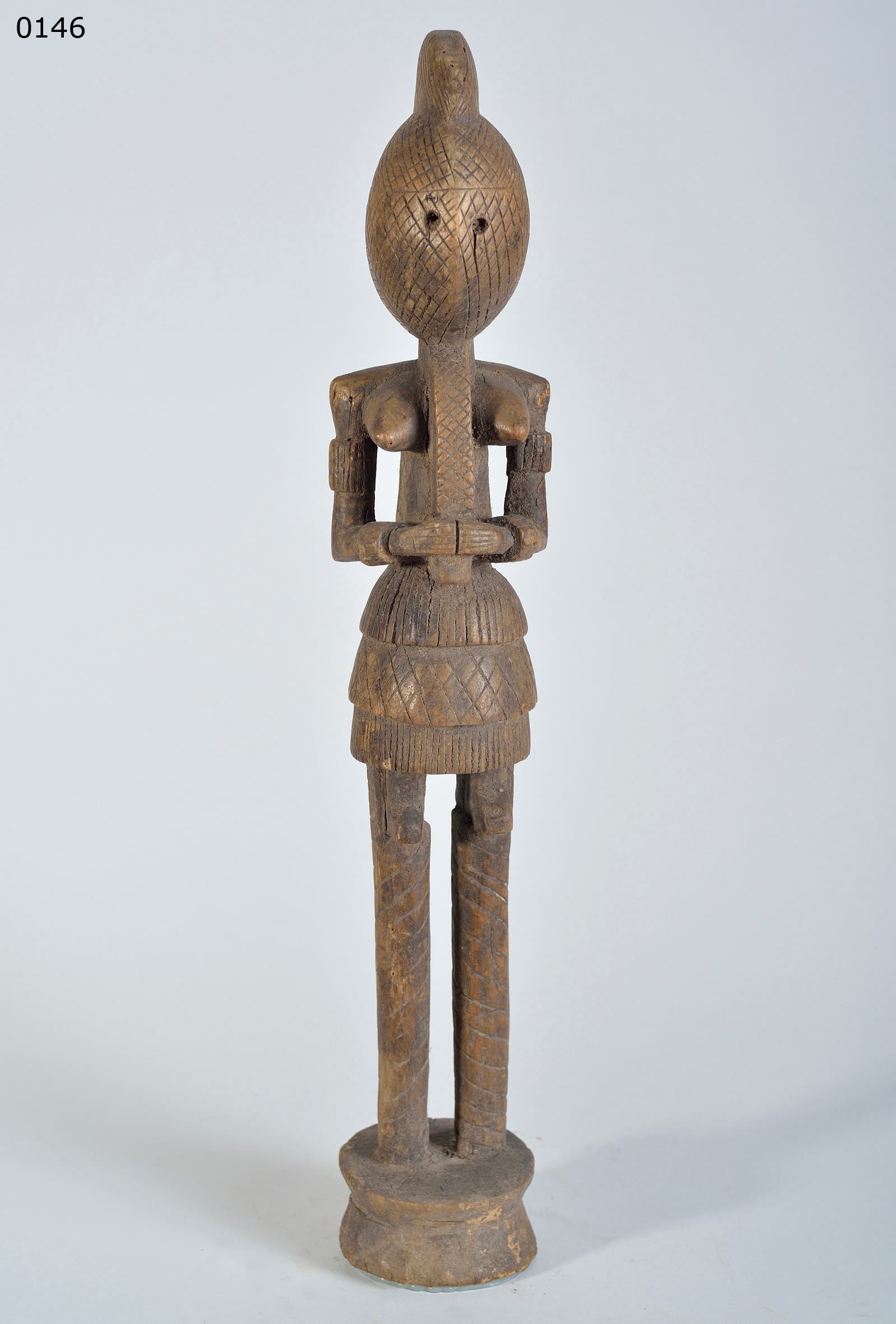
This striking mask features a deeply concave, oval facial plane bisected by a prominent central vertical ridge, painted in contrasting red and white geometric patterns. Surmounting the mask is a superbly carved, standing female figure featuring detailed scarification, prominent breasts, and a crested coiffure.
1. Aesthetic style — the yatenga style and the Convex/Concave play
This mask is a classic example of the Mossi aesthetic associated with the northern Yatenga region of Burkina Faso. The carver has utilized an interplay of positive and negative space. The mask face is a deep, concave oval, split dramatically by the sharp, convex line of the central nose/ridge. This stark geometric abstraction is balanced by the realistic, fleshy volume of the fully rendered female figure standing at the apex. The integration of complex, two-dimensional polychrome patterning on the face with three-dimensional figurative sculpture on top is a hallmark of Mossi craftsmanship.
2. Ritual function — the karan wemba and the elevation of the matriarch
The Karan Wemba mask represents a highly specific and revered social figure in Mossi society: the wemba. A wemba is a woman who has survived her husband, seen her children grow into adults, and transitioned beyond the normal social restrictions of women, effectively gaining the spiritual and political status of a male elder. When a wemba dies, this mask is danced at her funeral to honor her extraordinary life, guide her spirit to the ancestral realm, and assure the community that her protective, maternal wisdom will continue to oversee the lineage from the afterlife.
3. Physical patina — authentic polychromy and handling wear
The surface of this 103 cm mask shows wear consistent with kinetic use. The red ochre and white kaolin pigments applied to the facial plane are not solid or fresh; they are deeply muted, heavily abraded, and organically faded into the dark wood grain. The standing female figure exhibits a rich, dark brown patina, with the highest points of her breasts, nose, and coiffure polished to a smooth shine by decades of handling. The bite-bar and interior rim show deep, oily stains consistent with use by performers.
Summary
A refined synthesis of geometric abstraction and figurative portraiture, this Mossi Karan Wemba celebrates the culmination of female authority in Burkina Faso. Its faded polychromy and deep handling wear make it a notable ethnographic artifact.
Written with AI assistance from the collection appraisal, object photography and our own research; editorially reviewed. Mistakes are possible — corrections are welcome. How we work →