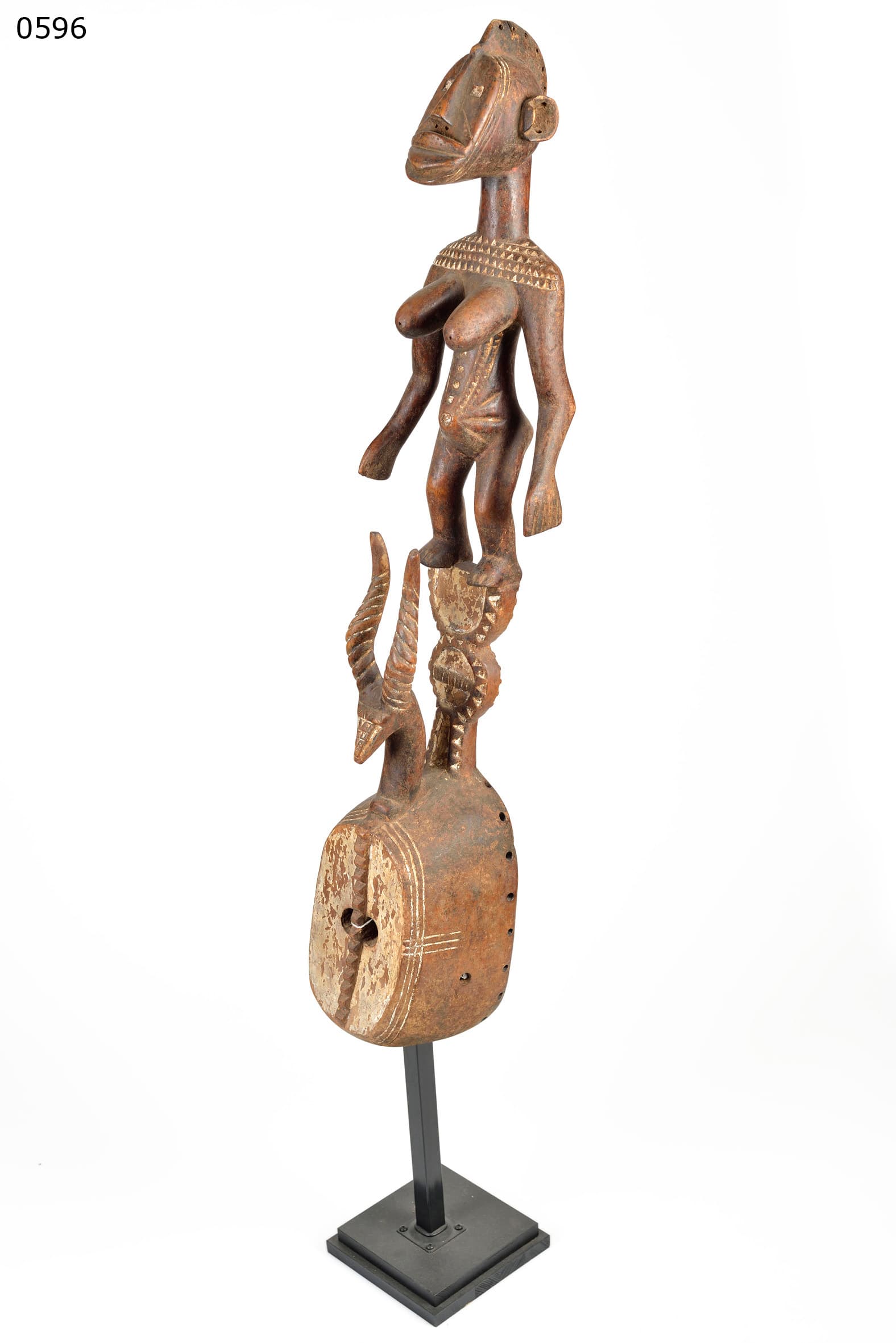
A tall dark wooden female figure (mid 20th C., 82 cm) from the Mossi of Burkina Faso — rigidly upright, crowned by a distinct bi-lobed sagittal crest, hands resting near the abdomen.
1. Royal commemoration (nakomse)
The Mossi are politically divided along an ancient fault line.
- Two Peoples, Two Arts: The original farmers (Nyonyosi) carve masks; the conquering ruling class (Nakomse) traditionally commission figurative statuary.
- Aristocratic Posture: This figure belongs to the royal Nakomse tradition, carved to commemorate a female ancestor — projecting the dignified, rigid authority of the ruling lineage.
2. The gyindo crest
The bi-lobed sagittal crest running front-to-back across the head is a social passport.
- Aristocratic Hairstyle: It depicts the gyindo, a historical coiffure worn exclusively by Mossi women of high rank and royal blood.
- Badge of Identity: Instantly readable at a glance, it marks the figure unambiguously as an elite woman rather than a generic ancestor.
3. Shrine veneration
At 82 cm, this was no minor domestic object.
- Royal Altar: Placed inside the ancestral shrine of a Mossi chief.
- Annual Sacrifices: During royal ceremonies, the chief offered millet beer and animal blood to thank the ancestral mothers and to petition them for the continued fertility and political stability of the chiefdom.
Summary
This Mossi figure is a stately monument to female aristocracy. Through its rigid verticality and the specific gyindo crest, it projects the enduring political and spiritual authority of the Mossi royal lineage.
Written with AI assistance from the collection appraisal, object photography and our own research; editorially reviewed. Mistakes are possible — corrections are welcome. How we work →
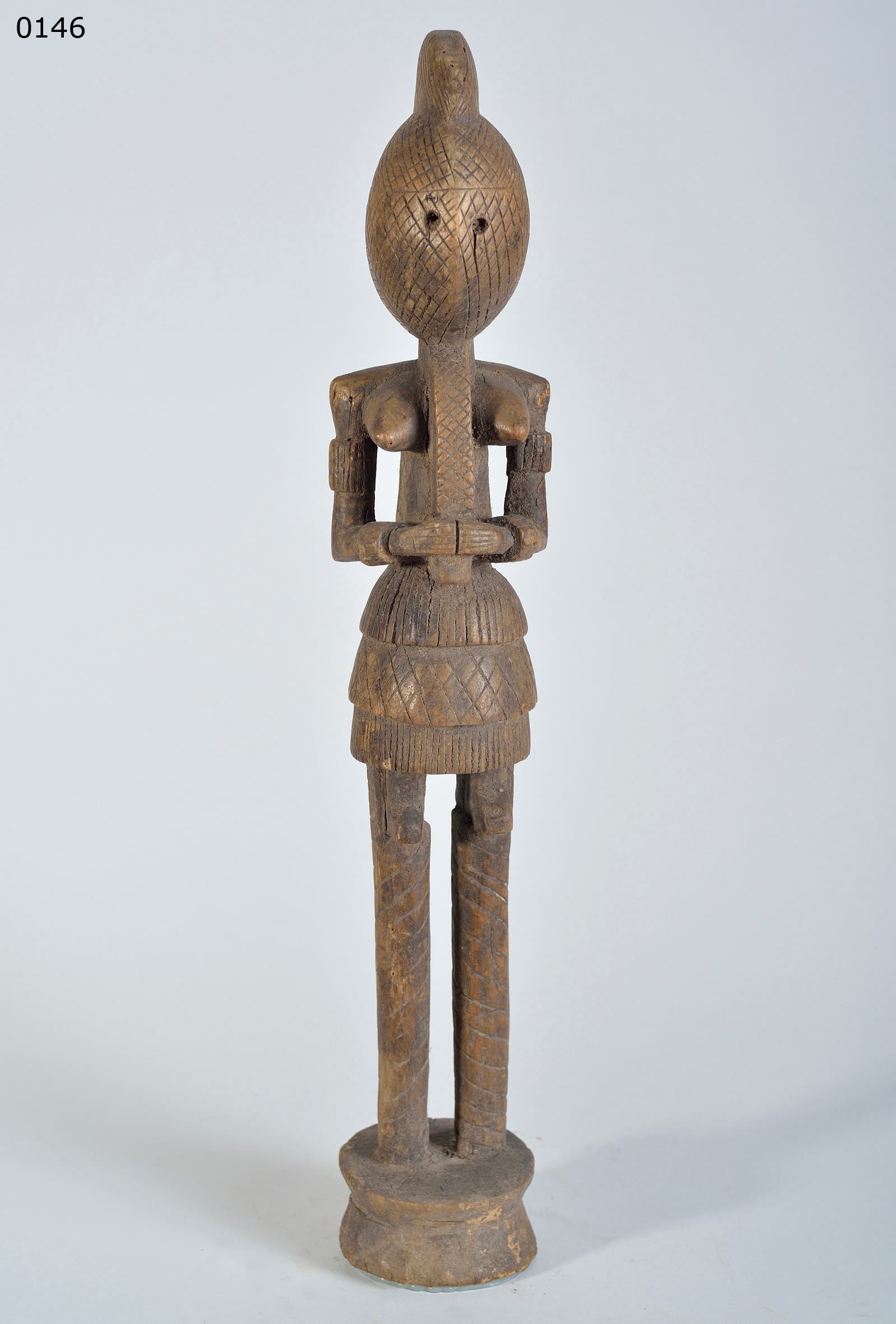
female masked figure

female ancestor figure

female ancestor figure