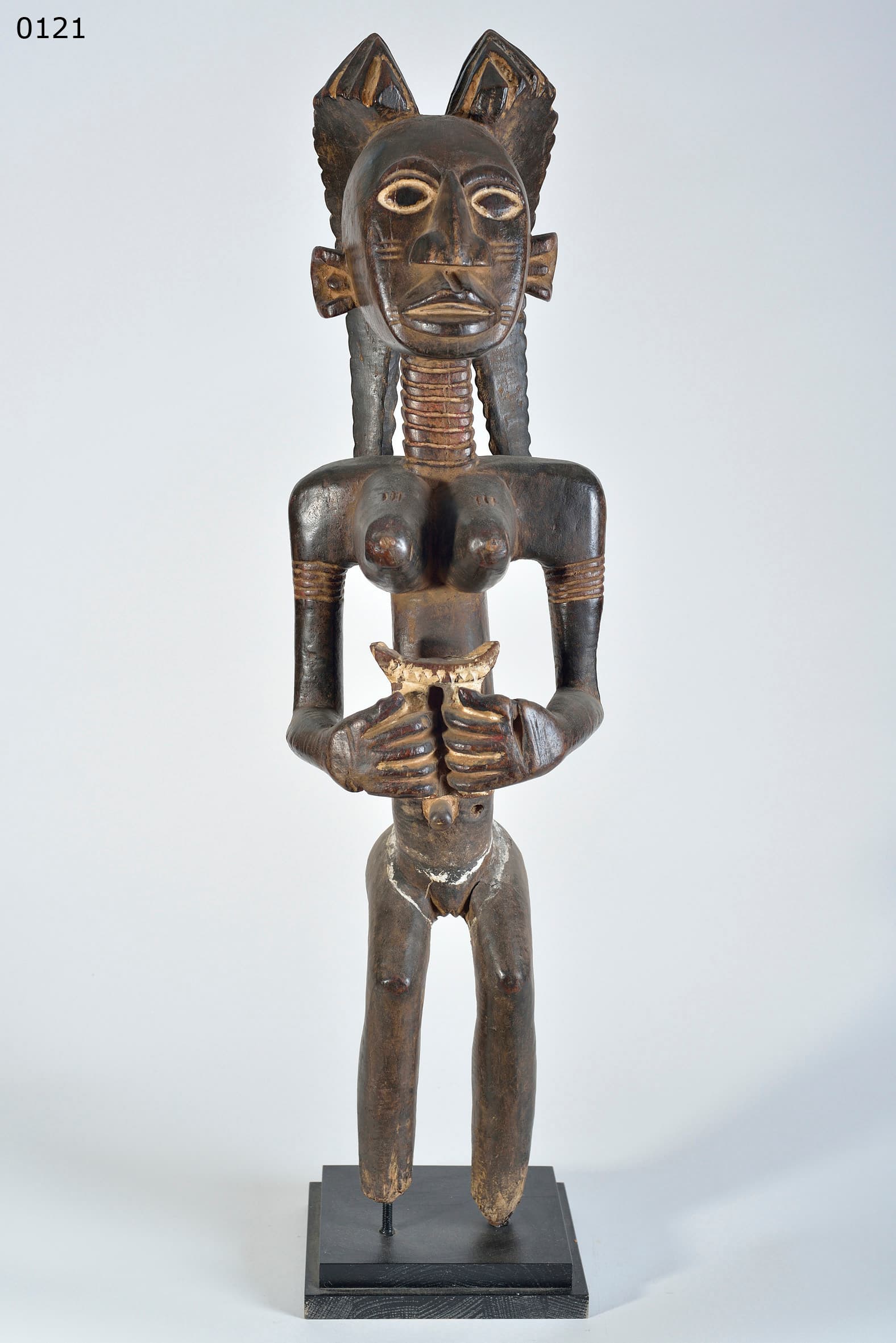
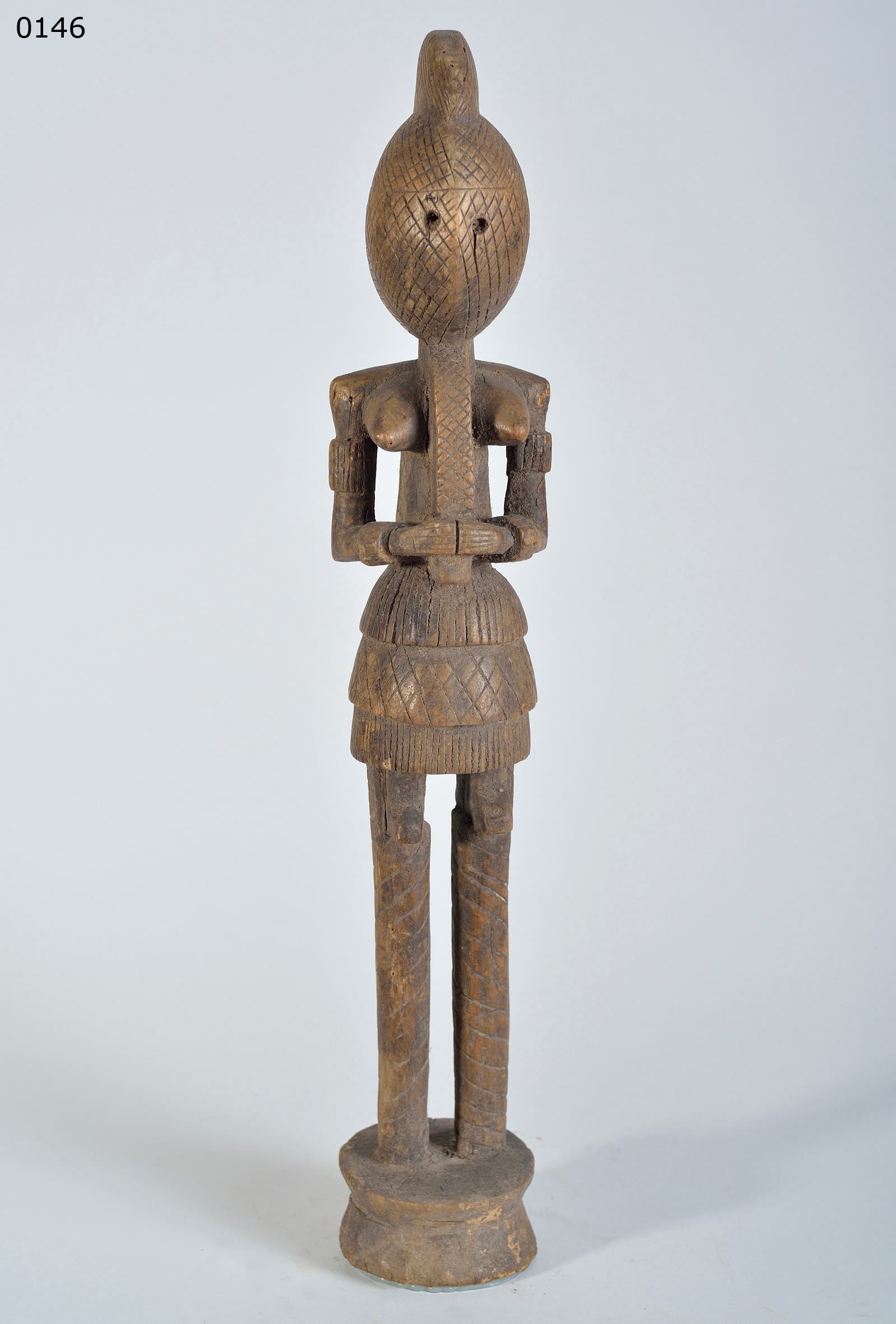
This tall wooden mask features the canonical oval, concave Mossi face bisected by a strong vertical ridge, with geometric eye-holes. Atop the mask, resting on an integrated, domed pedestal, stands an exceptionally elongated, slender female figure with long, straight arms, pronounced breasts, and deep facial scarification.
1. Aesthetic style — extreme elongation in the karan wemba superstructure
While sharing the exact ritual function as the standard Karan Wemba, this specific mask is distinguished by the radical, extreme elongation of its female superstructure. The sculptor has stretched the torso and the arms of the standing figure to an almost needle-like thinness, elevating her far above the foundational mask face. This deliberate distortion of proportion is a stylistic choice designed to emphasize the spiritual elevation, dignity, and otherworldly status of the deceased matriarch. The addition of the domed pedestal seamlessly integrates the flat mask face with the soaring, vertical energy of the figure.
2. Ritual function — the didactic dance of the living ancestor
During the funerary celebrations for a deceased wemba, the appearance of this mask is a moment of profound emotional and spiritual gravity. The dancer, completely obscured by a thick costume of dyed hibiscus fiber, moves with slow, stately, and deliberate grace—mimicking the dignified bearing of an elderly, highly respected woman. The towering height of the mask (107 cm) requires immense strength and balance from the performer, symbolizing the heavy, substantial weight of the matriarch's wisdom and the massive void left in the community by her passing.
3. Physical patina — dry taphonomy and faded pigmentation
The physical aging of this mask points to prolonged exposure and historic use. Unlike heavily oiled figures, the wood here has aged to a dry, matte, grey-brown tone, indicating significant environmental oxidation in the harsh Burkinabe climate. The incised geometric patterns on the figure's chest and the central ridge of the mask face retain only the faintest, ghostly traces of original white and red pigment. This natural fading, coupled with localized insect wear at the edges of the mask, is consistent with an early 20th-century origin.
Summary
This Mossi Karan Wemba is a notable example of extreme vertical elongation, lifting the revered female ancestor into the soaring realm of the spirits. Its dry, faded, and weathered patina supports its attribution and its historical roots in Voltaic funerary rites.
Written with AI assistance from the collection appraisal, object photography and our own research; editorially reviewed. Mistakes are possible — corrections are welcome. How we work →