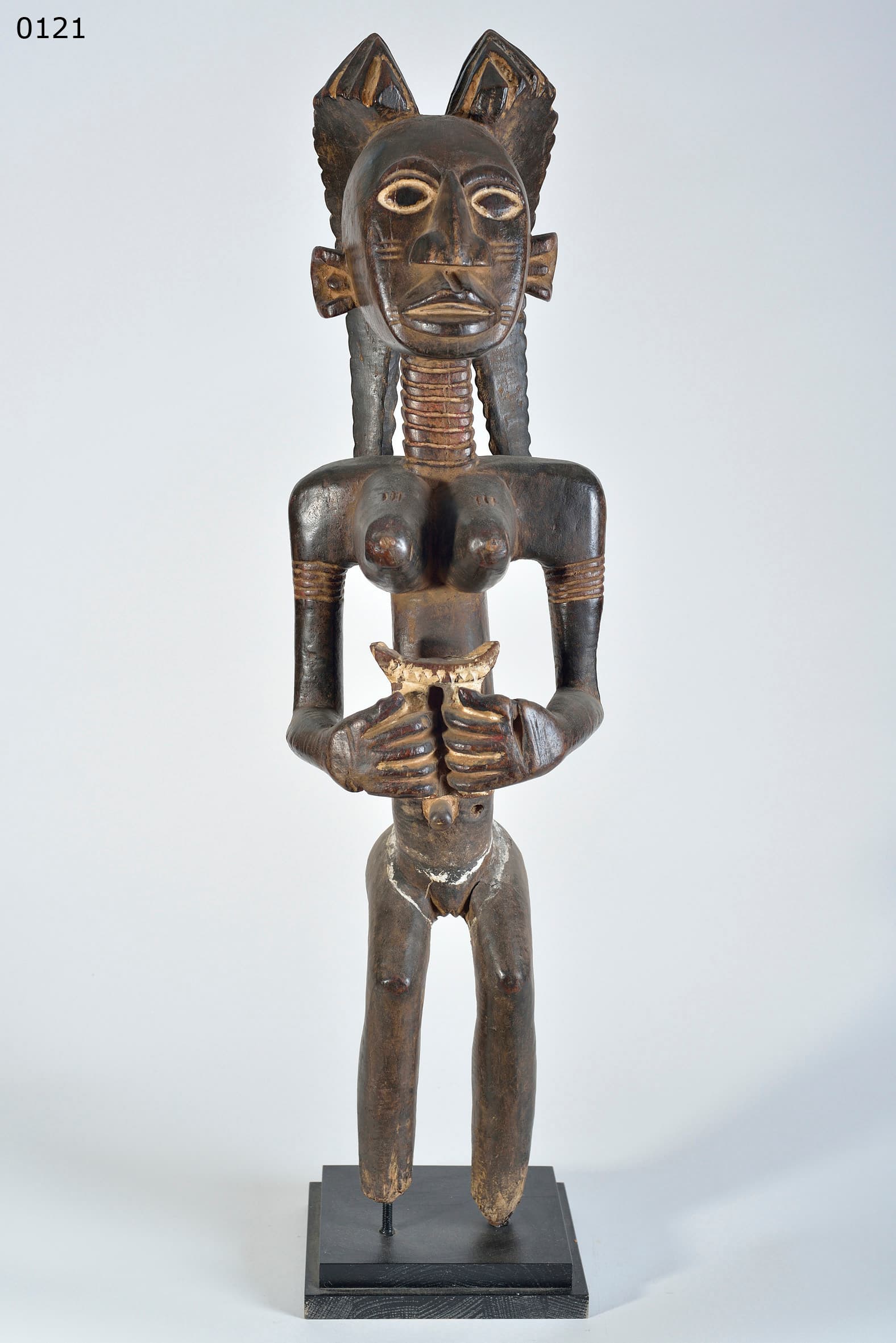
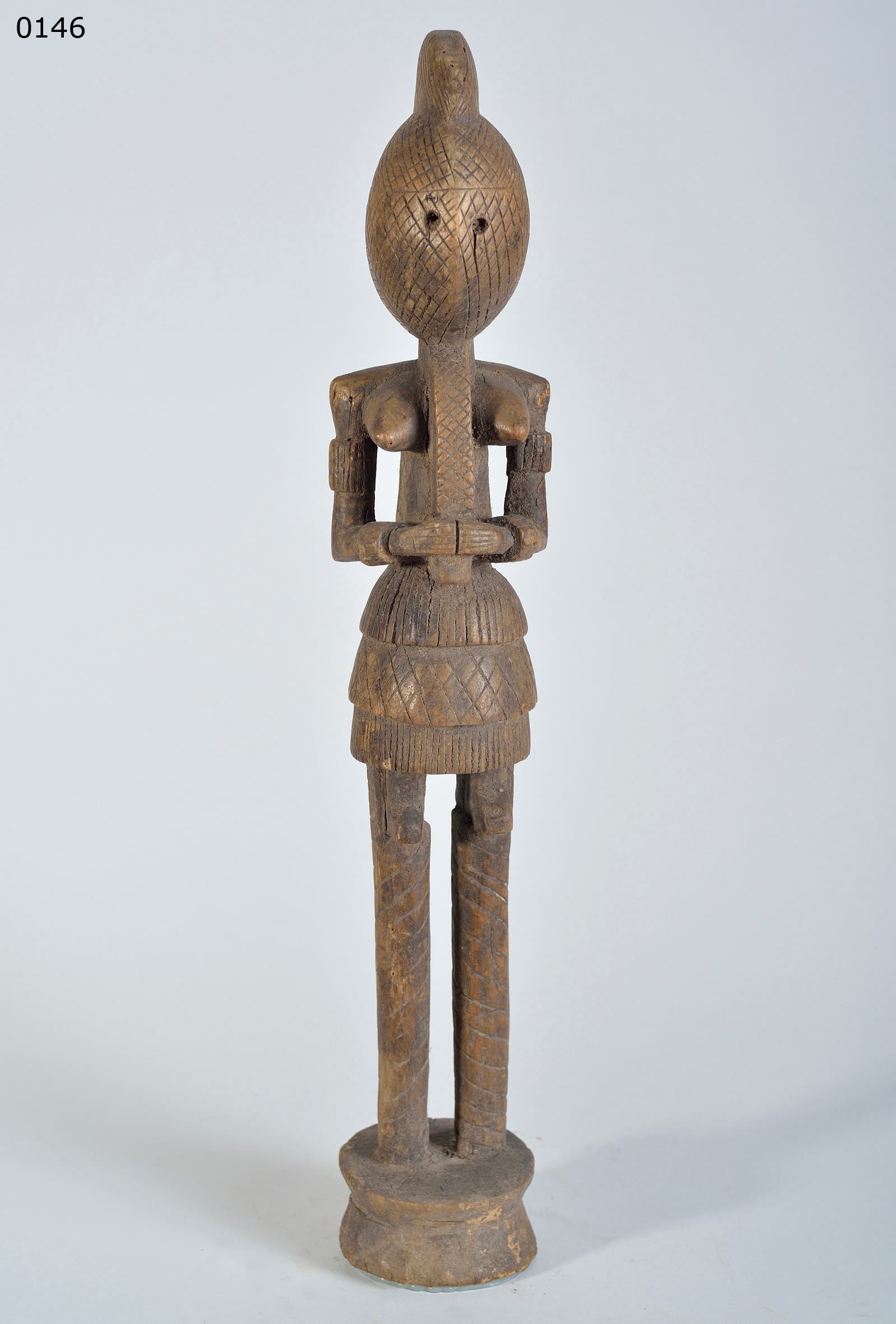
This magnificent iteration of the Karan Wemba mask features the classic oval, bisected faceplate, upon which rests a complex, geometric platform. Standing triumphantly on this platform is a female figure carved with extraordinary attention to realistic detail, featuring full, rounded thighs, bent knees, intricate body scarification, and a distinct, helmet-like crested coiffure.
1. Aesthetic style — anatomical realism vs. mask abstraction
This Karan Wemba provides a fascinating contrast to other variants by emphasizing anatomical volume and kinetic tension in the superstructure. While the face of the mask remains a stark, two-dimensional abstraction of concave and convex geometry, the female figure above is carved with astonishing realism. The slightly bent knees and the full, heavy modeling of the thighs give the figure a powerful, grounded stance, as if she is preparing to dance herself. The detailed, incised scarification (representing civilization and beauty) creates a striking, textural effect atop the severe mask base.
2. Ritual function — female social stratification
The Karan Wemba is not just a funerary object; it reflects the complex social stratification within Mossi culture. A woman can only achieve the status of wemba through decades of successful motherhood, marital devotion, and exceptional wisdom. By rendering her in wood with such exquisite, costly detail—complete with the complex, helmet-like coiffure of an elite woman—the entire community acknowledges that she has transcended ordinary humanity. The mask is a moving, monumental tribute to the foundational power of female leadership in West Africa.
3. Physical patina — oxidized hardwood and friction polish
The patina on this 100 cm mask is incredibly rich and visually satisfying. The dense tropical hardwood has completely oxidized, shifting from its original light color to a deep, dark, chocolate brown. The highest, most handled points of the sculpture—the figure's breasts, knees, face, and the central ridge of the mask—gleam with a natural, sweat-and-oil induced friction polish. The deeper recesses of the scarification and the geometric eye slits retain a matte, dusty texture, providing a contrast consistent with use in Burkinabe ceremonies.
Summary
A powerfully grounded example of Mossi carving, this Karan Wemba balances stark facial abstraction with detailed, muscular female portraiture. Its deeply oxidized, friction-polished patina makes it a compelling tribute to West African matriarchy.
Written with AI assistance from the collection appraisal, object photography and our own research; editorially reviewed. Mistakes are possible — corrections are welcome. How we work →