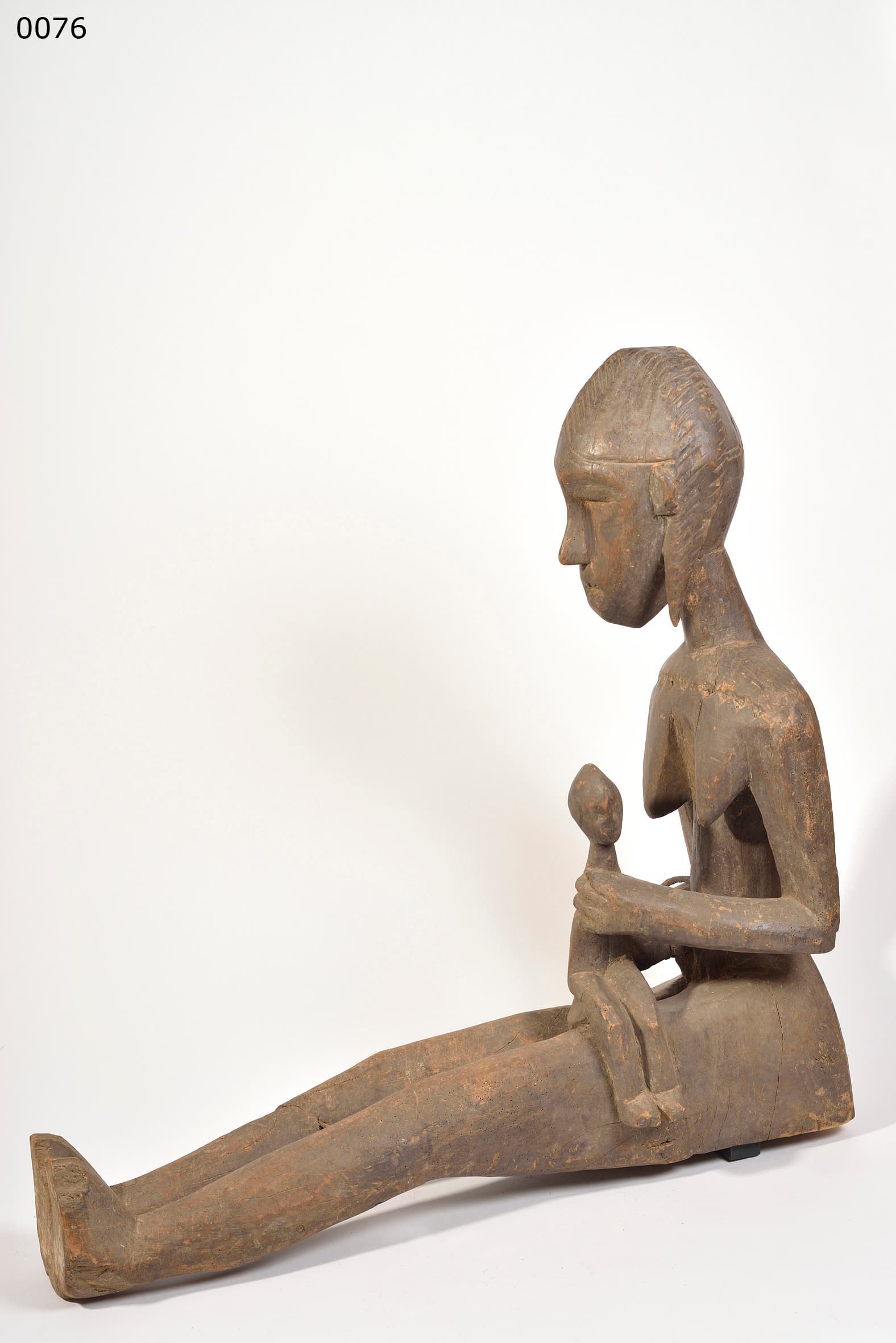
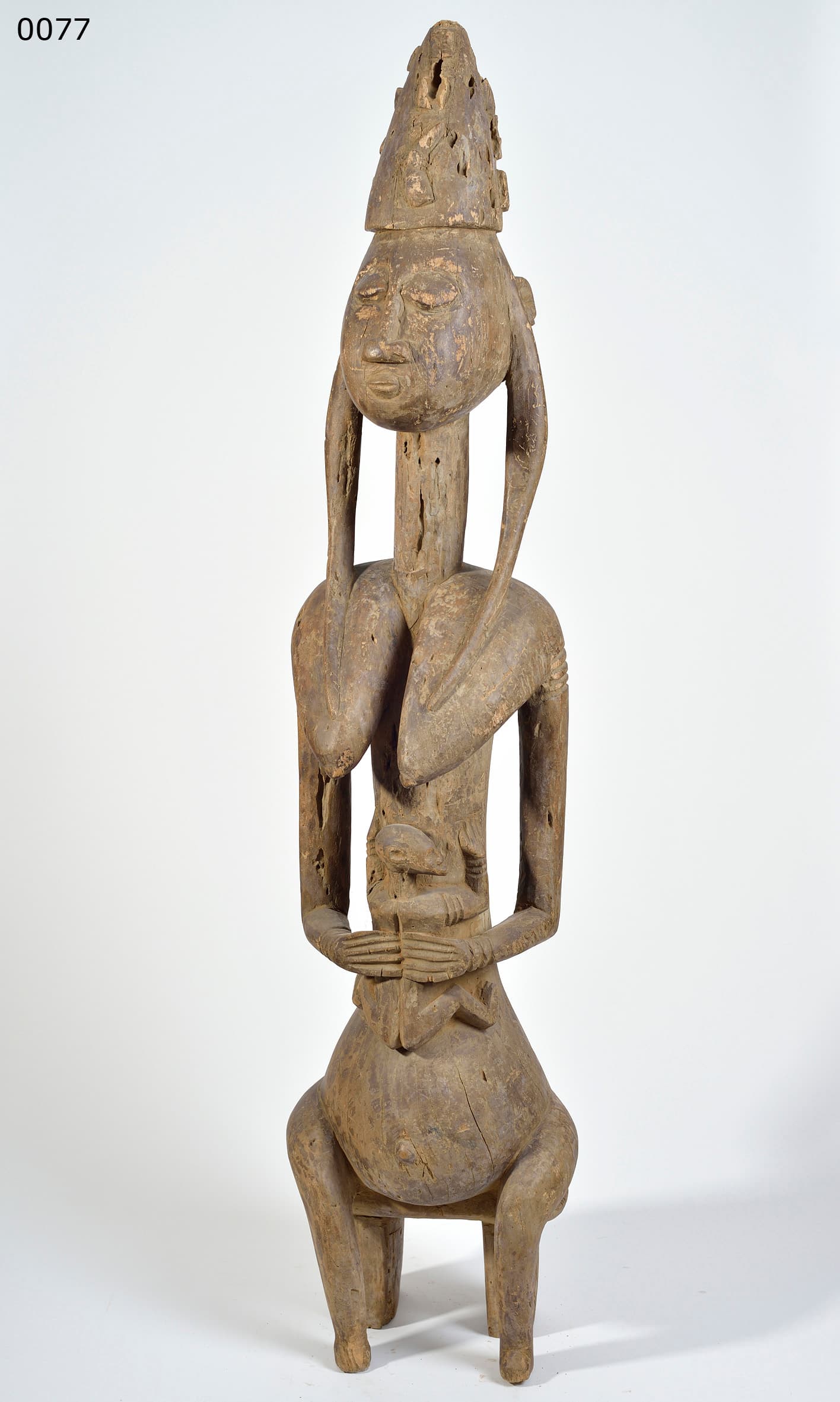
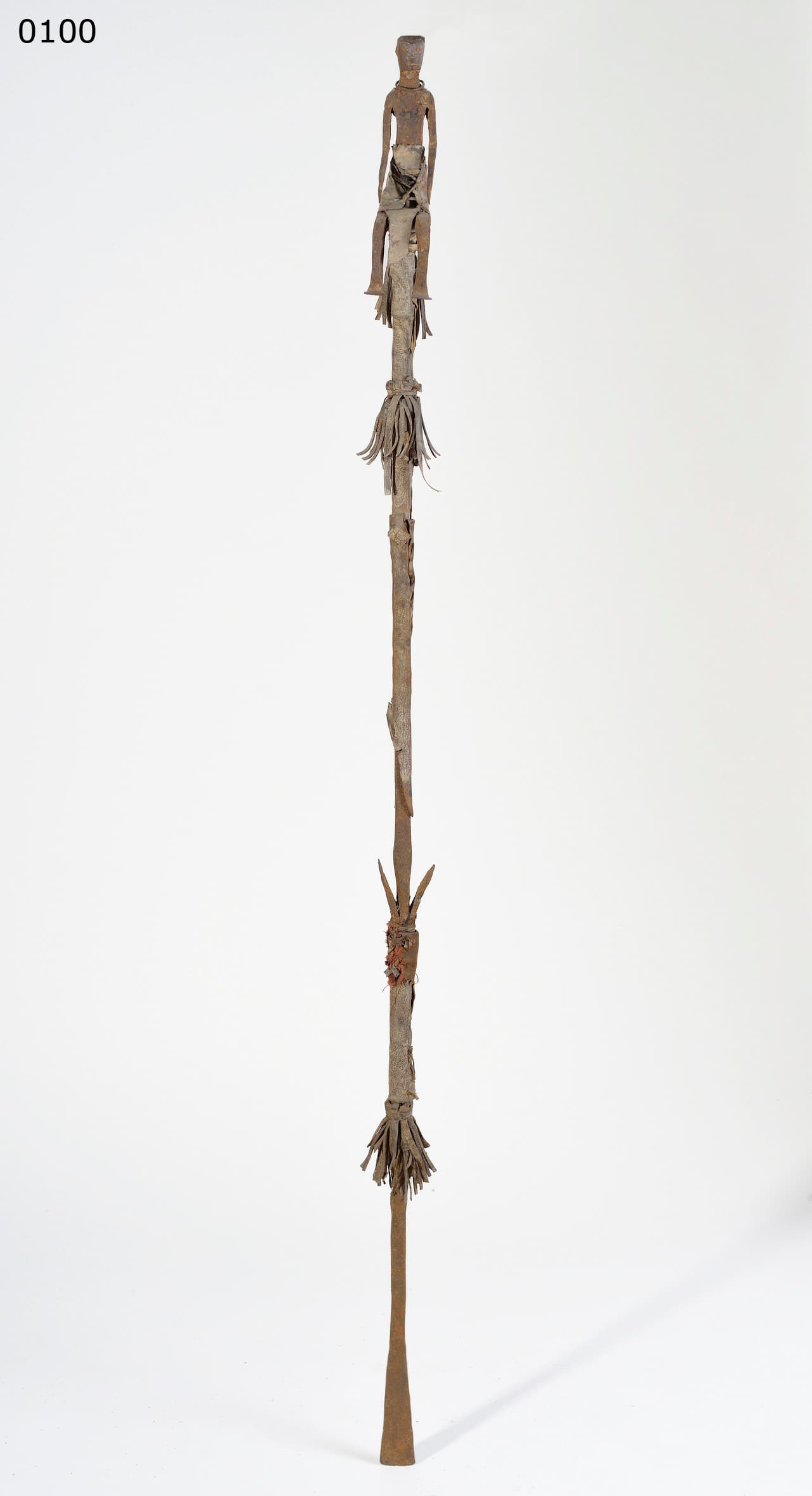
A severely eroded wooden female figure (24 cm) from the Bamana of Mali, with features consistent with an 18th-century origin — reduced to a core columnar silhouette with only the ghost of anatomical detail, the surface pale, deeply oxidized, and desiccated from centuries of exposure.
1. Extreme abstraction through age
Bamana sculpture is already celebrated for severe geometric abstraction, but the advanced age of this figure has further reduced it to pure archetypal essence.
- Taphonomic Abstraction: Time, weather, and ritual use have smoothed away all superficial carving, leaving a monumentally simplified post-like form.
- Manifestation Over Representation: The figure feels less like a carved likeness and more like a natural manifestation of ancient earth and wood — spiritual weight amplified by erosion.
2. Archaic animist function
Figures of this advanced age were often the foundational objects within early Bamana animist shrines.
- Pre-Jo and Pre-Guan: The piece may predate the codified aesthetic rules of the later Jo or Guan societies.
- Anchored Altar: It functioned as a primary altar, anchored into the earth, serving as the permanent unmoving physical anchor for village nyama — its power derived from longevity rather than visual beauty.
3. Attributed 18th-century survival and taphonomy
Encountering wooden West African artifacts with plausible 18th-century origins is exceptionally rare.
- Climate and Insects: The harsh climate and termite activity usually destroy organic material within decades.
- Calcified Relic: Total desiccation, deep structural fissures, and pale oxidized surface indicate centuries of extreme aging that cannot be artificially simulated — the piece has survived as a petrified relic of ancient Malian history.
Summary
A survivor of centuries past, this deeply eroded Bamana figure transcends traditional sculpture to become an artifact of pure ancient essence. Its attributed 18th-century origin and extreme physical degradation make it a rare artifact of significant historical interest.
Written with AI assistance from the collection appraisal, object photography and our own research; editorially reviewed. Mistakes are possible — corrections are welcome. How we work →