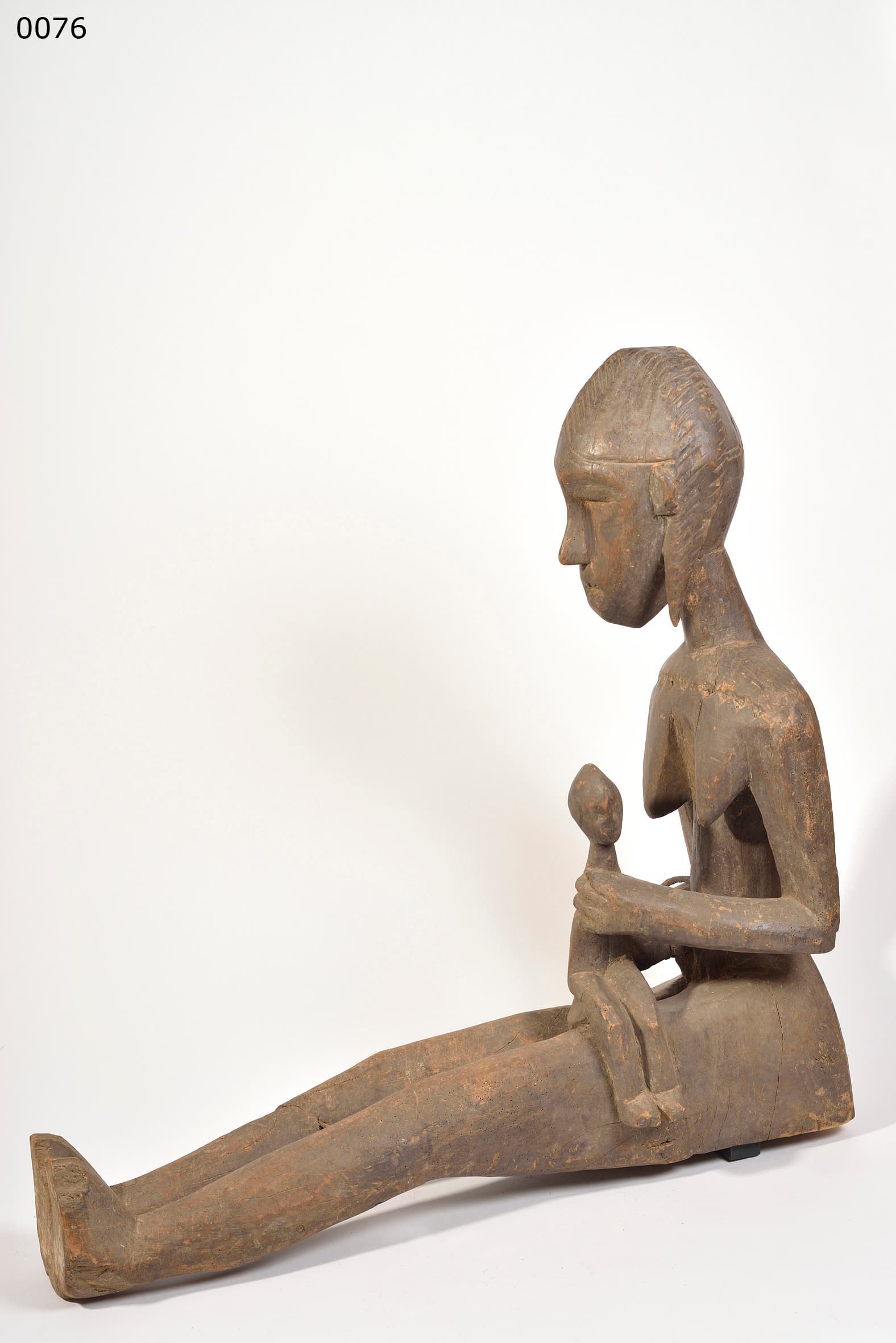
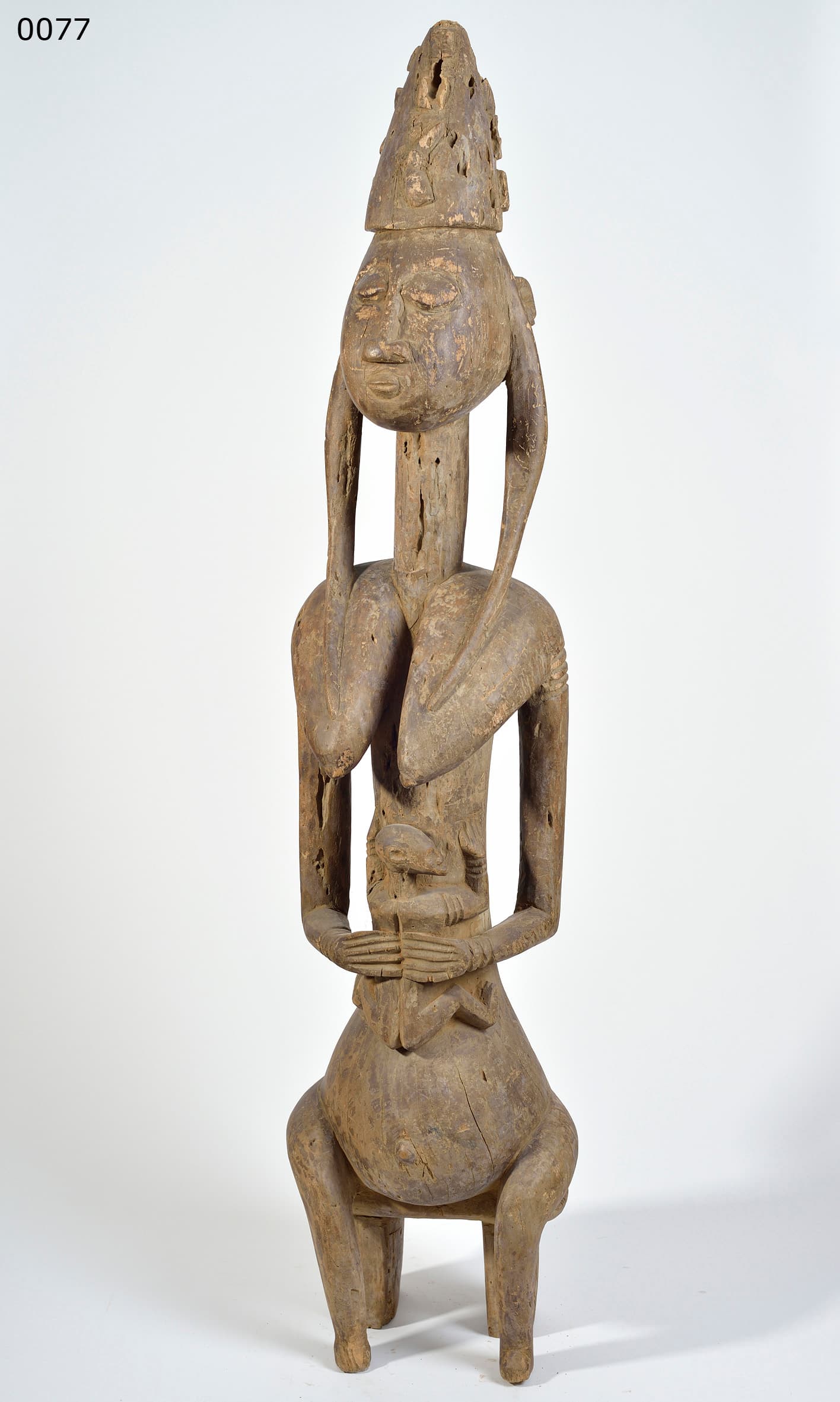
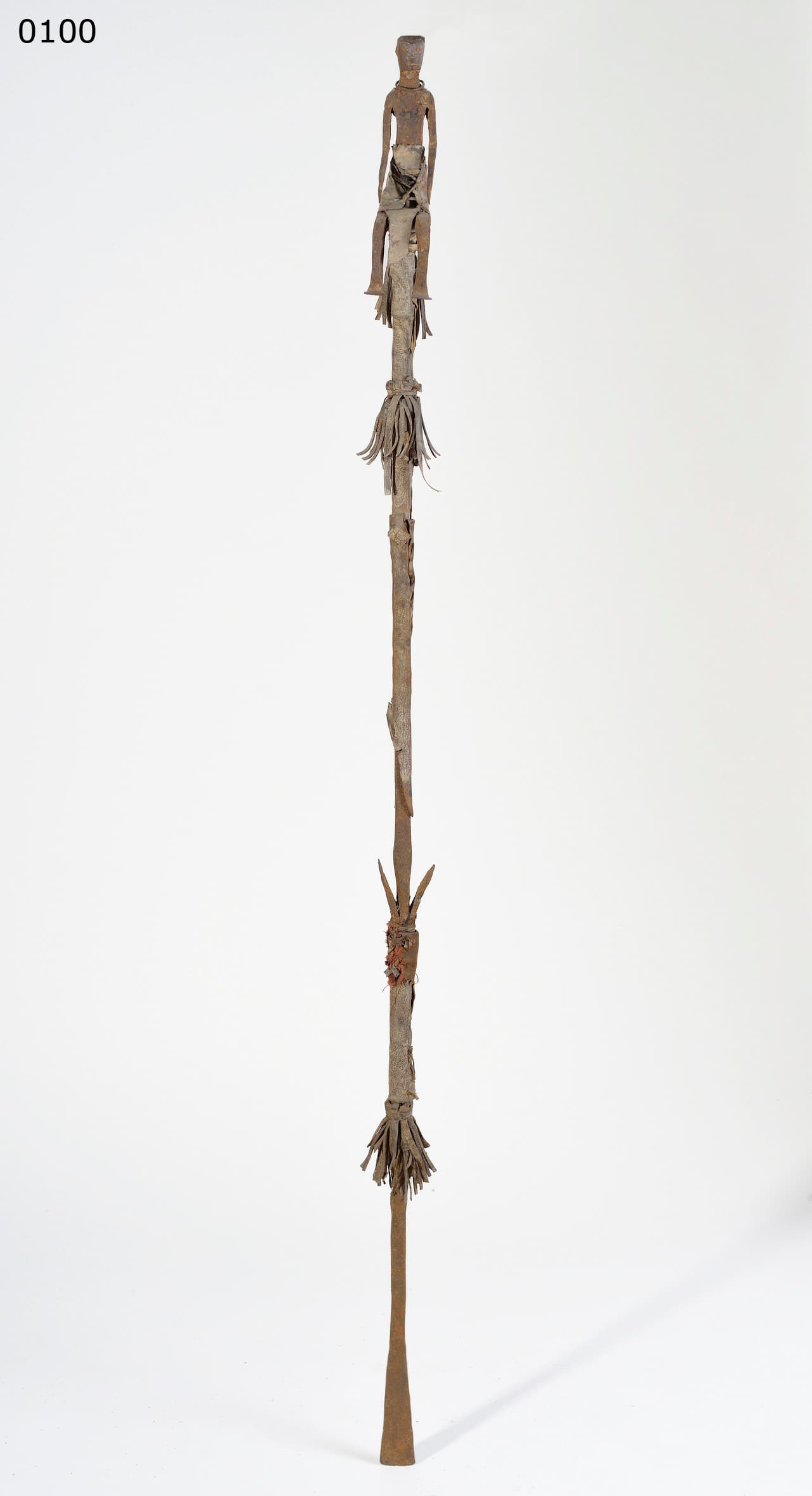
A matched horizontal pair of Ciwara crests (1st half 20th C., 97 cm each) from the Bamana of Mali — long sweeping bodies stretching backward, zoomorphic synthesis of antelope and aardvark, deeply carved geometric motifs, the aged wood showing an oxidized dry patina with clear handling wear along the elongated muzzles and ears.
1. Horizontal zoomorphic synthesis
In contrast to the vertical Segou style, the horizontal Ciwara of the southwestern Bamana regions synthesize multiple animals into a single sleek composite.
- Antelope, Aardvark, Pangolin: The long sweeping horns invoke the antelope; the low ground-hugging body refers to the aardvark or pangolin — animals celebrated for their ability to dig deeply into the earth.
- The Farmer's Silhouette: The design physically mimics the profile of the farmer bent over his hoe, fusing human labor and mythic beast into one form.
2. The mythos of the earth-digger
The horizontal orientation emphasizes the direct relationship between the mythical Ciwara beast and the soil.
- Digging Animals Honored: Incorporating the traits of burrowing creatures honors the back-breaking labor of preparing the earth for planting.
- Performance Mechanics: When danced, performers bend at the waist and use sticks as front legs — physically mimicking the digging action of the beast and visually fusing human labor with divine intervention.
3. Early 20th-century desiccation and handling
The physical condition suggests the pair is of significant age.
- Linear Checking: Deep cracks along the horizontal grain are characteristic of Malian dry-climate aging.
- Worn Muzzles and Bases: Softened darkened edges of the muzzles and bases record decades of handling, storage, and dance — suggesting ritual use rather than export carving.
Summary
Synthesizing the traits of the antelope and the aardvark, this horizontal pair of Ciwara crests is a tribute to the physical labor of Bamana agriculture. Their extreme length, desiccation consistent with an early 20th-century origin, and precise geometric carving make them notable examples of African performance art.
Written with AI assistance from the collection appraisal, object photography and our own research; editorially reviewed. Mistakes are possible — corrections are welcome. How we work →