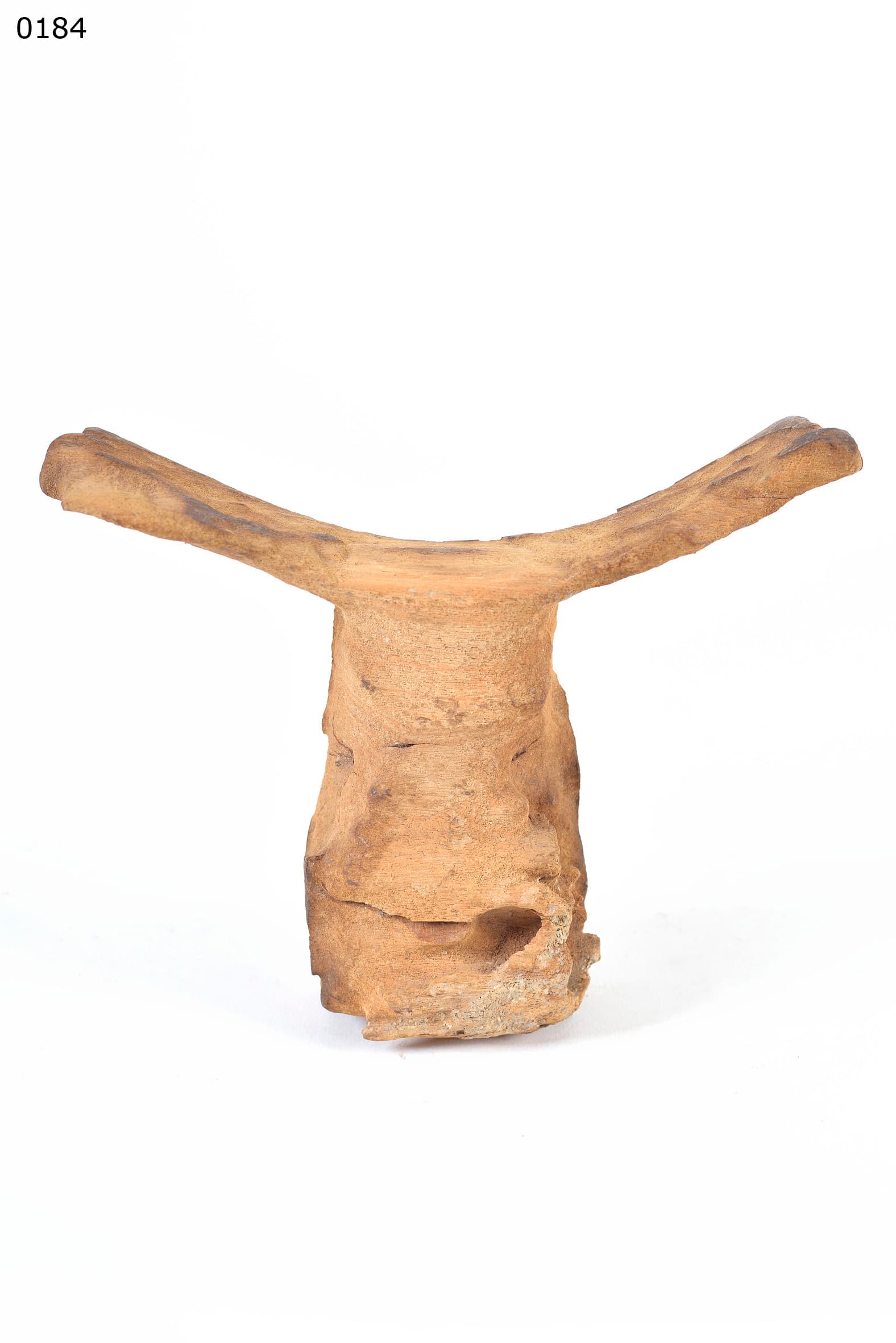
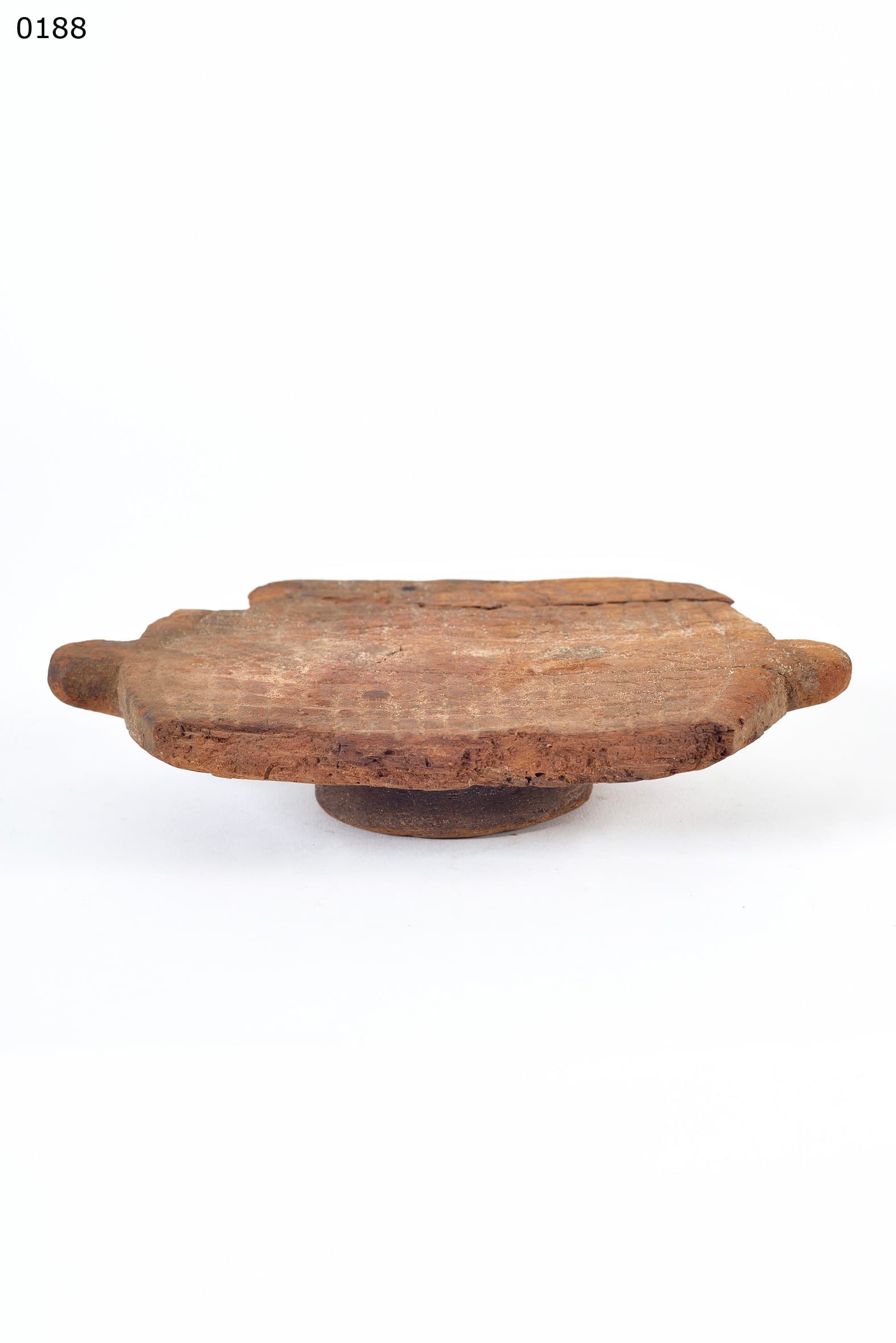
A Tellem male neckrest (10th–15th C., 23 cm) from Mali — a broad curved upper platform supported by two distinct roughly hewn vertical pillars on a flat base, the dry wood marked by deep longitudinal fissures and a pale oxidized surface suggesting significant age. Published in Leloup, "Dogon" (p. 24).
1. The dual-pillar typology
This object exemplifies the classic dual-pillar typology of ancient Tellem headrests.
- Stability by Design: Two columns rather than one provide increased stability, while creating a visually resonant negative space between the supports.
- Adze Marks as Signature: Raw unpolished adze marks still faintly visible on the pillars demonstrate the direct unpretentious carving techniques of the medieval Sahel — structural integrity and austere geometry prioritized over finish.
2. Elevation in the realm of the dead
As a fundamental component of the Tellem funerary assemblage, this neckrest was placed in the high cliff caves of the Bandiagara Escarpment.
- Throne for the Head: Not merely a functional support but a symbolic throne for the most sacred part of the body.
- Dignity in Eternity: The deceased maintained their dignity and posture as they entered the eternal realm of the ancestors, propped permanently on this austere little architecture.
3. Taphonomy and publication
The object's preservation is consistent with the arid cave environment.
- Desiccation: Severe desiccation has produced deep organic checking and a complete loss of original weight — the wood is now highly brittle.
- Documentation: Publication in Leloup's Dogon (p. 24) alongside other medieval neckrests supports its attribution and associates it with a documented tradition of African art history.
Summary
An elegant example of ancient functional geometry, this dual-pillar Tellem neckrest is a compelling relic of a lost medieval culture. Its state of desiccation and publication provenance make it a significant example of Tellem material culture.
Written with AI assistance from the collection appraisal, object photography and our own research; editorially reviewed. Mistakes are possible — corrections are welcome. How we work →