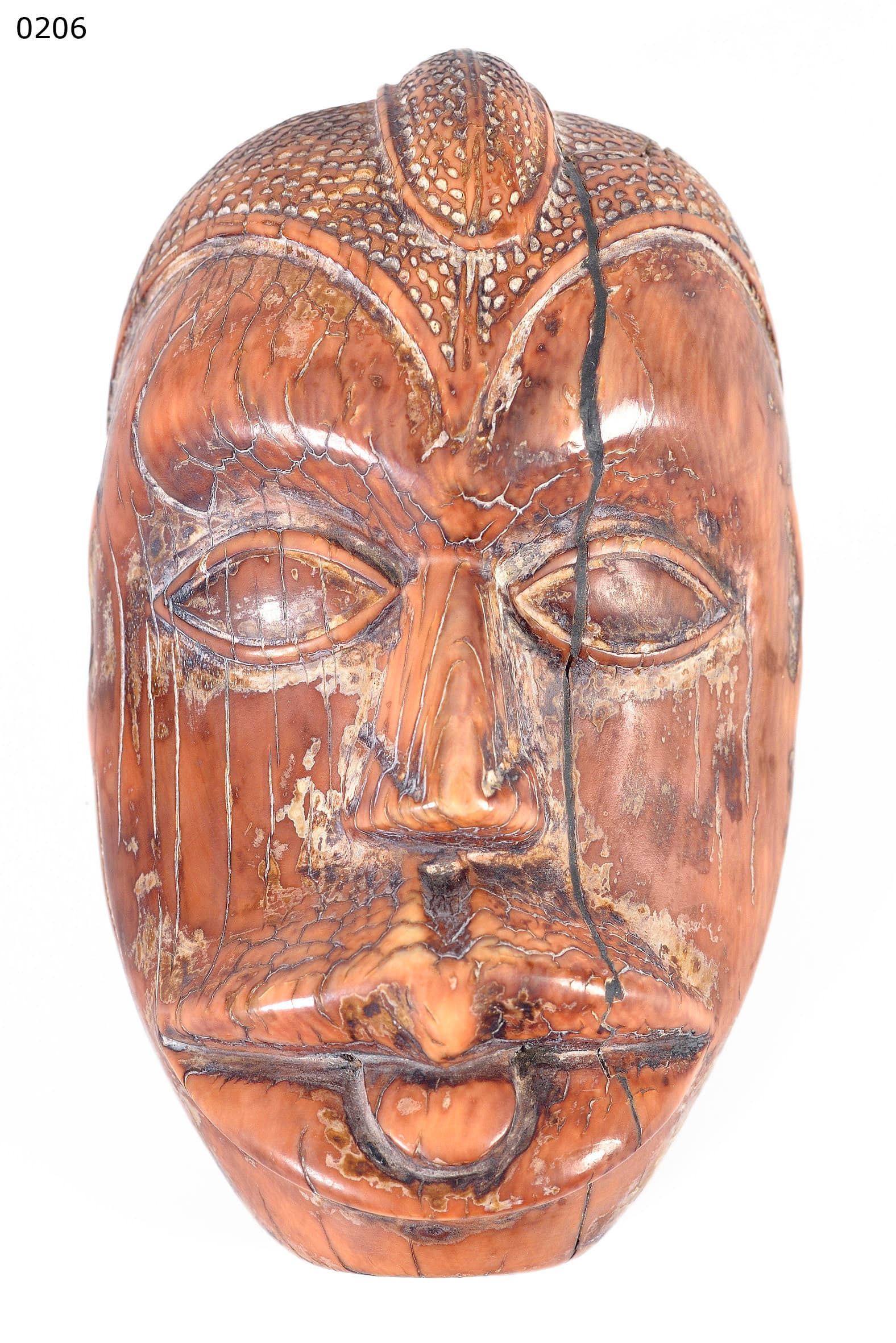
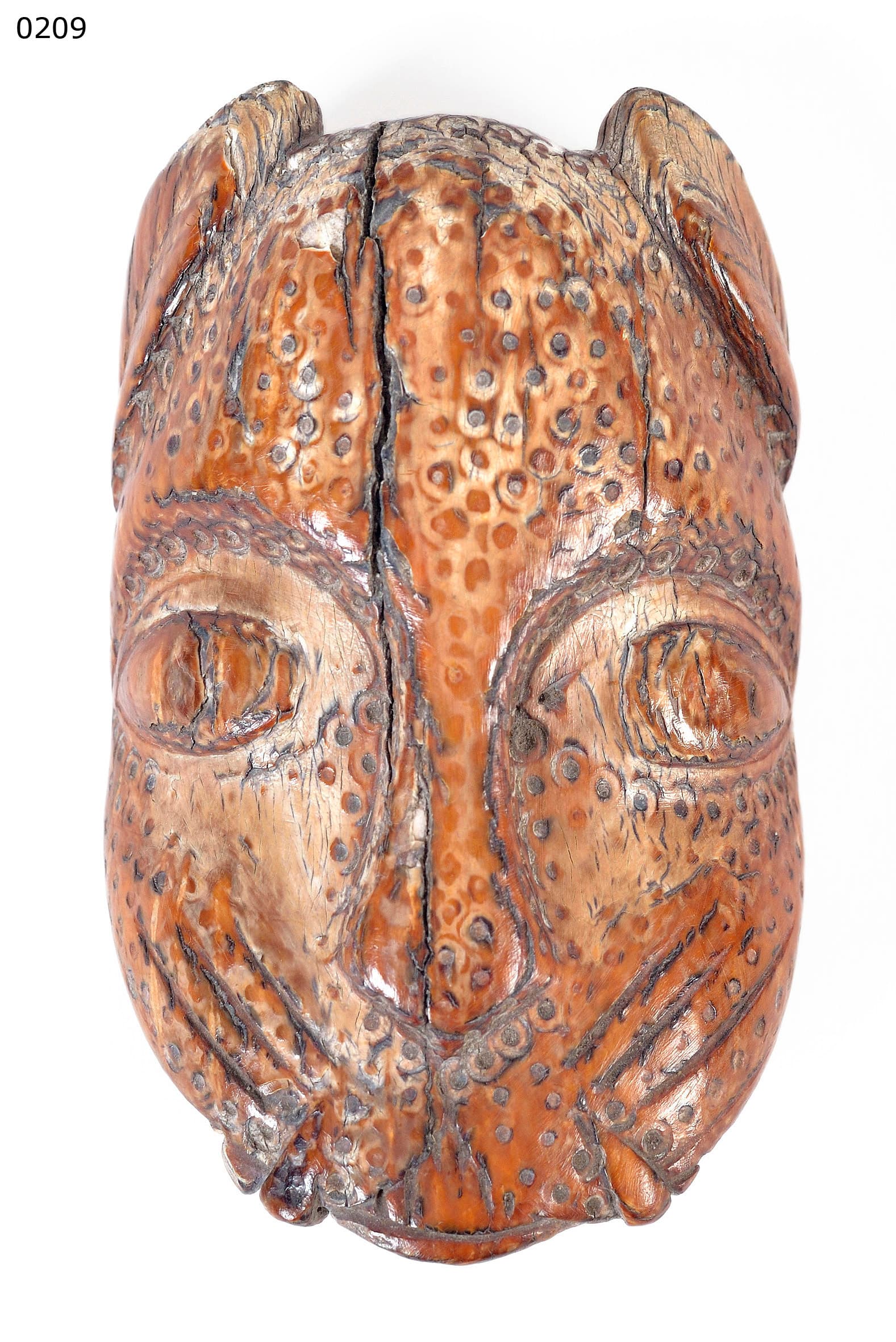
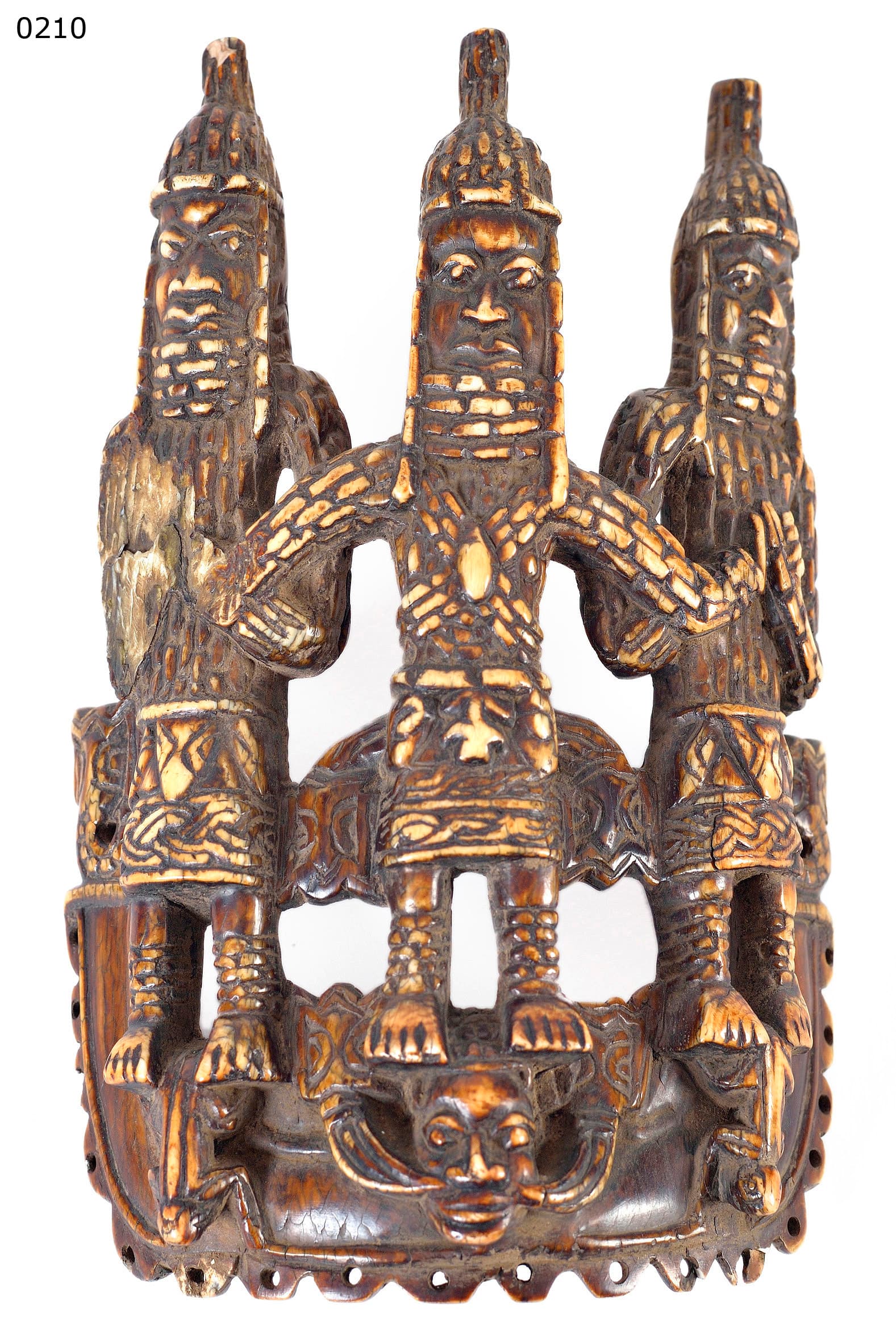
A miniature ivory leopard mask (late Benin, 15 cm) from the Edo of Nigeria — the leopard face rendered with piercing eyes and bared fangs, the spots executed as precise inlaid dark pegs (likely wood or coconut shell), the ivory deeply oxidized into a rich honey-brown hue.
1. The leopard as avatar of the oba
In the stratified visual language of the Benin Kingdom, the leopard is the ultimate avatar of the Oba (King).
- Parallel Sovereignty: The leopard rules the untamed forest with the same absolute authority with which the Oba rules the civilized Edo empire.
- Igbesanmwan Mastery: Created by the royal ivory carvers' guild, this piece adapts the apex predator's eyes, fangs, and spotted coat into a condensed geometric emblem of divine kingship.
2. Amuletic court regalia
These miniature masks were vital components of ceremonial court regalia, not merely ornaments.
- Left Hip Suspension: Worn from the left hip or belt by the Oba and high-ranking commanders such as the Ezomo.
- Protective Forcefield: The combination of long-lived elephant ivory and leopard iconography was believed to generate a spiritual shield deflecting malevolent magic — and to project terrifying authority during battle or the annual Igue festival.
3. Inlay technique and Ivory oxidation
The inlaid spots signal technical sophistication.
- Tight-Fitting Pegs: Precise inlays of dark wood or coconut shell were a demanding Edo specialty — each peg custom-fitted into a hand-drilled recess.
- Deep Oxidation: The deep lustrous honey-brown color is consistent with decades of oxidation, ritual palm oil, and direct skin contact — organic patination that typically requires a significant period to develop naturally.
Summary
A refined representation of royal Edo power, this inlaid ivory leopard mask is consistent with the visual expression of the divine authority of the Benin court. Its precise inlay technique and deep honey-brown oxidation support its association with historical examples of this tradition.
Written with AI assistance from the collection appraisal, object photography and our own research; editorially reviewed. Mistakes are possible — corrections are welcome. How we work →