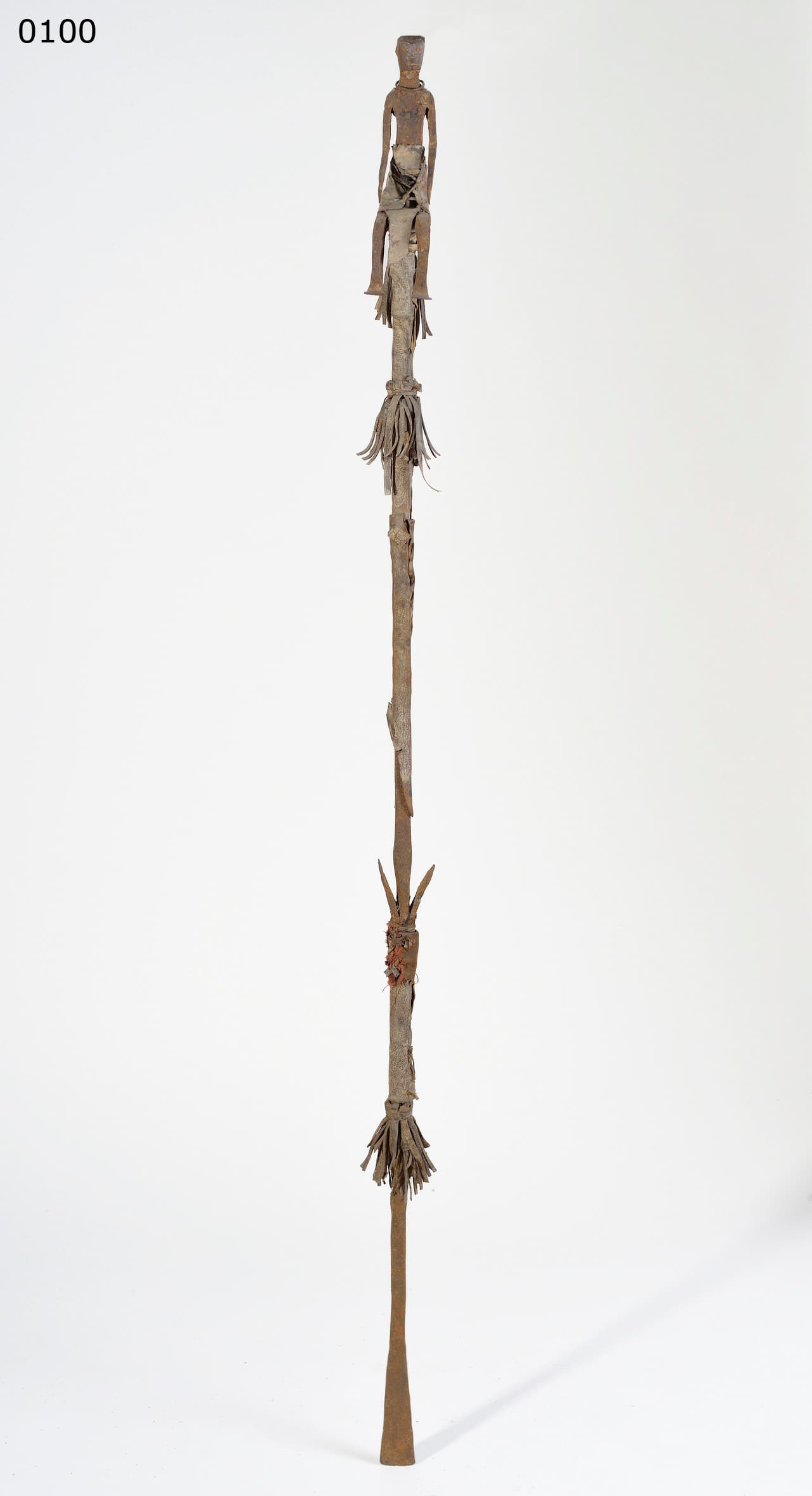
A highly minimalist forged iron quadruped (early 20th C., 33 cm) from the Bamana of Mali — likely a horse or giraffe, with an impossibly long slender neck, pointed head, and delicate spindly legs, the iron heavily corroded with a dry dark highly textured rusted surface.
1. Iron minimalism in the Sahel
Bamana blacksmiths (numuw) are absolute masters of reductive abstraction.
- Tensile Silhouette: The figure strips away all anatomical mass, using the tensile strength of forged iron to create a lithe soaring silhouette.
- Essence Over Realism: Extreme minimalism captures the pure spiritual essence and kinetic energy of the animal rather than its literal physical reality — weightless presence achieved through what is removed.
2. Altar implements and divination
Small iron animals of this type are powerful localized altars used by diviners and priests.
- Horse Symbolism: If representing a horse, the figure signals aristocratic prestige, military power, and spiritual journeying.
- Giraffe Reading: If read as a giraffe (suggested by the extreme neck), it represents far-reaching vision and connection to the celestial realm. Either way, the figure serves as an indestructible conduit for prayers and sacrifices.
3. Early 20th-century corrosion
Authenticity is firmly established by the profound oxidation.
- Ritual Residue Layering: Thick uneven rust and patination consistent with decades of exposure to blood, kola nut, and the elements on an open Malian altar.
- Structural Hardening: Deep pitting and hardened iron confirm early 20th-century origins and authentic ritual history rather than recent forging.
Summary
Elegantly soaring and brutally minimal, this Bamana iron zoomorphic figure is a triumph of Sahelian blacksmithing. Its kinetic lines and profound authentic rust patination make it a highly desirable ethnographic artifact.
Written with AI assistance from the collection appraisal, object photography and our own research; editorially reviewed. Mistakes are possible — corrections are welcome. How we work →