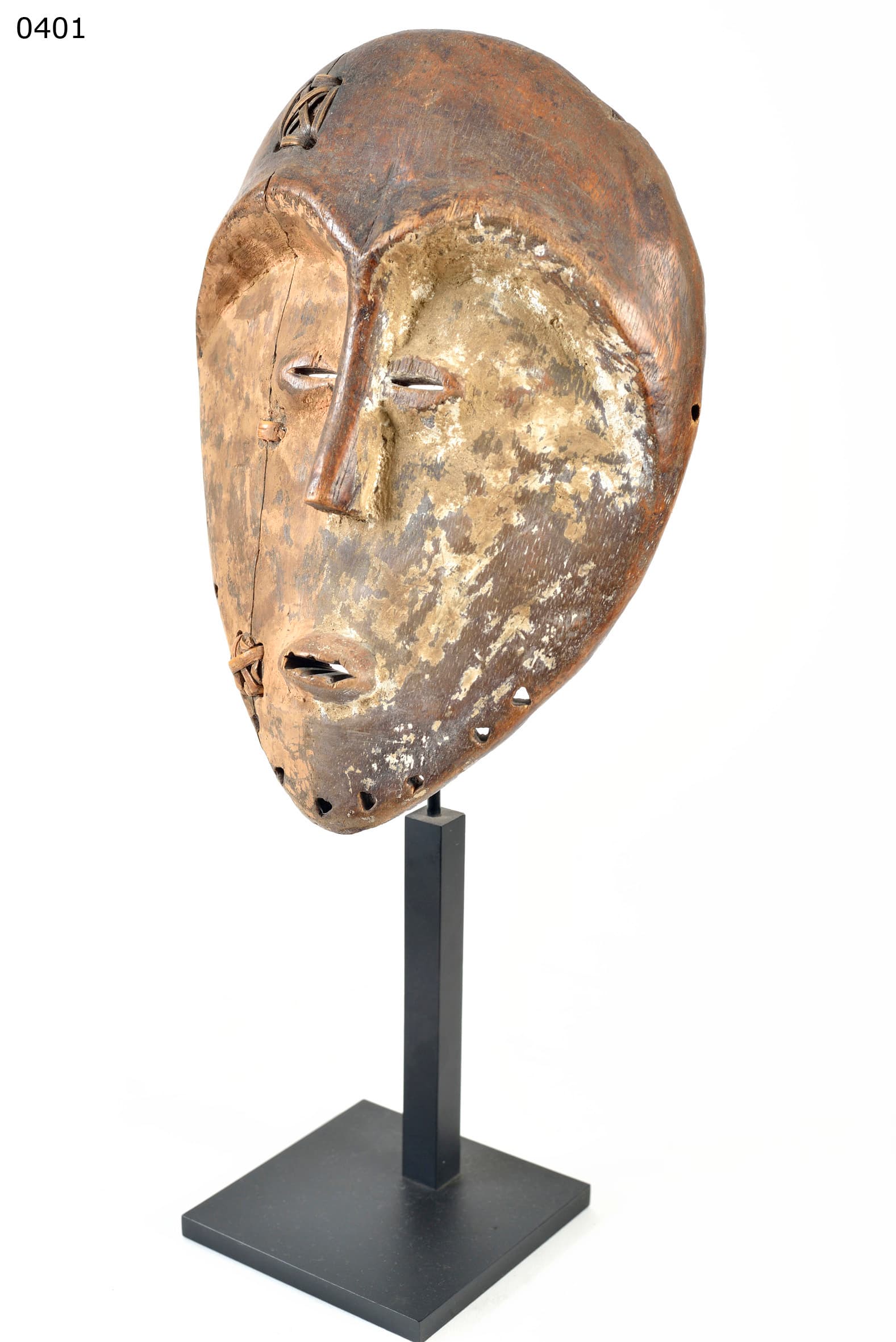
A remarkable, small ivory sculpture presenting a large, concave, heart-shaped face with a smaller, secondary figure or face clinging to its cheek. The ivory has developed a rich, mottled caramel and dark brown patina from extensive handling.
1. Aesthetic style and regional traits
This piece is highly representative of the aesthetic philosophy of the Lega Bwami society. The characteristic concave, heart-shaped face and the stark, dotted "coffee-bean" eyes are characteristic of Lega artistry. Ivory figures (iginga) are the highest-ranking objects in Lega society, restricted entirely to members of the Kindi (the highest grade of Bwami), symbolizing moral perfection, wisdom, and social harmony. The visual language is institutionally specific — only Bwami initiates could legitimately commission, possess, or interpret these forms.
2. Ritual function and pedagogical use
Lega art is never merely decorative; it is pedagogical. This figure, featuring a smaller face attached to the primary head, likely illustrates a specific Bwami aphorism or proverb taught during secret initiations. It may represent the concept of multi-generational wisdom, a multi-headed entity that "sees all," or a proverb about a specific moral failing that initiates must avoid. The Bwami curriculum is constructed entirely from such proverbial figures, each one keyed to a specific moral lesson the initiate must absorb to advance through the society's grades.
3. Physical patina and age indicators
Ivory in the Lega context is meant to be handled, rubbed, and ritually anointed. The deep, glossy, caramel-to-chocolate patina on this piece is consistent with years of being passed from hand to hand during Bwami ceremonies and regularly oiled. This deep coloration is highly consistent with an ivory object's active ritual life in the Congo rainforest. The mottled distribution of patina depth across the surface suggests decades of differential handling and oil application.
Summary
A classic and complex Lega iginga that serves as a moral and pedagogical tool for the Bwami secret society. Its hand-rubbed caramel patina and rare multi-figure iconography distinguish this notable example.
Written with AI assistance from the collection appraisal, object photography and our own research; editorially reviewed. Mistakes are possible — corrections are welcome. How we work →