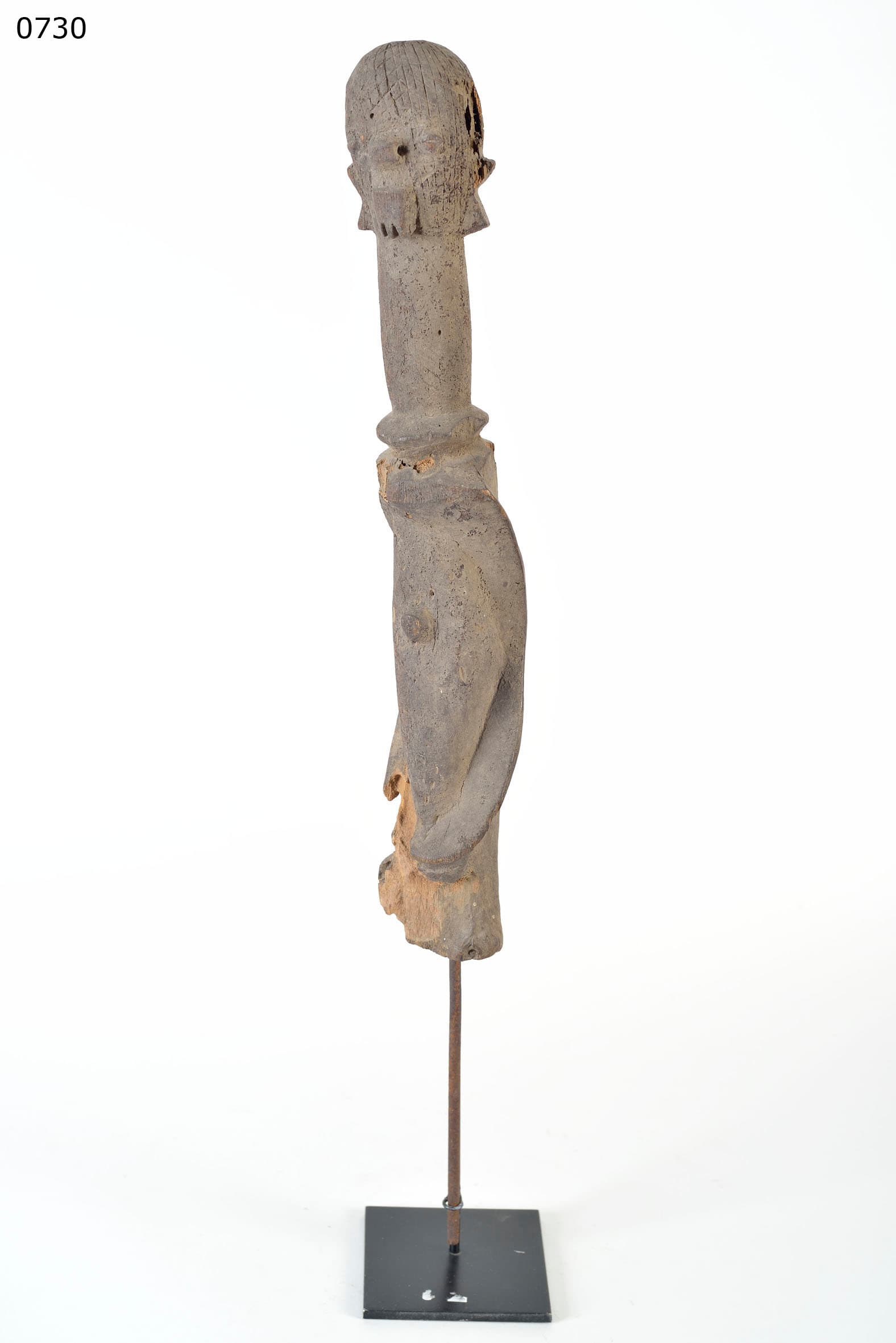
A rare pair of Wurkum peg-like wooden figures (1st half 20th C., 43 cm) from Nigeria — highly abstracted columnar bodies topped with stylized heads exhibiting distinct sagittal crests and simplified jutting facial features, both figures bearing a dry thickly crusted heavily oxidized brown patina indicative of extensive shrine storage.
1. Pole-style carving of the benue valley
The Wurkum (and the closely related Wurbo) people of the remote Upper Benue River Valley of Nigeria utilize a highly specific extreme form of pole-style carving.
- Radical Reduction: The artist makes no attempt to delineate legs, arms, or naturalistic torsos — the human form is radically reduced to a vertical peg or column.
- Head Focus: The focus is entirely on the head — carved with sharp jutting geometric planes and a prominent central crest representing a traditional elite coiffure, creating an aura of immovable ancient permanence.
2. Kundul healing and agricultural magic
These peg-figures — locally referred to as kundul — functioned as highly active spiritual tools rather than static portraits.
- Planted in Compound Earth: Their pointed or truncated bases were designed to be physically driven into the earth — diviners and healers planted these couples (representing male and female ancestral balance) directly into the soil of a family compound.
- Agricultural Protection: Planted to drive away illness, or placed in the center of agricultural fields to protect crops from witchcraft and ensure a bountiful harvest through ancestral intervention.
3. Desiccation and ritual crust
The surface condition perfectly reflects their function as active earthen-bound spiritual anchors.
- Dry Aged Wood: Dating to the early 20th century, the wood is incredibly dry — showing significant oxidation and deep age cracks along the grain.
- Sacrificial Crust: The upper halves are coated in a thick uneven friable crust — the hardened remnant of countless sacrifices of millet beer, herbal medicines, and blood poured over the heads of the ancestors by the healer to activate their protective power over decades.
Summary
A stark powerful example of Nigerian pole-style abstraction, this Wurkum couple reduces the human form to its absolute spiritual essence. Their deeply encrusted dry patina confirms genuine history as active agricultural and healing anchors.
Written with AI assistance from the collection appraisal, object photography and our own research; editorially reviewed. Mistakes are possible — corrections are welcome. How we work →