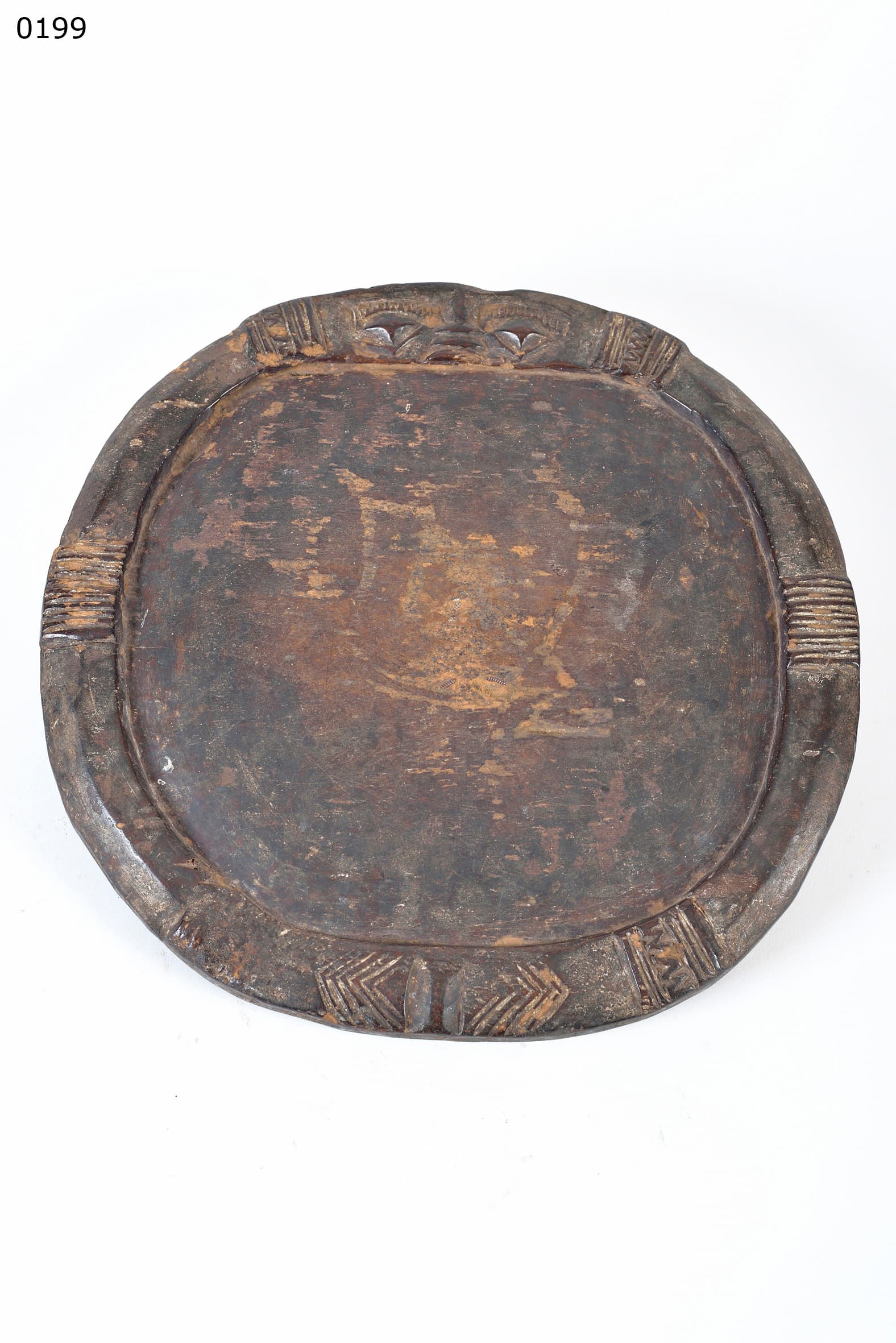
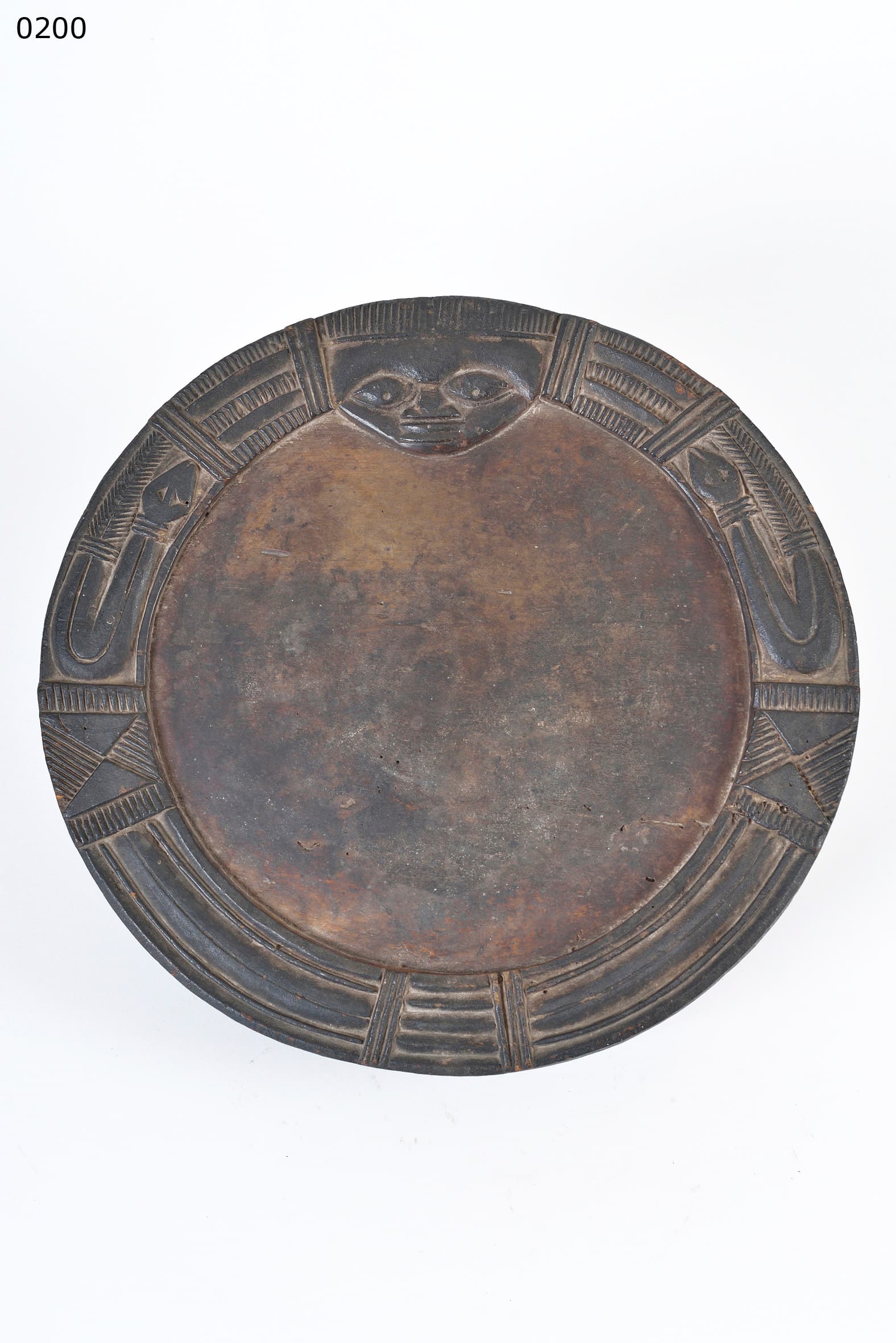
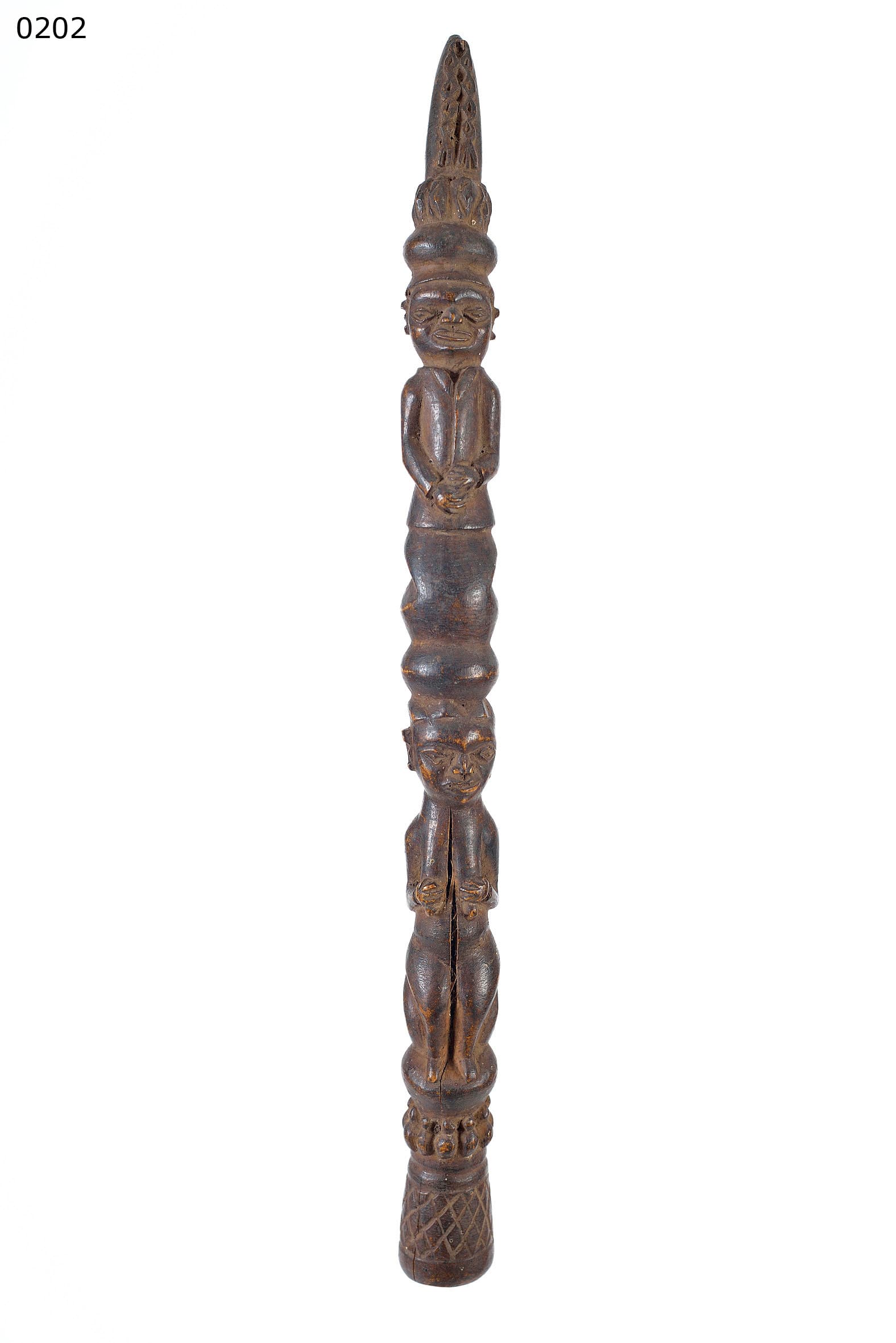
A highly geometric wooden head crest (1st half 20th C., 58 cm) from the Yoruba/Egun of Nigeria, featuring two massive upward-sweeping horn-like structures and painted linear detail. Published in both AFRICANA (p. 138) and KOPFSKULPTUREN (p. 97).
1. Publication and prestige
This is a published piece, documented in literature. Published works are highly regarded by collectors, as they help define the artistic boundaries of their respective cultures. This mask's appearance in two texts positions it as a notable reference object.
2. Formal characteristics
The mask features classic Yoruba/Egun stylistic markers pushed to geometric extremes.
- The Ears/Horns: The two massive vertical structures likely represent stylized, exaggerated ears (a feature sometimes seen in Efe/Gelede or Egungun masks to signify the spirit's ability to hear prayers) or an elaborate, status-indicating hairstyle.
- The Eyes: Heavy, almond-shaped eyes with prominent lids are a hallmark of Yoruba carving, conveying spiritual calm and otherworldly observation.
3. Ritual context: Ancestors and society
Worn as a crest (sitting atop the dancer's head rather than over the face), this mask would be part of a massive, spinning costume made of layered cloths. Whether deployed in Egungun (honoring returning ancestors) or Gelede (honoring the spiritual power of women), the crest elevates the dancer into a towering, divine presence.
Summary
This published Yoruba/Egun crest mask is a documented example that is highly representative of this carving tradition. It combines the serene, classical facial features of Nigerian carving with a bold vertical architecture designed to dominate the village square during festival performances.
Written with AI assistance from the collection appraisal, object photography and our own research; editorially reviewed. Mistakes are possible — corrections are welcome. How we work →