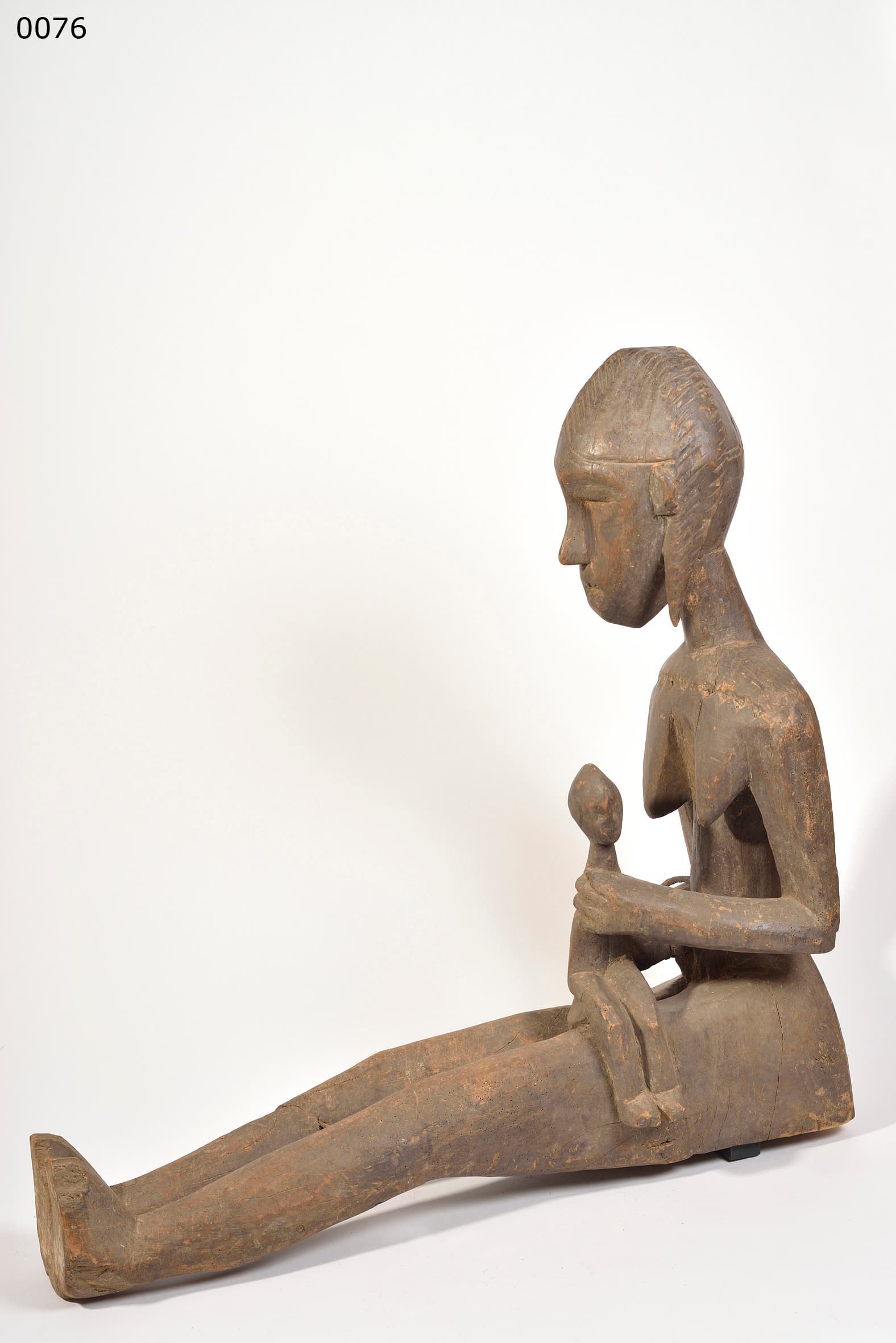
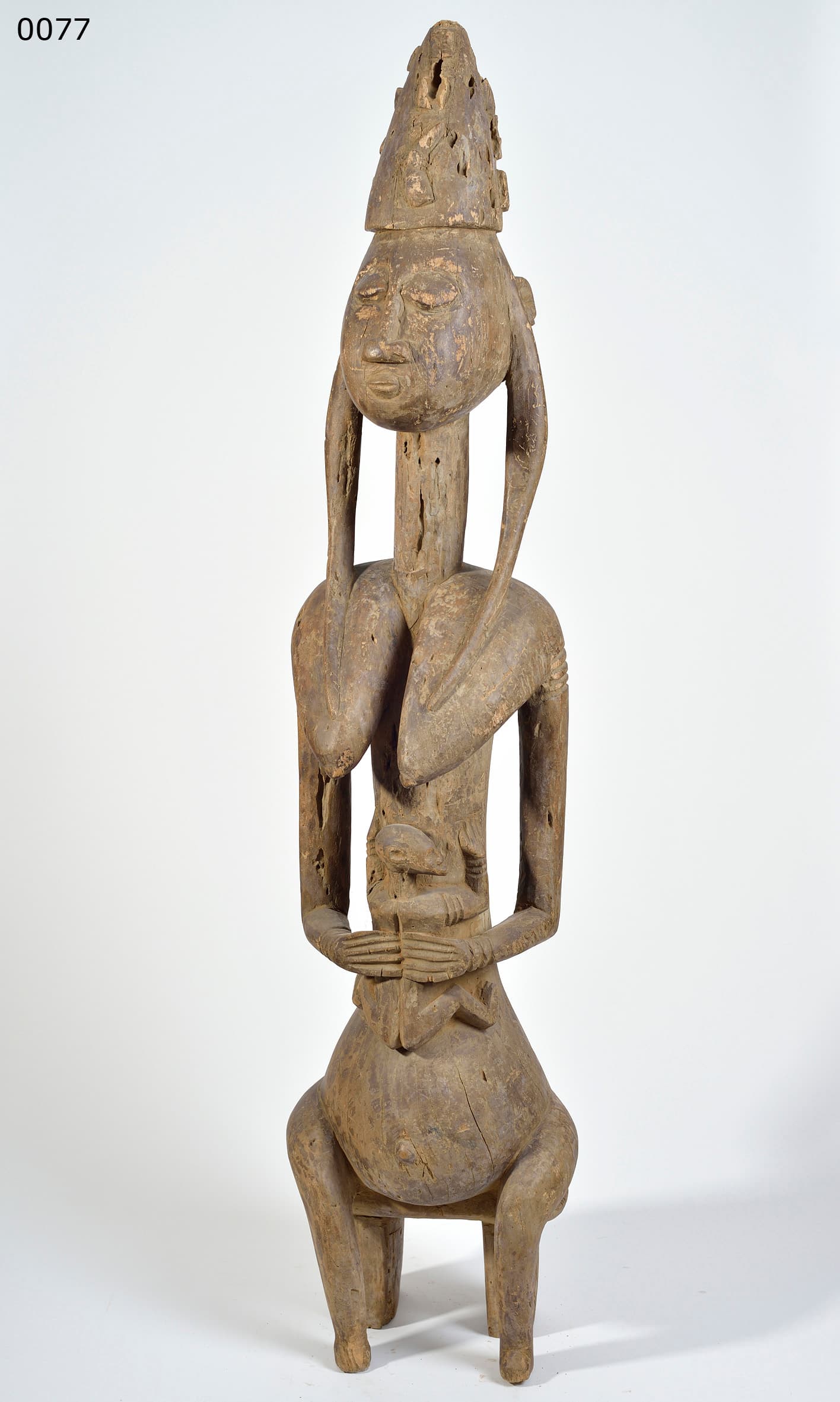
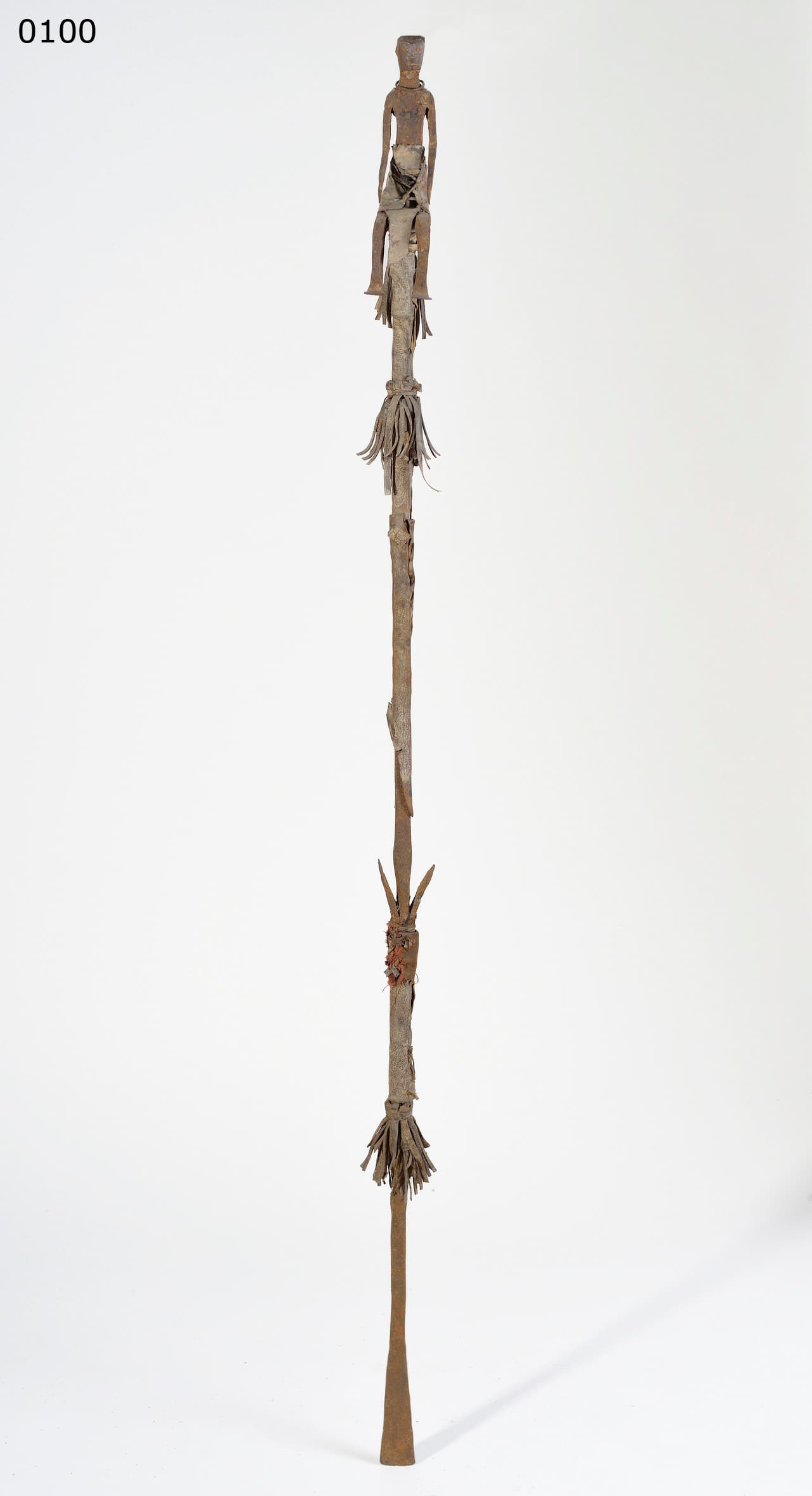
This towering wooden crest mask features the elegant, stylized form of a roan antelope with an intricate openwork mane, elongated vertical horns, and a smaller antelope calf carried on its back. The wood possesses a dry, dark patina with natural weathering and minor surface abrasions along the high points.
1. Aesthetic style and regional traits
This piece is a classic example of the vertical style of the Segou region in Mali. The Bamana carver has achieved a refined elegance through the pierced, zigzag openwork representing the antelope's mane, which also symbolizes the path of the sun and the flow of water. The inclusion of the fawn on the female's back emphasizes the theme of human and agricultural propagation, while the sweeping, elongated horns draw the eye upward, linking the earth to the heavens.
2. Ritual function and religious meaning
The Chiwara (or Ci Wara) is a mythical beast — half antelope, half human — that is believed to have taught the Bamana people the secrets of agriculture. These crests are worn in pairs (male and female) by champion farmers during planting and harvesting ceremonies. Attached to a basketry cap and worn with a full raffia costume, the dancers mimic the movements of the antelope scratching the earth, ritually ensuring a successful harvest and celebrating the union of sun, water, and soil.
3. Physical patina and age indicators
The wood displays a deeply oxidized, dry patina consistent with use in the Malian climate. The handling wear around the base, where it would have been repeatedly tied to the dancer's basketry cap, and the gentle rounding of the intricate openwork edges suggest a history of dynamic movement. The lack of artificial modern polishing allows the deep-seated oxidation of the wood grain to show through, supporting an attribution to the early 20th century.
Summary
This Chiwara is a fine example of Bamana agricultural artistry, distinguished by its scale and delicate openwork carving. Its graceful, soaring lines and wear consistent with ritual use make it a compelling artifact of Sahelian cultural history.
Written with AI assistance from the collection appraisal, object photography and our own research; editorially reviewed. Mistakes are possible — corrections are welcome. How we work →