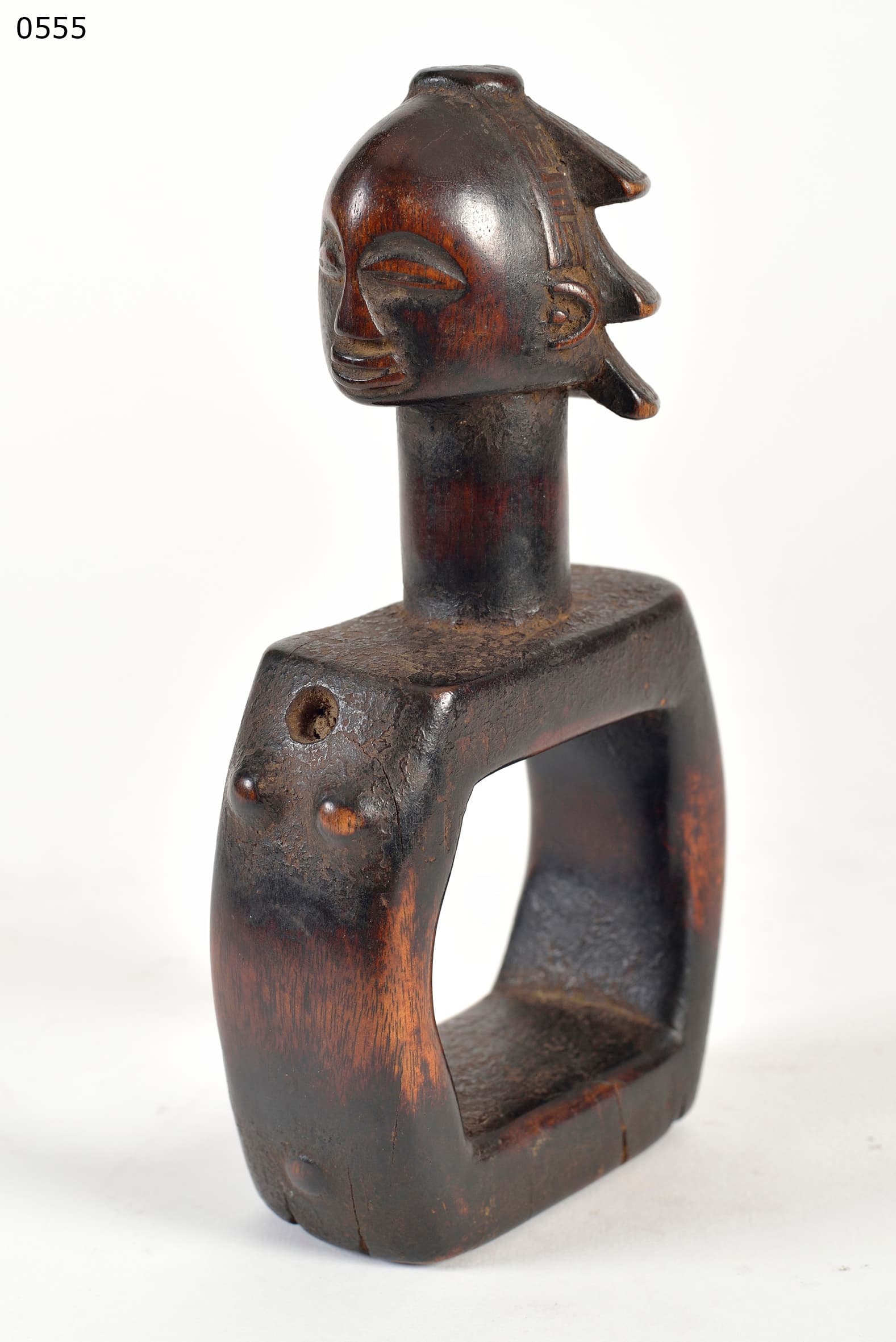
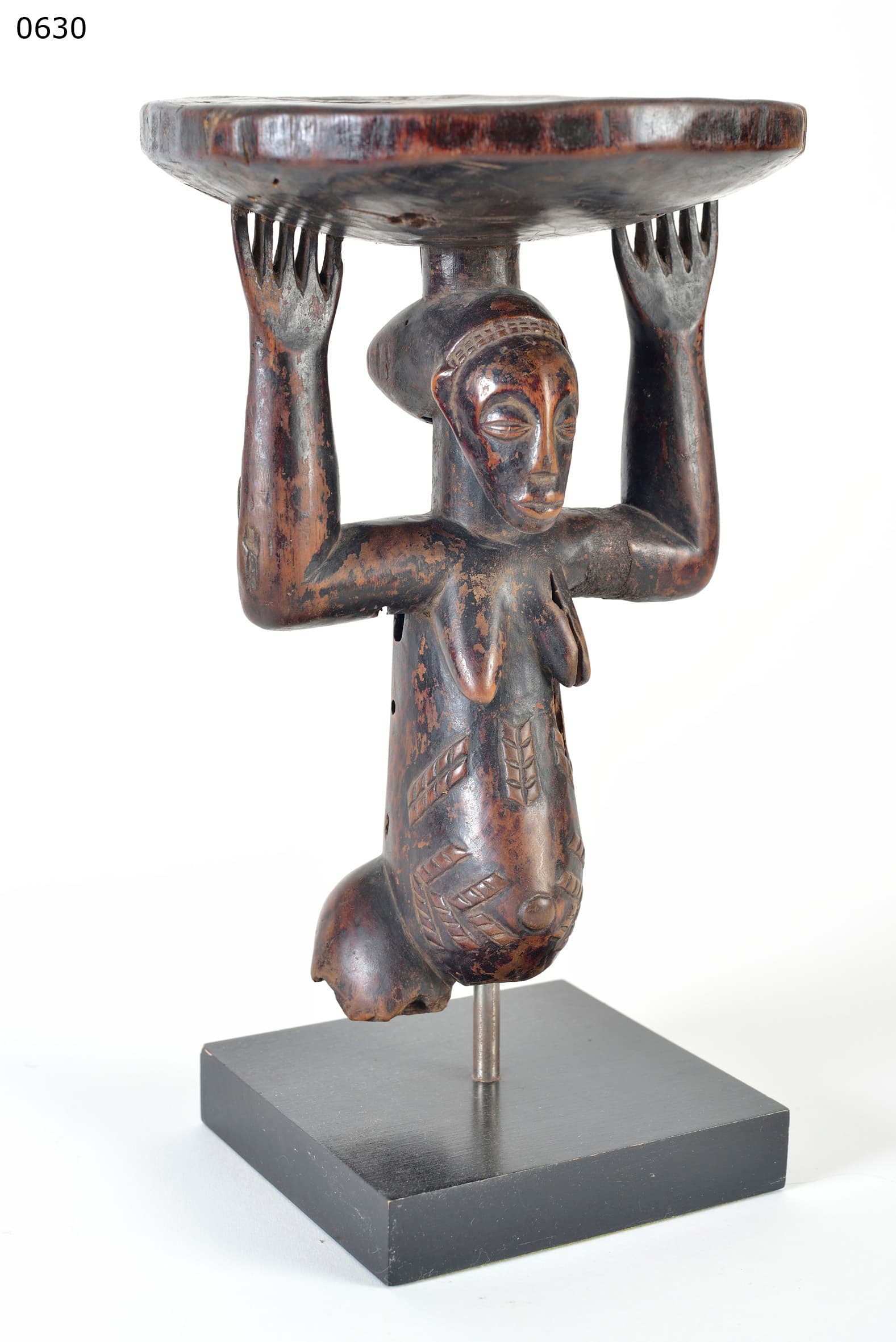
This small, truncated wooden figure is characterized by a disproportionately large, flat, heart-shaped face, a high, domed forehead, and rudimentary arms resting on the lower torso. The surface exhibits a smooth, lustrous, honey-brown patina.
1. Aesthetic style and regional traits
While the Luba are famous for their serene, highly naturalistic female figures, this piece represents a distinct, more abstract sub-style, potentially from the peripheries of the Luba empire where influences from the Kusu or Hemba cultures bleed over. The abstraction of the face into an inverted triangle and the reduction of the body to geometric blocks emphasizes the figure's spiritual interiority over physical realism.
2. Ritual function and secret society context
Rather than a royal prestige object, this is an intimate power figure or diviner's tool. Used by a Bilumbu (diviner), such small statues were often rubbed with oils and kept in woven baskets alongside bones, shells, and other potent materials. They served as physical anchors for ancestral spirits, aiding the diviner in diagnosing societal unrest, illness, or the root causes of witchcraft.
3. Physical patina and age indicators
The patina on this piece is consistent with traditional use and handling. The wood has developed a glassy, highly polished friction patina, particularly on the prominent forehead and torso. This type of lustrous, honey-toned surface is associated with generations of being touched, rubbed with palm oil, and held in human hands during private consultations.
Summary
This highly abstracted Luba power figure is a notable deviation from classical naturalism, focusing instead on psychological intensity. Its handled friction patina suggests a history of use in ancestral divination.
Written with AI assistance from the collection appraisal, object photography and our own research; editorially reviewed. Mistakes are possible — corrections are welcome. How we work →