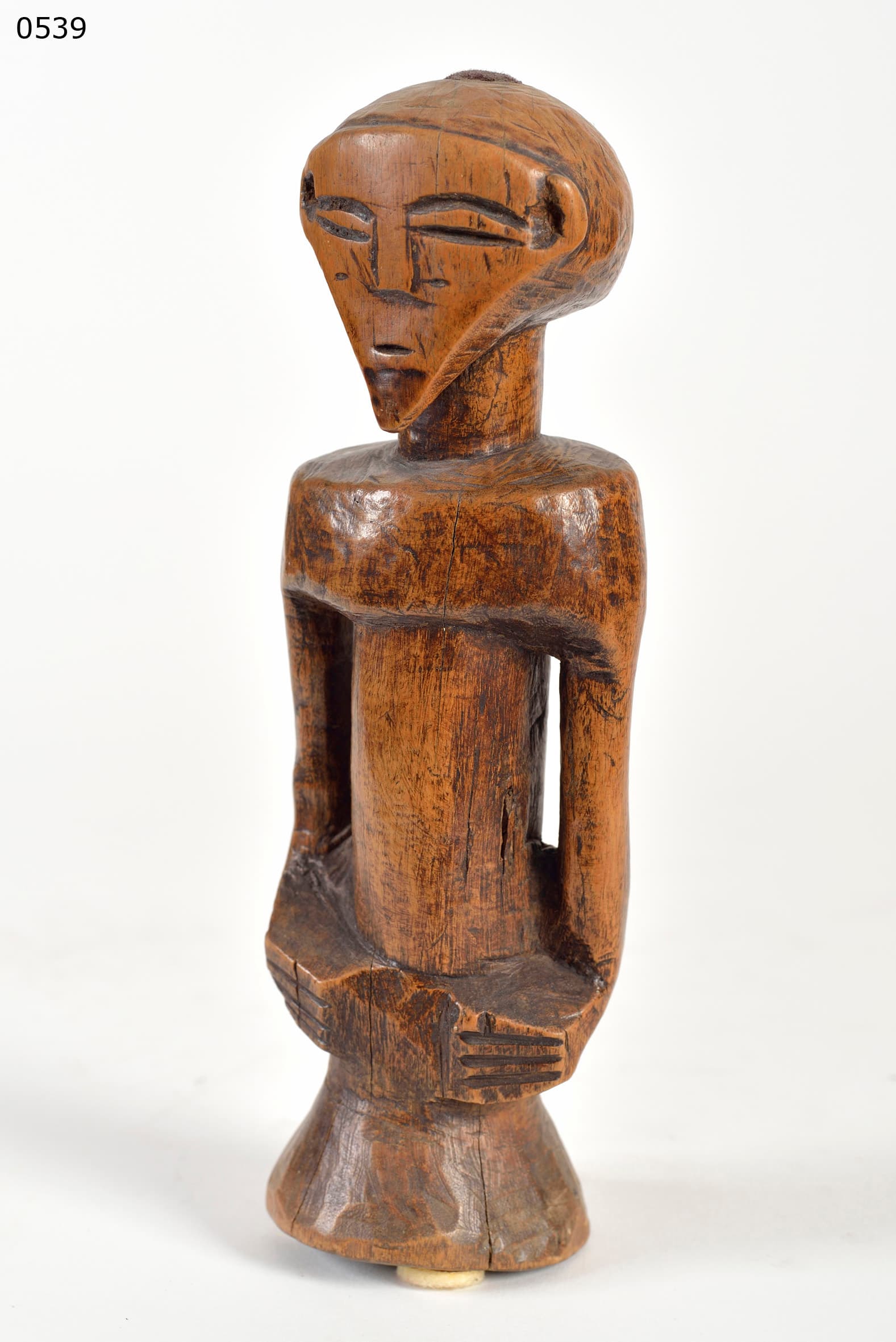
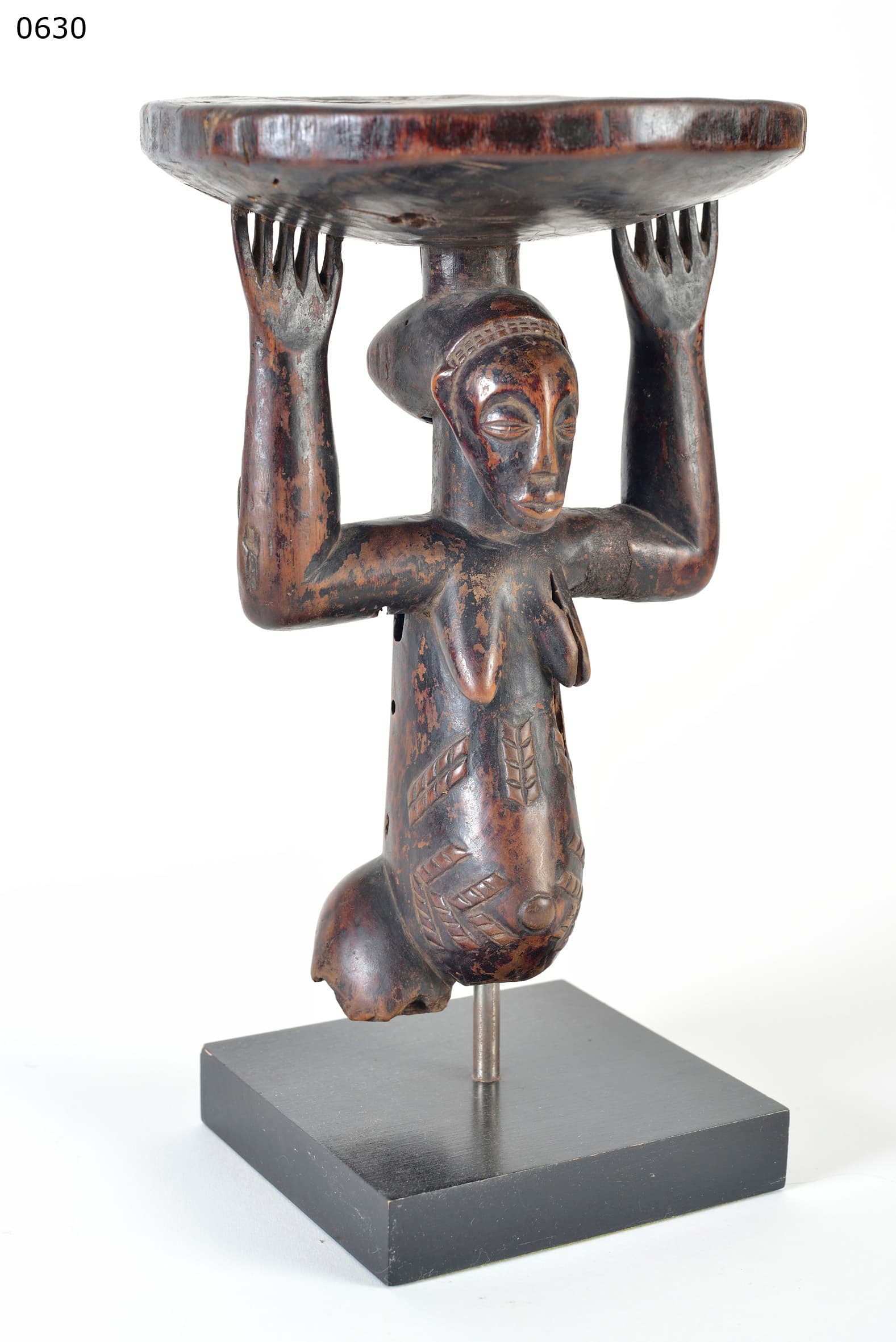
This highly unusual wooden implement consists of a finely carved, serene female head resting not on a torso, but atop a large, hollow, rectangular openwork frame. The wood is exceptionally dark and bears a glassy, rubbed patina across the frame and the facial features.
1. Aesthetic style and regional traits
While labeled broadly as a figure, this is specifically a kakishi or lubuko (friction oracle), used by the Luba, Songye, and neighboring Kuba peoples. The carver has brilliantly reduced the human body to an interactive tool. The head retains the classical, serene Luba ideal of beauty — representing the clairvoyant spirit of an ancestor — while the body is abstracted into a functional, ergonomic rectangle designed entirely for the mechanics of divination.
2. Ritual function and secret society context
This type of object is traditionally a primary diagnostic tool of a Bilumbu (diviner). During a consultation to uncover the cause of an illness, a sudden death, or witchcraft, the diviner holds the rectangular frame and rubs a small wooden block (or rubs the frame itself) along a surface. As the diviner recites a list of suspects or causes, the spirit intervenes; when the correct answer is spoken, the oracle mysteriously "sticks" or binds to the surface through friction, delivering the ancestor's verdict.
3. Physical patina and evidence of use
The patina is a key indicator of use in a friction oracle. Repetitive rubbing over time appears to have compressed the wood fibers of the rectangular frame, creating a smooth, dark, mirror-like polish. The serene face of the spirit also shows soft, rubbed wear from being held and anointed with palm oil prior to the divination sessions.
Summary
This Luba friction oracle is an ingenious fusion of classical portraiture and functional, kinetic design. The friction patina along its base and frame suggests its use as an active instrument of Central African spiritual practice.
Written with AI assistance from the collection appraisal, object photography and our own research; editorially reviewed. Mistakes are possible — corrections are welcome. How we work →